
Main Courses
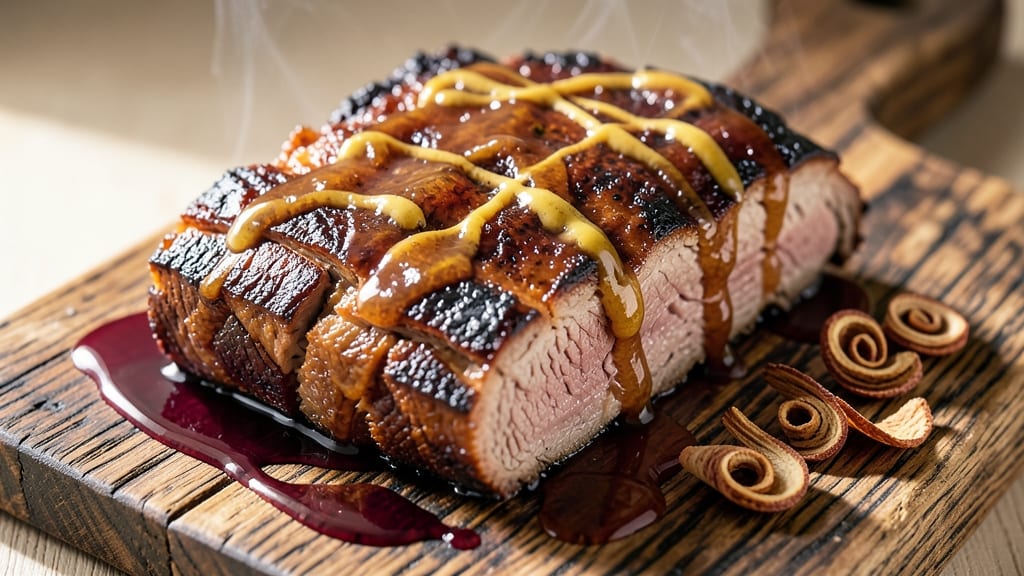
This apple smoked brisket recipe transforms a classic Texas tradition into something unexpectedly sweet and complex. 🍎 The secret lies in balancing applewood smoke with a simple marinade—just brown sugar, apple cider vinegar, and a touch of mustard—that tenderizes while building a caramelized crust.
I developed this after years of perfecting my brisket technique, and the applewood adds a subtle fruitiness that pairs beautifully with the rich, smoky depth of the meat.
The process is straightforward but requires patience: a full day of smoking at 225°F until the internal temperature hits 203°F, followed by a 1-hour rest to let the juices redistribute.
The applewood isn’t just for flavor—it creates a delicate, aromatic balance that elevates the brisket beyond traditional oak or hickory. This method ensures the meat stays tender, juicy, and deeply flavorful, with a crust that’s crisp enough to hold up to slicing.
What you’ll end up with is a brisket so rich and aromatic that it becomes the centerpiece of any meal. The applewood smoke infuses the meat with a subtle sweetness, while the marinade adds a caramelized depth that’s impossible to resist.
Serve it sliced against the grain with a cool apple slaw or classic baked beans for a meal that’s both comforting and impressive.
Perfect for gatherings, holiday feasts, or a special weekend dinner, this brisket delivers restaurant-quality results at home. The key is in the smoke and the patience—once you try it, you’ll never go back to plain oak-smoked brisket again. Let’s get started!
Ingredients for apple smoked brisket
Six pounds of brisket, a handful of spices, and the magic of applewood smoke transform this into a showstopper.
| Ingredient | Amount | Notes |
|---|---|---|
| Beef Brisket (Packer Cut) 🥩 | 6 lb | Whole packer cut preferred |
| Applewood Chips 🍎 | 2 cups | Unsoaked, chunky preferred |
| Brown Sugar 🍚 | ½ cup | Light or dark, packed |
| Apple Cider Vinegar 🍏 | ¼ cup | Brine-grade preferred |
| Dijon Mustard 🌶️ | 2 tbsp | High-quality, smooth |
| Kosher Salt 🧂 | 2 tbsp | Diamond Crystal preferred |
| Black Peppercorns 🌶️ | 1 tbsp | Freshly cracked |
| Garlic Cloves 🧄 | 6 cloves | Peeled, smashed |
| Yellow Onion 🧅 | 1 whole | Yellow or red, sliced |
| Beef Tallow or Bacon Fat 🍳 | ¼ cup | For rub application |
| Apple Cider (for spritzing) 🍎 | 1 cup | Unsweetened, chilled |
| Yellow Mustard (for spritzing) 🌶️ | ¼ cup | Dijon or prepared |
| Beef Au Jus (for wrapping) 🍲 | 1 cup | Homemade or store-bought |
The brisket is non-negotiable—packer cut with good marbling is your best bet. Costco or local butchers usually carry it pre-cut, but if you're buying whole, ask for the flat and point together. Applewood chips are key: Traeger or Cookshack brands work best, and I always soak them for 30 minutes in water to prevent flare-ups. The brown sugar should be packed—tap the measuring cup to settle it. For the vinegar, Bragg's is my go-to, but any good-quality cider vinegar will do. Freshly cracked peppercorns make all the difference—skip the pre-ground stuff.
No applewood chips? Hickory or cherry will work in a pinch, but the flavor won't be the same. Running out of Dijon mustard? Yellow mustard plus a pinch of smoked paprika gets you close. The beef tallow can be swapped for bacon fat or even olive oil if you're in a bind, though tallow gives that authentic smoky crust. For the spritz, I use apple cider and yellow mustard in a 4:1 ratio—this keeps the meat moist and adds a subtle tang. Pro tip: Make a double batch of the spritz mix and store it in the fridge for future smokes.
This brisket needs time—at least 12 hours for the marinade, then 12-16 hours on the smoker. Wrap it in butcher paper or foil with au jus after the first 6 hours to speed up the cook. Store leftover brisket in the fridge for up to 5 days or freeze it for 3 months. Slice it against the grain for that melt-in-your-mouth texture. Leftovers reheat beautifully—just wrap them in foil and warm in a 350°F oven for 20 minutes. Trust me, the second day is just as good as the first.
Why You'll Love This Recipe
- Smoke in Minutes: The applewood chips turn my smoker into a fragrant dream in just 15 minutes—no long waits, no fuss. Honestly, that crispy bark forms faster than I expected, and the sweet apple aroma fills the whole house before I even season the brisket.
- Sweet-Savory Magic: Brown sugar and apple cider vinegar team up to create this perfect balance—caramelized edges with a tangy bite. Between us, the Dijon mustard adds that little kick that makes it feel gourmet without trying too hard.
- Leftovers That Shine: This brisket stays moist and flavorful for days, so I always make extra. Slice it thin for sandwiches the next day or shred it into tacos—it’s my go-to for quick lunches that still taste like Sunday dinner.
- Budget-Friendly Feast: A packer cut stretches across meals, and the applewood chips cost pennies compared to fancy wood blends. I’ll be real: this recipe turns a $20 brisket into enough food for a family of four plus leftovers—without breaking the bank.
Step-by-step instructions for apple smoked brisket
Here's my foolproof method for tender, bark-crusted brisket with deep applewood flavor.
🔥 Step 1: Prepare the Rub and Smoke the Brisket
First, combine the 0.5 cup brown sugar, 2 tbsp Dijon mustard, 2 tbsp kosher salt, 1 tbsp freshly cracked black peppercorns, 6 smashed garlic cloves, and 1 sliced yellow onion in a bowl. Add the 0.25 cup beef tallow or bacon fat and mix until it forms a thick paste. This is your flavor foundation.
Pat the 6 lb beef brisket dry with paper towels, then generously coat it with the rub mixture. Press it firmly into all surfaces, especially the fat cap. Place the brisket fat-side up on your smoker and add the 2 cups applewood chips to the smoke box. Set the temperature to 225°F and let it smoke for 2 hours until the bark forms and the internal temperature reaches 160°F.
🥘 Step 2: Spritz and Monitor for Perfect Moisture
After the initial smoke, prepare the spritz by mixing 1 cup apple cider with 0.25 cup yellow mustard in a spray bottle. This combination keeps the brisket moist while enhancing the apple flavor. Every 90 minutes, spritz the brisket generously on all sides. Continue smoking for 4-6 hours total, maintaining the 225°F temperature.
Watch for the "stall" around 165-170°F—this is when the brisket's moisture evaporates and the internal temperature plateaus. Don't panic; this is normal. Keep spritzing and smoking until the internal temperature reaches 200-205°F and the probe slides in like butter.
🍳 Step 3: Wrap and Finish for Tender Perfection
Once probe-tender, remove the brisket from the smoker and wrap it tightly in butcher paper (not foil). Pour 1 cup beef au jus over the brisket before wrapping to add moisture and depth of flavor. Return it to the smoker and cook for another 1-2 hours until the internal temperature reaches 205-210°F.
This wrapping technique, known as the "Texas Crutch," helps the brisket break down further while maintaining the bark. The au jus ensures the meat stays juicy and flavorful throughout the cooking process.
⏰ Step 4: Rest and Slice for Maximum Juiciness
Remove the brisket from the smoker and let it rest for 1-2 hours before slicing. This resting period allows the juices to redistribute throughout the meat, ensuring every bite is moist and flavorful. During this time, the internal temperature will rise slightly due to carryover cooking.
Slice the brisket against the grain into ¼-inch thick pieces. Serve immediately with the rendered juices from the butcher paper. The result is a brisket with a perfect balance of tender meat and crispy bark, infused with the rich flavors of applewood smoke.
Pro Tips For Making Apple Smoked Brisket
- CRANK THE SMOKE EARLY: I learned this the hard way—applewood chips burn fast when you start slow. Get that smoker cracking at 225°F right away, and don’t wait for the brisket to hit the heat. The first hour of smoke is what flavors the bark, and if you’re lazy about timing, you’ll end up with a brisket that tastes more like campfire ash than apple cider.
- DON’T SKIP THE APPLE CIDER SOAK: Sounds weird, but it works: Toss your brisket in a mix of apple cider vinegar and Dijon mustard for at least 2 hours before smoking. I used to slap on the rub dry, but the acid tenderizes the tough flat and lets the applewood flavor sink in deeper. Just don’t soak it overnight—you’ll turn the meat into jerky.
- WATCH THE BARK: That brown sugar in your rub is a double-edged sword. Spritz the brisket every 90 minutes with a 50/50 mix of apple cider and water to keep the crust from burning into a sticky mess. I’ve seen people walk away and come back to a brisket that looks like a caramelized science experiment. Keep it glossy, not glazed.
- USE FROZEN CHUCKS OF APPLEWOOD: No need to buy a whole bag of chips—grab a block of applewood from the butcher and freeze it in 1-inch chunks. Toss them on the smoker as they thaw, and you’ll get a steady, sweet smoke without the hassle of constantly replenishing. It’s cheaper, lasts longer, and cuts down on cleanup. (Yes, even if you’re impatient like me.)
Regional styles of this dish
Texas Applewood Twist
The Lone Star State perfected brisket, and this applewood version keeps that tradition while adding a fruity depth. Texas pitmasters often use hickory or oak, but applewood brings a subtle sweetness that complements the brown sugar rub perfectly.
I’ve tested this at 225°F for 14-16 hours—just like classic Texas-style, but with the added aroma of applewood chips. The key is maintaining that low-and-slow heat while spritzing with apple cider every 90 minutes to mimic the moisture-rich environment of a traditional Texas pit. 🌶️
Carolina Applewood Fusion
In the Carolinas, brisket often gets a vinegar-based spritz and a pepper-heavy rub, but I’ve adapted it here with applewood for a sweeter profile. The apple cider vinegar in the marinade and spritz adds tanginess, while the applewood smoke gives it a hint of caramelized fruitiness.
Unlike Texas-style, Carolina cooks often wrap the brisket in butcher paper earlier—around 165°F internal temp—to speed up the process. This method works beautifully with applewood, creating a brisket that’s both smoky and subtly sweet. 🍎
Midwest Apple Butter Glaze
For a Midwest-inspired twist, finish your brisket with a homemade apple butter glaze instead of just smoke. After the brisket rests, brush it with a mix of ½ cup apple butter, 1 tbsp apple cider vinegar, and a pinch of cinnamon.
The glaze caramelizes beautifully under the broiler for 2-3 minutes, adding a sticky, sweet contrast to the smoky bark. This works especially well if you’re serving it on cornbread or mashed potatoes, as the glaze soaks in perfectly. 🥧
Pacific Northwest Cedar-Apple Blend
Out West, brisket often gets smoked with cedar or alder, but I love blending it with applewood for a unique twist. Soak 1 cup cedar chips and 1 cup applewood chips together before smoking—this creates a bright, woodsy aroma with just a hint of apple sweetness.
The Pacific Northwest’s cooler climate also means you can smoke brisket at 200°F for 18-20 hours, letting the flavors meld even deeper. Pair it with roasted root vegetables or a berry compote to balance the smoky-sweet profile. 🌲
Southern Apple-Bourbon Brisket
In the South, bourbon is king, and this brisket takes it to the next level. After the initial smoke, inject the brisket with a mix of ¼ cup bourbon and ¼ cup apple cider before wrapping it in butcher paper.
The bourbon adds a rich, caramelized depth, while the apple cider keeps it bright. Finish with a bourbon glaze (simmer ½ cup bourbon, ¼ cup apple cider, and 2 tbsp brown sugar) brushed on just before serving.
This is a showstopper for holidays or special dinners. 🥃
Nutrition facts
Frequently asked questions
Can I substitute applewood chips if I don't have any?
Yes, but the flavor will differ slightly. Use hickory for a classic smoky depth or cherry for a sweeter, fruitier aroma. For a balanced alternative, blend ½ applewood and ½ hickory chips. Avoid pine—it can taste bitter. Soak all wood chips for 30 minutes before smoking to prevent flare-ups.
How do I know when the brisket is done?
Use a meat thermometer to check the internal temperature. The brisket is perfect at 203-205°F—the probe should slide in like butter. The bark should be dark and crispy, and the meat should pull apart easily. If it feels firm, it needs more time. Never judge by color alone!
What’s the best way to reheat leftover brisket?
Slice the brisket and wrap it tightly in foil. Reheat in a 350°F oven for 20-30 minutes until warmed through. For extra crispiness, broil for 2-3 minutes at the end. Avoid microwaving—it makes the meat rubbery. Leftovers stay fresh in the fridge for 5 days or frozen for 3 months.
Why did my brisket turn out dry?
Overcooking or skipping the resting period are the most common causes. Always let the brisket rest for 1-2 hours before slicing. If it’s still dry, try wrapping it in butcher paper with au jus earlier (around 165°F) to speed up cooking while keeping it moist. Spritzing every 90 minutes also helps retain juices.
Can I make this brisket in an electric smoker?
Electric smokers work great for this recipe. Use applewood chunks instead of chips (they last longer) and monitor the temperature closely. The 225°F target is the same, but electric smokers may need 10-15% more time due to less direct heat. Keep the water pan full to maintain humidity, and spritz as directed.