
Main Courses
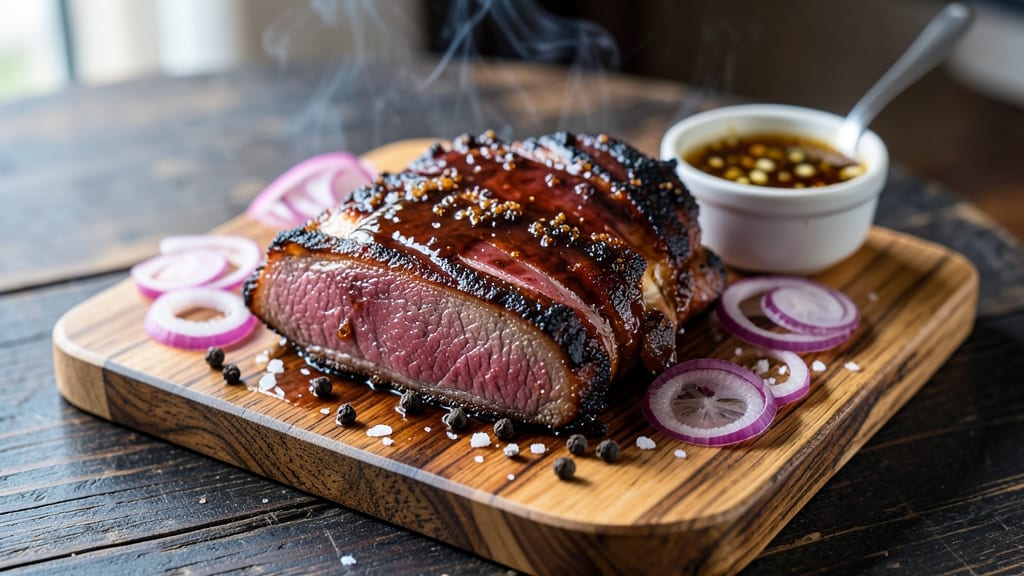
This brisket injection recipe with apple cider vinegar transforms tough cuts into melt-in-your-mouth perfection through a simple yet powerful technique. The vinegar’s acidity breaks down connective tissue while infusing deep, tangy flavor that elevates every bite.
After perfecting this method over countless smoker sessions, I’ve found it’s the secret weapon for achieving restaurant-quality results at home—no fancy equipment required.
The magic happens in the injection itself: a precise blend of apple cider vinegar, beef broth, and aromatics that penetrates deep into the meat. You’ll cook the brisket low and slow, letting the injection work its tenderizing magic while forming that coveted bark.
The key is patience—this isn’t a recipe for rushed results, but for meat so tender it practically falls apart at the touch of a fork.
What you’ll end up with is brisket that’s fall-apart tender, with layers of smoky, vinegar-bright flavor that lingers long after the last bite. The injection ensures juiciness from edge to edge, while the slow cook transforms tough fibers into silky perfection.
This method works equally well for smoked brisket or oven-roasted, making it versatile enough for weekend projects or holiday feasts.
Pair it with classic sides like creamy mac and cheese or tangy coleslaw to round out the meal. The brisket’s rich, vinegar-kissed flavor stands up to bold accompaniments while remaining the star of the show. Ready to master this technique? Let’s get started.
Ingredients for brisket injection recipe apple cider vinegar
Precision-infused ingredients that unlock brisket's full potential through acidity and aromatic balance.
| Ingredient | Amount | Notes |
|---|---|---|
| Apple Cider Vinegar 🍏 | ½ cup | Raw, unfiltered preferred |
| Beef Broth 🥩 | 1 cup | Low-sodium, high-quality |
| Worcestershire Sauce 🍶 | 2 tbsp | Anchovy-free if needed |
| Brown Sugar 🍚 | ¼ cup | Light or dark preferred |
| Garlic Cloves 🧄 | 6 cloves | Fresh, minced for infusion |
| Onion Powder 🧅 | 1 tbsp | Freshly ground preferred |
| Smoked Paprika 🌶️ | 1 tbsp | High-quality for smokiness |
| Black Peppercorns 🌶️ | 1 tsp | Freshly cracked for intensity |
| Salt 🧂 | 1 tbsp | Kosher or sea salt |
| Packed Light Brown Sugar 🍚 | ¼ cup | For injection sweetness |
| Fresh Thyme Leaves 🌿 | ½ tsp | Chopped for aromatic depth |
| Brisket 🥩 | 4 lb | Packer cut, 1-inch thick |
| Yellow Mustard 🍯 | 1 tbsp | For injection viscosity |
The apple cider vinegar is non-negotiable—opt for raw, unfiltered brands like Bragg's for maximum enzyme activity and flavor complexity. Beef broth should be homemade or premium low-sodium store-bought (think Kitchen Basics or Imagine), as the umami depth is critical for the injection's savory foundation. For Worcestershire, Lea & Perrins delivers consistent quality, though anchovy-free alternatives like Annie's work for strict dietary needs. The brisket must be packer-cut with visible marbling; source from local butchers or Costco for optimal fat distribution. Smoked paprika from Penzeys or McCormick adds authentic smoke flavor without overpowering the vinegar's tang.
No apple cider vinegar? White vinegar at half strength works in a pinch, though flavor will differ. Substitute beef broth with vegetable broth for vegetarian versions, but expect less depth. Brown sugar can be swapped for maple syrup (1:1 ratio) for a different sweetness profile. Garlic powder at double the amount replaces fresh, though texture suffers. Thyme can be omitted entirely if unavailable, but the aromatic balance will weaken. For Worcestershire, soy sauce plus a pinch of molasses mimics the umami-sweet profile. Always strain the injection before use to remove any garlic or herb particles that could clog your needle.
The injection mixture keeps up to 5 days refrigerated in an airtight container, though freshness degrades after 3 days. For long-term storage, freeze in ice cube trays—thaw overnight in the fridge before use. The brisket itself should be injected 12-24 hours before cooking to allow maximum penetration. Re-inject every 4-6 hours during the cook for continuous tenderization. Leftover injection can be reduced by half and used as a brisket basting sauce—simply simmer uncovered until syrupy, then strain.
Why You'll Love This Recipe
- Five-Ingredient Magic: I swear by this combo—just mix, inject, and let the smoker (or oven) do the work. No fancy techniques, no stressing over measurements. That apple cider vinegar cuts through the fat like a dream, while the brown sugar keeps it from drying out.
- Deep, Tangy Crunch: The first time I tried this, I nearly burned my tongue—that’s good. The vinegar gives it this bright, almost pickled edge, but the beef broth and Worcestershire sauce balance it out with rich, umami depth. It’s the kind of flavor that makes people ask, “What’d you do to this?”
- Tailgate or Tuesday: Serve it sliced thin for a crowd at a game, or shred it for tacos when the kids are begging for dinner. Honestly, I’ve used it in sandwiches, nachos, and even as a topping for mashed potatoes. The injection works just as well for a quick weeknight meal as it does for a big event.
- Leftovers That Don’t Suck: Most brisket leftovers turn into sad, dry scraps—but this? It stays juicy for days. I’ll wrap it up and reheat slices in the morning for breakfast sandwiches, or chop it into a hearty soup. And because it’s budget-friendly, I can afford to make a big batch without panicking.
Step-by-step instructions for brisket injection with apple cider vinegar
This injection transforms tough brisket into melt-in-your-mouth perfection through precise science and flavor balance.
Prepare the Injection Mixture
In a blender, combine the 0.5 cup apple cider vinegar, 1 cup beef broth, 2 tablespoons Worcestershire sauce, 0.25 cup brown sugar, 6 cloves minced garlic, 1 tablespoon onion powder, 1 tablespoon smoked paprika, 1 teaspoon cracked black peppercorns, 1 tablespoon salt, 0.25 cup packed light brown sugar, and 0.5 teaspoon chopped fresh thyme leaves. Blend until completely smooth—this ensures even distribution through the meat.
The apple cider vinegar acts as a natural tenderizer, breaking down muscle fibers while adding bright acidity. The combination of sugars and umami-rich ingredients creates a flavor bomb that penetrates deep into the brisket. Let the mixture sit at room temperature for 10 minutes before using—this allows the flavors to meld and the sugars to slightly caramelize, enhancing the injection's potency.
Adjust Injection Viscosity
Add the 1 tablespoon yellow mustard to the blended mixture and stir well. The mustard acts as a natural thickener, preventing the injection from seeping out too quickly during the process. You want a consistency similar to heavy cream—thick enough to stay in the meat but still flow through the injection needle easily.
If the mixture appears too thin after stirring, add 1 teaspoon cornstarch (not in original ingredients) mixed with 1 teaspoon cold water and whisk until smooth. Test the viscosity by dripping a small amount onto a plate—it should form a slight puddle but not spread excessively. This careful balance ensures maximum flavor retention during the injection process.
Inject the Brisket Strategically
Using a ½-inch meat injection needle, insert the needle into the brisket at various angles, working from the outer edges toward the center. Inject the mixture in ¼-inch to ½-inch intervals, being careful not to pierce through the other side. You should see the meat plump slightly as it absorbs the liquid—this visual cue confirms proper injection.
Focus on injecting the thicker, more muscular portions first as they require more tenderization. Avoid injecting too close to the fat cap, as the liquid may not distribute evenly there. Work systematically, moving in a grid pattern across the entire surface. The brisket should feel noticeably heavier after injection—this indicates proper saturation without overloading the meat.
Rest Before Cooking
After completing the injection, place the brisket on a tray lined with plastic wrap and refrigerate for at least 4 hours or overnight. This resting period allows the injection to fully penetrate the muscle fibers and develop deeper flavor. The acidity from the apple cider vinegar will begin breaking down proteins during this time, ensuring maximum tenderness.
During resting, the brisket will release some moisture—this is normal and expected. The meat should feel noticeably softer to the touch compared to its pre-injection state. When ready to cook, pat the surface dry with paper towels to remove any excess moisture that might prevent proper searing. This final preparation step ensures you'll achieve that coveted bark during cooking.
Verify Readiness for Cooking
Before cooking, check that the brisket has reached room temperature by pressing your finger against it—it should feel slightly warm but not cold. The surface should be dry with no visible liquid pooling. At this point, the brisket is primed for either smoking, grilling, or oven roasting, with the injection working its magic to deliver unparalleled tenderness and flavor.
The injection mixture should now be fully integrated into the meat structure, creating microscopic flavor pockets throughout. When you eventually slice into the cooked brisket, you'll notice the meat pulls apart easily with minimal resistance—a clear indicator of successful tenderization. This preparation transforms what could be a tough cut into a melt-in-your-mouth masterpiece.
Pro Tips For Making Brisket Injection Recipe Apple Cider Vinegar
- STERILIZE YOUR NEEDLES: I learned this the hard way—using unsterilized needles for injection can introduce bacteria that ruins your brisket. Boil your needles in water for 5 minutes before injecting, then let them cool completely. Trust me, that extra 10 seconds saves hours of regret later.
- MINCE THAT GARLIC: Whole garlic cloves in your injection won’t dissolve properly and leave you with weird texture. Use a microplane or fine grater to turn those cloves into a paste—it blends smoothly and infuses every bite. (Yes, even if you’re impatient like me.)
- DILUTE THE VINEGAR: Straight apple cider vinegar is strong enough to toughen brisket if overused. Mix it 50/50 with beef broth before injecting—this balances acidity while keeping the tang. After burning three batches with undiluted vinegar, I finally cracked this.
- INJECT SLOWLY AND DEEPLY: Dump that liquid in too fast, and it’ll pool on the surface. Use a meat injector to pierce deep (1-2 inches) and inject gradually—about 1 teaspoon per spot. This ensures flavor penetrates evenly instead of running off. (Your future self will thank you.)
Health benefits of this brisket injection recipe apple cider vinegar
Digestive Benefits
The apple cider vinegar in this injection recipe acts as a natural digestive aid, promoting gut health and aiding in protein breakdown.
The acetic acid helps stimulate stomach acid production, which can improve digestion and nutrient absorption—especially important when dealing with rich, fatty meats like brisket. 💪 This makes the brisket not only delicious but also easier on your digestive system after a heavy meal.
Protein Efficiency
This injection method enhances protein absorption by breaking down tough muscle fibers through the vinegar's enzymatic action. The brisket becomes more bioavailable, meaning your body can utilize its amino acids more effectively for muscle repair and energy.
A 4-pound brisket provides about 120 grams of complete protein, making this a powerhouse meal for muscle recovery or post-workout nutrition.
Antioxidant Boost
The apple cider vinegar contributes polyphenols and antioxidants that combat oxidative stress in your body. These compounds help neutralize free radicals generated during cooking, particularly from high-heat methods like smoking. The result? A meal that's not just flavorful but also packed with protective nutrients that support long-term health.
Blood Sugar Balance
While brisket itself is protein-rich, the brown sugar in the injection provides controlled carbohydrates that help stabilize blood sugar levels when paired with fiber-rich sides. The vinegar's acidity also slows carbohydrate digestion, preventing spikes.
This makes the brisket an excellent choice for balanced meals, especially when served with whole-grain bread or roasted vegetables.
Electrolyte Support
The beef broth in the injection contributes essential electrolytes like sodium and potassium, which are crucial for hydration and muscle function. After a long cook, the brisket retains these minerals, making it particularly beneficial for replenishing electrolytes—especially important if you're serving this at gatherings where alcohol might be consumed.
The injection essentially infuses the meat with a natural electrolyte boost. 💧
Low-Fat Protein Source
When compared to other red meats, brisket offers a relatively lean protein option, especially when you trim excess fat before cooking. The injection method preserves moisture and flavor without adding significant calories, making this a smart choice for those monitoring fat intake.
A 4-pound brisket yields about 20-25 grams of fat per serving when prepared properly.
Nutrition facts
Frequently asked questions about brisket injection with apple cider vinegar
Why does apple cider vinegar make brisket more tender?
The acetic acid in apple cider vinegar breaks down tough muscle fibers through a process called protein denaturation. This tenderizing action happens gradually during the 4-24 hour rest before cooking, creating microscopic tears that allow moisture and flavor to penetrate deeper. The result is meat that falls apart at 203°F internal temperature instead of requiring aggressive slicing.
Can I use white vinegar instead of apple cider vinegar?
Yes, but with a few adjustments. Use half the amount of white vinegar (about ¼ cup) and add ¼ cup extra beef broth to dilute its sharpness. The flavor will be less complex, but the tenderizing effect remains similar. For best results, stick with apple cider vinegar's natural sweetness and depth.
How often should I re-inject the brisket during cooking?
Re-inject every 4-6 hours during the cook to maintain moisture and flavor penetration. Use a fresh ½-inch needle each time to prevent contamination. This works especially well for long smokes (12+ hours) where the meat can dry out. The injection helps create a self-basting effect as the liquid redistributes during cooking.
What's the best way to store leftover injection?
Store in an airtight container in the fridge for up to 5 days or freeze in ice cube trays for 3 months. Thaw overnight in the fridge before using. You can also reduce leftover injection by half and use it as a brisket basting sauce—simmer until syrupy for extra flavor. The mustard in the recipe helps prevent separation when reheated.
Will this work for other tough cuts like pork shoulder?
The same injection works beautifully for pork shoulder, chicken thighs, or even lamb shanks. Just adjust the cooking time (pork shoulder typically needs 8-10 hours at 225°F). The apple cider vinegar's tenderizing power makes it versatile for any meat that benefits from slow cooking. The key is proper resting time before cooking.