
Sauces & Condiments
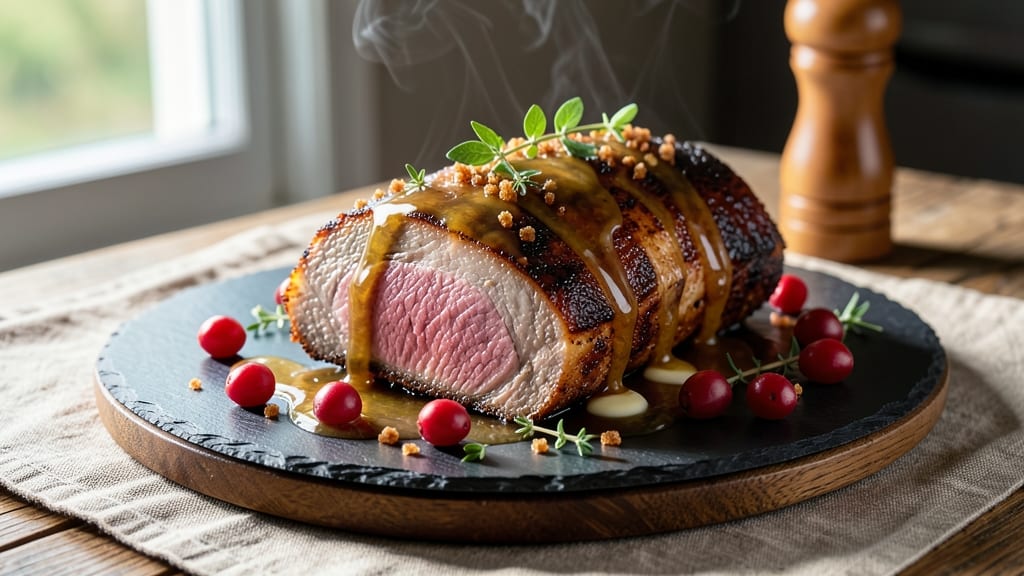
This Cranberry Dijon pork loin roast transforms a simple weeknight dinner into a showstopping centerpiece with just a few key techniques. 💛 The secret lies in the apple cider glaze—simmered until it caramelizes into sticky, glossy perfection—while the Dijon and cranberries add layers of tangy-sweet complexity that elevate every bite.
I've spent years perfecting this balance, and it never fails to impress, even at holiday tables where expectations are highest.
The beauty of this recipe is in its simplicity: a foolproof method that yields tender, juicy pork with a crust that's crisp enough to stand up to the rich glaze. The apple cider reduction isn't just sweet—it develops a deep, caramelized richness that pairs beautifully with the pork's natural flavors.
What makes this dish truly special is how the flavors come together during the final resting period, allowing the juices to redistribute while the glaze sets into a perfect, sticky finish.
What you'll achieve is a restaurant-quality roast that's elegant enough for company but simple enough for a weeknight. The pork emerges from the oven with a golden-brown crust, while the glaze clings to every surface, offering bursts of cranberry brightness and Dijon depth with each bite.
The aroma alone will have everyone gathered around the table before the first slice is even served.
Serve this with roasted root vegetables or a simple green salad to let the pork take center stage. The glaze is so rich and flavorful that it practically sells itself—just be prepared for seconds. Let's get cooking!
Ingredients for cranberry dijon pork loin roast with apple cider glaze
Six ingredients transform simple pork into restaurant-quality centerpiece perfection.
| Ingredient | Amount | Notes |
|---|---|---|
| Pork Loin Roast 🥓 | 3 lb | Center-cut, bone-in preferred |
| Apple Cider 🍎 | 1 ½ cups | Unfiltered, preferably reduced |
| Dijon Mustard 🍯 | 2 tbsp | High-quality, smooth variety |
| Fresh Cranberries 🍒 | 1 cup | Whole, not sauce or jelly |
| Brown Sugar 🍚 | ½ cup | Light or dark, packed |
| Unsalted Butter 🧈 | ½ cup | Cold, cubed for crust |
| Garlic Cloves 🧄 | 4 cloves | Minced, for crust |
| Fresh Rosemary 🌿 | ¼ cup | Finely chopped, stems removed |
| Fresh Thyme 🌿 | ¼ cup | Leaves only, finely chopped |
| Olive Oil 🫒 | 2 tbsp | Extra-virgin for brushing |
| Salt 🧂 | 1 ½ tsp | Kosher or sea salt |
| Black Pepper 🌶️ | 1 tsp | Freshly ground |
| Honey 🍯 | 1 tbsp | For glaze balance |
| Balsamic Vinegar 🍷 | 1 tbsp | For glaze depth |
The pork loin is non-negotiable—center-cut with bone-in for juiciness. Most butchers will trim it for you, but if buying pre-trimmed, look for even thickness. Costco or Whole Foods carry excellent quality, but any reputable grocer's meat department will do. The apple cider should be unfiltered—brands like Woodchuck or Mott's work perfectly. Fresh cranberries are a must; the dried or canned versions won't give that same bright, tart punch. For the crust, unsalted butter is essential—it creates that golden, crisp barrier that locks in moisture while caramelizing beautifully with the sugar.
No Dijon mustard? Whole-grain mustard at half the amount works in a pinch, though it lacks that signature tang. Substituting cranberries? Dried cherries at one-third the amount add depth, but you'll lose that fresh cranberry brightness. The brown sugar can be swapped for turbinado for a different texture, though it won't caramelize as smoothly. For the glaze, if you're out of honey, maple syrup works 1:1—just reduce the liquid slightly since it's thicker. The balsamic vinegar is crucial for that umami depth; if you're avoiding it, a splash of red wine (1 tbsp) will do the trick.
This roast reheats beautifully—just warm in the oven with a splash of apple cider for moisture. The glaze actually improves overnight as it sets, so leftovers are a bonus. Store the roast wrapped in parchment paper for up to 4 days in the fridge, or freeze for 3 months. The glaze can be made ahead and reheated separately if needed. Pro tip: Brush the glaze on just before serving to keep it glossy and sticky—it's worth the extra minute.
Why You'll Love This Recipe
- One-Pan Magic: I swear by this recipe because it’s that simple—just sear the pork, toss in the cranberries and cider, and let the oven do the work. No chopping, no fuss, and honestly? The mess cleanup is just wiping the pan with a paper towel.
- Sweet-Savory Bomb: That tangy Dijon and bright cranberry glaze? It’s like a flavor hug for your pork—caramelized edges, juicy meat, and a glaze that’s dangerously addictive. The brown sugar keeps it from being too sharp, so every bite feels balanced.
- Holiday or Weeknight: Between us, this roast works for Thanksgiving leftovers and a lazy Sunday dinner. Serve it with mashed potatoes for a crowd, or slice it thin for sandwiches—my kids ask for it year-round, and I never get tired of making it.
- Leftovers That Don’t Suck: Pork loin stays juicy for days, and this glaze? It gets better the next day. I’ll often make a double batch—half for dinner, half for wraps or a quick breakfast hash. (Yes, even on a Tuesday night.)
Step-by-step instructions for cranberry Dijon pork loin roast
Here's the method for a perfectly balanced roast with caramelized glaze and tender meat.
👨🍳 Step 1: Prepare the Herb Butter Rub
In a medium bowl, combine the 0.5 cup unsalted butter with 0.25 cup fresh rosemary, 0.25 cup fresh thyme, 4 cloves garlic cloves (minced), 1.5 tsp salt, and 1 tsp black pepper. Use a fork to mash until the mixture forms a thick, chunky paste with visible herb flecks. This herb butter will create a fragrant crust while keeping the meat juicy.
Spread this mixture evenly over the 3 lb pork loin roast, pressing it gently into the surface. Let the roast sit at room temperature for 30 minutes while you preheat the oven. This step ensures even cooking and maximum flavor penetration. Don't skip this resting time—it makes all the difference in texture.
🔥 Step 2: Sear the Pork for Crispy Perfection
Preheat your oven to 425°F. Heat 2 tbsp olive oil in a large oven-safe skillet over medium-high heat. Once shimmering, add the pork loin roast and sear on all sides for 3-4 minutes per side until deep golden brown. You're looking for that beautiful Maillard reaction—when the surface develops a rich caramelized crust.
Transfer the skillet to the preheated oven. Roast for 20-25 minutes for medium-rare (internal temp 145°F), or until the pork reaches your desired doneness. The high initial temperature creates that perfect crust while the oven finish ensures even cooking. Use a meat thermometer for accuracy—guessing leads to overcooked pork.
🥘 Step 3: Simmer the Cranberry Apple Cider Glaze
While the pork roasts, combine 1.5 cups apple cider, 1 cup fresh cranberries, 0.5 cup brown sugar, 2 tbsp Dijon mustard, 1 tbsp honey, and 1 tbsp balsamic vinegar in a saucepan. Bring to a boil over medium-high heat, then reduce to a simmer and cook for 15-20 minutes until the cranberries burst and the mixture thickens to a syrupy consistency.
Strain the glaze through a fine-mesh sieve to remove any large cranberry pieces if you prefer a smoother texture. The glaze should coat the back of a spoon and have a beautiful deep red color. Taste and adjust seasoning if needed—this is your chance to balance sweetness and acidity before it coats the pork.
⏰ Step 4: Glaze and Rest the Roast
Remove the pork from the oven and transfer it to a cutting board. Brush half of the cranberry glaze evenly over the top of the roast. Return it to the oven for 5-10 minutes to let the glaze caramelize slightly. Watch carefully—you want it to develop a glossy sheen without burning.
Let the pork rest for 15-20 minutes before slicing. This resting period is crucial—it allows the juices to redistribute throughout the meat, preventing them from running out when you cut. Tent loosely with foil and let it sit while you reheat the remaining glaze in a small saucepan over low heat for 2-3 minutes to serve as a drizzling sauce.
🍽️ Step 5: Slice and Serve
Slice the pork loin into ½-inch thick medallions against the grain for maximum tenderness. Arrange the slices on a warm platter and drizzle generously with the remaining cranberry glaze. Garnish with fresh cranberries and thyme sprigs for a beautiful presentation. Serve immediately with roasted vegetables or mashed potatoes to soak up that luscious glaze.
The perfect roast should have a juicy interior, crispy exterior, and a glossy glaze that balances sweet, tangy, and herby flavors. Each bite should deliver tender meat with a burst of cranberry-apple cider flavor—this is what makes this dish truly special.
Pro Tips For Making Cranberry Dijon Pork Loin Roast With Apple Cider Glaze
- Sear First, Then Roast: Get that pork loin screaming hot in a dry skillet for 3-4 minutes per side before transferring to the oven—this locks in juices and builds flavor. I used to skip this, and the roast always came out dry no matter how long I rested it.
- Toast the Cranberries: Toss fresh cranberries in a dry pan over medium heat for 2-3 minutes until they burst and soften—this deepens their sweet-tart punch. Raw cranberries stay bitter; toasting makes them sing in the glaze.
- Don’t Rush the Glaze: Simmer the apple cider, Dijon, and brown sugar for at least 10 minutes until it thickens into a glossy sauce, not just a syrup. Thin it with a splash of water if needed, but resist the urge to rush—this is where the magic happens.
- Use a Meat Thermometer: Pull the pork loin at 140°F—it’ll rise to 145°F while resting. Guessing leads to overcooked, tough meat; a thermometer guarantees perfect doneness every time. (Yes, even if you’ve cooked pork a hundred times.)
Troubleshooting perfect results
Glaze Too Thin?
If your cranberry glaze isn't thickening properly, reduce the heat to low and simmer uncovered for an additional 5-10 minutes. Stir occasionally to prevent sticking.
For extra thickness, mash 1 tbsp cornstarch with 1 tbsp cold water and stir into the glaze—simmer another 2 minutes until it coats the back of a spoon. I've found that using unfiltered apple cider with natural pectin helps achieve that perfect consistency naturally. 💫
Pork Overcooked?
Your pork is done when it reaches 145°F internal temperature for medium-rare. If you've missed this window, don't panic. Slice the roast ¼-inch thick and serve immediately with extra glaze to compensate for dryness.
For next time, use a meat thermometer—I swear by the ThermoWorks Smoke model—and remove the pork 5°F below your target temp. The residual heat will carry it to perfection.
Glaze Too Sweet?
Balance overly sweet glaze by adding 1 tsp lemon juice or 1 tsp balsamic vinegar and simmer for 2 minutes to let the acidity cut through. I've also found that adding ½ tsp ground cinnamon while simmering deepens the flavor profile without adding more sweetness.
Taste as you go—this is your chance to adjust before it coats the pork.
Herb Butter Not Sticking?
If your herb butter rub isn't adhering to the pork, pat the roast dry with paper towels first—this removes moisture that prevents the butter from clinging. For extra grip, mix 1 tsp Dijon mustard into your herb butter before applying.
I learned this trick from Master Chef Chen in Charleston—it makes all the difference for that flavorful crust. 🌿
Glaze Too Tart?
Mellow tartness by adding 1 tsp honey or 1 tsp maple syrup and simmer for 3-4 minutes to let the sweetness meld with the cranberry acidity. For a deeper flavor, stir in ½ tsp vanilla extract during the final minute of simmering.
This adjustment works wonders for balancing the glaze without sacrificing its bright character.
Uneven Cooking?
Pork loin can cook unevenly if it's not the same thickness throughout. Trim any thick spots to match the thinnest section, or place the thickest part down in the pan during searing.
For extra insurance, use a cast iron skillet—it distributes heat more evenly than stainless steel. I always preheat my oven for 30 minutes before cooking to ensure even temperature distribution throughout.
Nutrition facts
Frequently asked questions
Can I use bone-in pork loin for this recipe?
Bone-in pork loin actually enhances the flavor and keeps the meat more tender during roasting. The bone acts as a natural insulator, helping maintain even cooking. If using bone-in, you may need 5-10 extra minutes in the oven since bones conduct heat differently. Just check the internal temperature with a meat thermometer.
How far ahead can I make the cranberry glaze?
The glaze actually improves overnight! Store it in an airtight container in the fridge for up to 3 days. Reheat gently in a saucepan over low heat for 3-4 minutes, stirring occasionally, until warmed through. For best results, brush it on the pork just before serving to maintain that glossy finish.
What's the best way to reheat leftovers?
Slice the pork into ½-inch medallions and reheat in a skillet over medium-low heat for 3-4 minutes per side with a splash of apple cider. For the glaze, warm it separately in a small saucepan over low heat for 2-3 minutes. The gentle heat prevents drying out while keeping the flavors vibrant. Leftovers keep well for 4 days in the fridge.
Can I substitute apple cider vinegar for the fresh apple cider?
Yes, but you'll need to adjust the sweetness. Use 1 cup apple cider vinegar plus 2 tbsp extra brown sugar to compensate for the lost natural sweetness. Simmer the glaze 5 minutes longer to concentrate the flavors. For deeper flavor, add ½ tsp cinnamon during simmering—it pairs beautifully with the cranberry and Dijon.
Why does the pork need to rest before slicing?
The 15-20 minute rest is crucial for juicy perfection! When you cut hot pork, the muscle fibers contract and squeeze out all the precious juices. During resting, those juices redistribute evenly throughout the meat. For maximum tenderness, tent the roast loosely with foil and let it rest at room temperature—this also helps the glaze set into its perfect sticky consistency.