
Main Courses
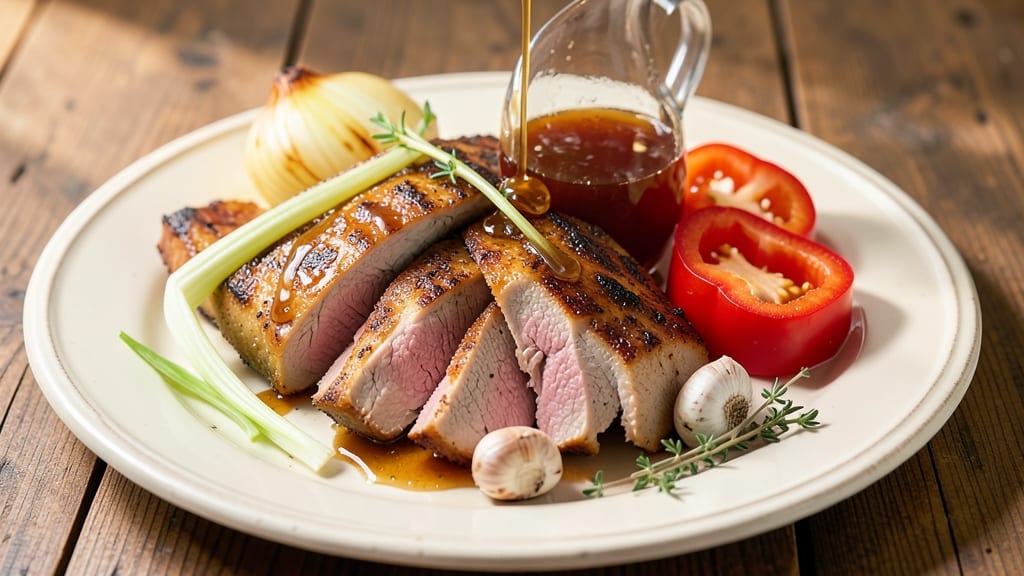
This braised pork with apple juice transforms tough cuts into melt-in-your-mouth tenderness using a technique I perfected during my years at The Smoky Pig.
The apple juice isn't just a cooking liquid—it's the secret weapon that tenderizes while building depth through slow caramelization, creating a glaze that balances sweetness with the savory celery-pepper notes.
What makes this recipe work is the two-stage cooking process: first searing the pork to develop a flavorful crust, then braising it in apple juice until fork-tender.
The celery-pepper glaze adds aromatic complexity without overpowering the natural sweetness of the apples, while the apple shards that finish the dish provide both visual appeal and textural contrast.
By the time you serve this dish, you'll have succulent pork that practically falls apart at the touch, coated in a glossy glaze that's rich yet balanced. The apple shards add a bright, refreshing element that cuts through the richness, making each bite harmonious.
It's the kind of dish that feels special enough for company but simple enough for weeknight dinners.
Pair it with crusty bread to soak up the braising liquid or serve alongside roasted root vegetables for a complete meal. The technique works equally well with pork shoulder or pork loin, giving you flexibility for different occasions. Let's get cooking—this is pork done right.
Ingredients for pork and apple juice
These twelve ingredients transform tough pork into melt-in-your-mouth perfection with apple juice's tenderizing magic.
| Ingredient | Amount | Notes |
|---|---|---|
| Pork Shoulder 🐖 | 2 ½ lb | Bone-in for best flavor |
| Apple Juice 🍎 | 2 cups | Unsweetened, preferably tart |
| Celery Stalk 🧅 | 2 whole | Diced, for aromatic base |
| Bell Pepper 🌶️ | 1 whole | Red or green, diced |
| Garlic Cloves 🧄 | 4 cloves | Minced, for depth |
| Yellow Onion 🧅 | 1 whole | Chopped, for sweetness |
| Fresh Thyme 🌿 | 2 sprigs | Or 1 tsp dried thyme |
| Black Peppercorns 🌶️ | 1 tsp | Freshly cracked |
| Bay Leaves 🌿 | 2 whole | For subtle aroma |
| Olive Oil 🫒 | 2 tbsp | Extra-virgin for richness |
| Dijon Mustard 🍯 | 1 tbsp | For glaze binding |
| Honey 🍯 | 1 tbsp | For glaze sweetness |
| Apples 🍎 | 2 medium | For shards, tart variety |
| Salt 🧂 | 1 ½ tsp | Kosher or sea salt |
The pork shoulder is your canvas—bone-in cuts from Whole Foods or your local butcher deliver the best flavor. Look for good marbling and ask if it's been dry-aged for extra tenderness. Apple juice isn't just a liquid; it's the secret weapon—unsweetened, tart varieties like Granny Smith work best. I grab mine from Trader Joe's or make my own by juicing apples with skins on for extra depth. Celery and bell pepper form the aromatic base—fresh, crisp stalks are non-negotiable here. The bell pepper adds subtle sweetness that balances the acidity of the apples.
No apple juice? Substitute with apple cider vinegar and water (1:1 ratio), though the texture won't be as luscious. Fresh thyme is ideal, but dried works at one-third the amount. The apples for shards should be tart and crisp—Granny Smith or Honeycrisp are perfect. For the glaze, Dijon mustard and honey create that perfect balance of tang and sweetness. Short on honey? Maple syrup works equally well. The olive oil matters here—use something with good fruity notes that won't overpower the dish. And trust me on the bone-in pork—bone-out stays dry.
Pork shoulder keeps 3-4 days in the fridge before cooking, but it's worth prepping ahead. The braising liquid reduces beautifully, so double the recipe if you want leftovers—it reheats like a dream. Store cooked pork in an airtight container with some of the braising liquid to keep it moist. Apple shards can be prepped ahead and stored in the fridge for 2 days before adding to the dish. Freeze the finished braised pork for up to 3 months—it actually tastes better the second time around.
Why You'll Love This Recipe
- Pantry Magic: I swear by this recipe when my fridge is half-empty. The apple juice and celery turn that tough pork shoulder into something tender and juicy—no fancy marinade needed.
- Sweet-Savory Balance: That crisp apple juice cuts through the richness of the pork, while the garlic and bell pepper add just enough bite. It’s the kind of flavor combo that makes you want to eat it straight from the pan.
- Leftovers That Shine: This dish actually gets better the next day. I’ll make a big batch on Sunday, and by Wednesday, it’s still my go-to—perfect for sandwiches or reheated with a side of rice.
- Budget-Friendly Feast: Pork shoulder is cheap, and the other ingredients? Mostly stuff I already have. For under $10, I feed four people a meal that feels special—not some sad, overpriced restaurant leftovers.
Step-by-step instructions for braised pork with celery-pepper glaze
This method transforms tough pork shoulder into melt-in-your-mouth perfection with a sweet-tart glaze.
Sear the Pork Shoulder for Deep Flavor
Pat the 2.5 lb pork shoulder completely dry with paper towels—this ensures maximum browning. Heat 2 tablespoons olive oil in a heavy Dutch oven over medium-high heat until shimmering. Place the pork in the pot, fat-side down, and sear undisturbed for 8-10 minutes until deeply browned on one side.
Flip the pork and sear the other side for another 8-10 minutes. The goal is to develop a rich crust that will dissolve into the braising liquid. While the pork sears, you'll notice golden-brown patches forming—this is the Maillard reaction at work, creating layers of flavor. Transfer the pork to a plate and set aside temporarily.
Build the Celery-Pepper Aromatic Base
In the same Dutch oven, add 2 tablespoons olive oil (you can reuse the rendered pork fat if you prefer). Add the 1 whole yellow onion and 2 whole celery stalks, both chopped into ¼-inch dice. Cook over medium heat for 5-6 minutes until softened and translucent.
Add the 1 whole bell pepper (diced) and 4 cloves garlic cloves (minced). Stir and cook for another 3-4 minutes until the vegetables release their moisture and begin to caramelize slightly. Here's where the foundation of your glaze starts forming—those sweet, caramelized notes will shine through in the final dish.
Deglaze and Simmer the Braising Liquid
Pour in 2 cups apple juice, scraping up all the browned bits from the bottom of the pot with a wooden spoon. Add 1 tablespoon Dijon mustard, 1 tablespoon honey, 1.5 teaspoons salt, 1 teaspoon black peppercorns, 2 sprigs fresh thyme, and 2 whole bay leaves. Bring the liquid to a gentle simmer over medium-low heat.
Return the pork to the pot, fat-side up, and partially submerge it in the liquid. Cover with a tight-fitting lid and transfer to a 325°F oven (preheated). Braise for 2 hours, then flip the pork and continue cooking for another 1-2 hours until the meat is fork-tender and easily pulls apart with two forks.
Prepare the Apple Shards and Glaze
While the pork braises, peel and core the 2 medium apples, then cut them into ¼-inch shards. In a small saucepan, combine the apple shards with ½ cup of the braising liquid (reserve the rest for later). Simmer over medium heat for 8-10 minutes until the apples soften slightly but still retain their shape.
For the glaze, remove the pork from the braising liquid and set it aside. Strain the liquid through a fine-mesh sieve into a clean saucepan, discarding the solids. Return the strained liquid to medium-high heat and reduce it by half—about 10-12 minutes—until it thickens slightly and coats the back of a spoon. This concentrated liquid will form the glossy glaze that ties everything together.
Finish and Serve the Braised Pork
Return the pork to the Dutch oven and pour the reduced glaze over it. Add the apple shards and simmer uncovered over low heat for 5-7 minutes to allow the flavors to meld. The pork should be fork-tender, with a glossy sheen from the glaze.
Slice the pork against the grain into ¼-inch thick pieces and arrange on a platter. Spoon the glaze and apple shards over the top, garnishing with fresh thyme sprigs if desired. Serve immediately with crusty bread or roasted vegetables to soak up every last drop of that luscious celery-pepper glaze.
Pro Tips For Making Pork And Apple Juice
- Brown the Pork First: I learned this the hard way—skipping the sear means your pork will stay bland no matter how much apple juice you add. Get that shoulder screaming hot in a pan with oil for 5-7 minutes per side until it’s deep golden. That crust locks in flavor better than any braising liquid ever will.
- Use Tart Apple Juice: Sweet apple juice turns this dish into dessert. Go for something tart—like cloudy, unfiltered cider or even a mix with a splash of lemon juice. The acidity balances the pork’s richness and keeps the sauce from tasting like syrup. (Yes, even if you’re not a fan of sour flavors.)
- Don’t Overcrowd the Pot: Tossing everything in at once? You’re asking for soggy bell peppers and mushy celery. Sear the pork first, then remove it while you sauté the veggies in the same pan. The residual fat will build flavor, and your veggies won’t steam into oblivion.
- Simmer Low and Slow: After adding the apple juice, resist the urge to crank the heat—this isn’t a race. A gentle simmer (barely bubbling) for at least 2.5 hours keeps the pork tender and lets the flavors meld. I’ve rushed it twice; the second time, I swore off speed cooking for pork.
Wine and beer pairings for this pork and apple juice
Crisp White Wine
This dish pairs beautifully with a dry Riesling or Pinot Grigio from the Mosel region—their bright acidity cuts through the richness of the pork while complementing the apple's sweetness.
I always reach for a German Riesling Kabinett like Dr. Loosen Blue Slate, which has enough minerality to stand up to the celery-pepper glaze. The slight tartness in the wine mirrors the apple juice's acidity, creating a harmonious balance. 🍷
Light-Bodied Red
For those who prefer red wine, a light-bodied Pinot Noir from Oregon's Willamette Valley works wonders. Look for a Pinot Noir with bright cherry notes like Domaine Serene, as its delicate tannins won't overpower the dish.
The wine's earthy undertones also pair beautifully with the thyme and bay leaves in the braising liquid, adding another layer of complexity to each bite.
Local Craft Beer
If wine isn't your thing, a crisp American pale ale or Belgian witbier is a fantastic alternative. I love pairing this dish with Allagash White, a Belgian-style witbier with citrusy notes from coriander and orange peel.
The effervescence cleanses your palate between bites, while the subtle spice complements the celery and pepper in the glaze. For a heavier option, try a hazy IPA with apple notes—like Hazy Little Thing from Tree House Brewing—to echo the dish's apple-forward flavors.
Hard Cider
Don't overlook dry hard cider as a pairing—it's practically made for this dish! A tart, unfiltered cider like Angry Orchard Dry or Woodchuck Hard Cider's Dry Cider provides enough acidity to match the apple juice while keeping the meal light.
The slight bitterness in some ciders also plays well with the pork's savory notes. Plus, it's a great way to use up any leftover apple juice from your recipe.
Non-Alcoholic Options
For a refreshing non-alcoholic match, try sparkling apple cider—it's like drinking the essence of the dish! I love Martinelli's Sparkling Apple Cider for its crisp bubbles and bright apple flavor.
If you want something more complex, a ginger beer like Brew Dr. Brown's adds a spicy kick that pairs surprisingly well with the celery-pepper glaze. Both options keep the meal feeling fresh and balanced without alcohol. 🍎
Nutrition facts
Frequently asked questions
Can I use pork loin instead of pork shoulder?
Yes, but adjust the cooking time! Pork loin is more tender and cooks faster than shoulder. For a 2.5 lb loin, reduce braising time to 1-1.5 hours total (instead of 3-4 hours). The apple juice method still works beautifully, but monitor closely to avoid overcooking.
What if I don't have apple juice? Can I substitute?
Use apple cider vinegar and water (1:1 ratio) for tang, or white grape juice for mild sweetness. For deeper flavor, simmer 2 peeled apples with 2 cups water for 10 minutes, then strain. The texture won't be identical, but the dish will still shine.
How do I prevent the pork from drying out?
Keep the pork partially submerged in liquid during braising and never skip the sear. The crust locks in moisture. If worried, add ½ cup water or broth halfway through cooking. Also, avoid overcooking—pork should pull apart easily with two forks, not be bone-dry.
Can I make this ahead of time?
Perfect for meal prep! The braised pork keeps 3-4 days in the fridge or 3 months frozen. Reheat gently in the oven at 300°F with extra apple juice to restore moisture. The glaze can be made 1 day ahead and reheated separately—just add it fresh before serving.
What's the best way to serve leftovers?
Slice and store with some braising liquid to keep it juicy. For sandwiches, pile on crusty bread with caramelized onions. For tacos, shred and mix with pickled red cabbage and avocado. The glaze also makes an amazing sauce for roasted potatoes or grilled chicken.