
Main Courses
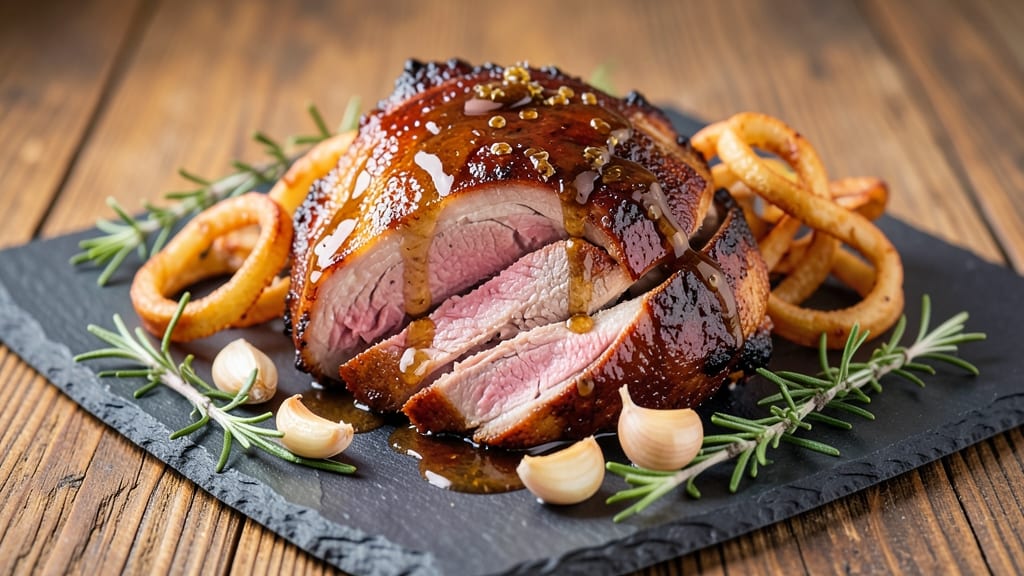
A pork roast recipe with apple cider vinegar transforms tough cuts into melt-in-your-mouth perfection with minimal effort. The acidity tenderizes the meat while building deep, savory flavors—no fancy techniques required. I first discovered this method while cooking for my family during Thanksgiving, and it became an instant tradition.
The secret lies in the vinegar, which breaks down connective tissue and infuses the meat with bright, tangy notes. A simple marinade of apple cider vinegar, garlic, and herbs does the heavy lifting, while slow roasting ensures even cooking.
This method works equally well for pork shoulder or loin, making it versatile for any occasion.
By the time it comes out of the oven, your roast will be fork-tender with a caramelized crust, surrounded by a rich, aromatic pan sauce. The vinegar’s acidity cuts through the richness, creating a balanced flavor profile that’s both comforting and elegant.
It’s the kind of dish that makes weeknight dinners feel special.
Serve with roasted potatoes and steamed greens for a complete meal, or pair it with crusty bread to soak up every last bit of that flavorful sauce. The best part? This recipe delivers restaurant-quality tenderness without the fuss. Let’s get cooking!
Ingredients for pork roast recipe apple cider vinegar
Six ingredients transform tough pork into restaurant-quality tenderness with minimal effort.
| Ingredient | Amount | Notes |
|---|---|---|
| Pork Shoulder Roast 🥩 | 4 lb | Bone-in preferred for flavor |
| Apple Cider Vinegar 🍎 | ½ cup | Raw, unfiltered preferred |
| Garlic Cloves 🧄 | 8 cloves | Smashed for deeper infusion |
| Fresh Rosemary 🌿 | ¼ cup | Chopped, stems removed |
| Fresh Thyme 🌿 | ¼ cup | Leaves only, stems removed |
| Yellow Onion 🧅 | 1 whole | Quartered, skin on |
| Carrots 🥕 | 4 whole | Whole, scrubbed clean |
| Beef Broth 💧 | 1 ½ cups | Low-sodium preferred |
| Olive Oil 🫒 | 2 tbsp | Extra-virgin for richness |
| Salt 🧂 | 1 ½ tbsp | Kosher or sea salt |
| Black Pepper 🌶️ | 1 tbsp | Freshly ground preferred |
| Brown Sugar 🍯 | 2 tbsp | Light or dark variety |
| Fresh Parsley 🌿 | ⅛ cup | Chopped, for garnish |
The pork shoulder makes all the difference here—bone-in roasts develop deeper flavor, but boneless works in a pinch. Most grocery stores carry pre-cut roasts, but if you're buying a whole shoulder, look for one with good marbling. Costco or Whole Foods often have excellent cuts, but the butcher section at your local supermarket will too. The key is weight—stick to 4 lbs for perfect tenderness. If you're using a different cut like loin, reduce cooking time by 20-30 minutes. For the vinegar, raw and unfiltered (like Bragg) adds complexity, but white vinegar in a bind works fine—just reduce to 1/4 cup.
No fresh rosemary? Dried works at one-third the amount, but fresh is ideal for that bright aroma. The garlic can be roasted ahead for extra sweetness—toss whole cloves with olive oil, bake at 400°F for 10 minutes, then smash. For the beef broth, low-sodium is critical to avoid overwhelming the dish. Annie's or Swanson are reliable brands, but homemade is better. The carrots and onion don't need peeling—just scrub and quarter. Baby carrots work if that's what you've got, but whole ones caramelize better. Swap the brown sugar for honey if you prefer, but it won't caramelize the same way.
This roast reheats beautifully—double-wrap in foil and bake at 325°F for 10 minutes to revive. Keeps for 4-5 days in the fridge, 3 months frozen. For make-ahead convenience, braise the pork fully, cool completely, then refrigerate. The flavors deepen overnight, making it even more tender. Store leftovers in airtight containers with some of the pan sauce to keep everything moist. The sauce thickens as it cools, so thin with a splash of water or broth when reheating.
Why You'll Love This Recipe
- Few Ingredients Needed: I swear by this—just a roast, some vinegar, garlic, and herbs. No fancy marinades or 10-step processes here. Honestly, I keep the same pantry staples on hand just for this.
- Crispy-Tender Magic: That apple cider vinegar does something wild—it keeps the pork juicy inside while giving it a golden, crackling crust. The rosemary and thyme? They smell like a fall afternoon in your kitchen.
- Weeknight & Holiday Hero: I’ve served this for lazy Mondays and Thanksgiving leftovers. It’s the same recipe, but somehow feels special when I slow-roast it longer for company. (Yes, even on a Tuesday night.)
- Leftovers That Don’t Suck: The vinegar keeps it moist for days, so I make a double batch. Slice it thin for sandwiches or shred it into tacos—no sad, dry meat here. My wallet thanks me too.
Step-by-step instructions for vinegar-braised pork roast
This method transforms tough pork into melt-in-your-mouth perfection using the magic of apple cider vinegar.
Sear the Pork Shoulder for Deep Flavor
Heat a large Dutch oven over medium-high heat and add the 2 tablespoons olive oil. Once shimmering, place the 4 lb pork shoulder roast fat-side down and sear for 8-10 minutes until the fat renders and the skin turns deep golden brown. Flip the roast and sear the other side for another 5-6 minutes.
This initial sear creates a flavorful crust while breaking down surface fibers. Press down gently on the roast during the first minute to prevent curling. If the fat becomes too hot and starts smoking excessively, reduce heat slightly to maintain control. The goal is even browning without burning.
Build the Vinegar-Braised Base
Remove the seared pork and set it aside. In the same Dutch oven, add the quartered yellow onion and whole carrots, cooking for 5 minutes until they begin to soften. Add the 8 smashed garlic cloves, 0.25 cup chopped fresh rosemary, and 0.25 cup fresh thyme leaves, stirring for 1 minute until fragrant.
Pour in the 0.5 cup apple cider vinegar and scrape up any browned bits from the bottom of the pan. This deglazing captures all the caramelized flavors. Let the vinegar simmer for 2 minutes until it reduces by about half and the aromatics are fully infused. The vinegar's acidity will tenderize the pork while adding bright flavor.
Braise Until Fork-Tender
Return the pork to the Dutch oven, fat-side up. Add the 1.5 cups beef broth, 1.5 tablespoons salt, 1 tablespoon black pepper, and 2 tablespoons brown sugar. Bring to a simmer, then reduce heat to low, cover, and transfer to a 300°F oven.
Braise for 3-3.5 hours until the pork is fork-tender and the internal temperature reaches 200-205°F. The meat should pull apart easily with minimal resistance. Check occasionally and add ¼ cup water if the liquid reduces too much. The vinegar and slow cooking will break down connective tissue, transforming tough pork into succulent, pull-apart perfection.
Rest and Serve with Fresh Herbs
Remove the pork from the oven and let it rest in the braising liquid for 15 minutes before serving. This resting period allows the juices to redistribute throughout the meat. Using two forks, shred the pork directly in the Dutch oven, mixing it with the flavorful braising liquid.
Garnish with the 0.125 cup chopped fresh parsley just before serving. The bright green color contrasts beautifully with the rich, caramelized pork. Serve with the braising liquid spooned over the top—this sauce is packed with flavor from the vinegar, herbs, and rendered pork fat. The result is a restaurant-quality dish with minimal effort.
Pro Tips For Making Pork Roast Recipe Apple Cider Vinegar
- SEAR THE ROAST FIRST: I learned this the hard way—skipping the sear means your pork will taste bland no matter how much vinegar you use. Get that Dutch oven or heavy pot screaming hot and let the meat develop a deep brown crust before adding anything else. That’s where the flavor lives.
- BRINE THE PORK OVERNIGHT: This isn’t optional. Toss your pork shoulder in a mix of cold water, 1/4 cup apple cider vinegar (yes, some upfront), 2 tablespoons salt, and 1 tablespoon sugar for 12–24 hours. It stays juicy and absorbs the tangy depth of the vinegar before cooking—your future self will notice the difference when slicing.
- DON’T SKIP THE GARLIC SMASH: Peel those cloves, then crush them flat with the side of your knife or a garlic press before tossing them in. Whole cloves won’t infuse—you’ll just get bitter garlic bits. Smashing them releases the oils and lets the flavor meld with the pork and vinegar during cooking.
- BASTE WITH THE VINEGAR MIX: After the initial sear, pull the roast out and make a quick basting liquid: reduce 1/2 cup apple cider vinegar with 2 minced garlic cloves, a splash of broth, and a pinch of thyme. Brush it on every 30 minutes—it caramelizes into a glossy, tangy crust that cuts through the richness of the pork. (Yes, even if you’re impatient like me.)
Perfect pairings for this dish
Side Dish Harmony
This rich, vinegar-braised pork pairs beautifully with roasted garlic mashed potatoes—their creamy texture balances the tangy sauce. I like to roast whole garlic cloves in the oven with olive oil until caramelized, then mix into the mashed potatoes with Portland creamery butter and a splash of whole milk.
For a lighter option, sautéed green beans with slivered almonds add freshness and crunch. 🥔
Bread Pairings
Crusty sourdough bread from your local bakery soaks up the flavorful braising liquid like a dream. I recommend Portland's Daily Rye or New Seasons Market's artisan loaves—their dense texture holds up perfectly.
For a heartier option, serve with garlic-focaccia or crusty baguette slices toasted with herb butter. The vinegar's acidity makes these breads taste even more delicious.
Wine Pairings
A medium-bodied Pinot Noir from Oregon's Willamette Valley complements the dish beautifully—its red fruit notes mirror the vinegar's brightness while balancing the pork's richness. For a white option, try a Chardonnay with subtle oak notes, like La Crema's Monterey.
Avoid heavy reds like Cabernet, as they can overpower the delicate vinegar flavors. A crisp Sauvignon Blanc from New Zealand also works wonderfully. 🍷
Beer Complements
An amber ale with caramel and toasty notes pairs perfectly, like Deschutes Brewery's Mirror Pond. For a lighter option, a Belgian witbier with citrus and peppery notes cuts through the richness.
Avoid heavy stouts or IPAs—they'll compete with the pork's savory depth. I often serve this dish with a local Portland craft beer from Breakside Brewery for that perfect Pacific Northwest touch.
Sauce Enhancements
For an extra touch, finish the braising liquid with 1 teaspoon Dijon mustard and a pinch of smoked paprika just before serving. This adds depth without overpowering. Another trick? Stir in 1 tablespoon apple cider vinegar at the end to brighten flavors.
The sauce should coat the back of a spoon—if it's too thick, thin with a splash of beef broth or water. 💫
Nutrition facts
Frequently asked questions
Why does apple cider vinegar make pork roast so tender?
The acidity in apple cider vinegar breaks down collagen and connective tissue in the meat during cooking, making it fork-tender. It also tenderizes the fibers while adding a bright, tangy flavor that balances the richness. This slow-braising method with vinegar is particularly effective for tougher cuts like pork shoulder.
Can I use white vinegar instead of apple cider vinegar?
Yes, but the flavor will be less complex. Use half the amount (¼ cup instead of ½ cup) since white vinegar is more acidic. For best results, stick with apple cider vinegar—its mild sweetness and depth of flavor enhance the pork beautifully. If you're in a pinch, balsamic vinegar also works well.
How do I know when the pork is fully cooked?
Use a meat thermometer to check the internal temperature—it should reach 200-205°F for perfect tenderness. The meat will pull apart easily with minimal resistance. If you don't have a thermometer, cut into the thickest part: juices should run clear, and the meat should feel very soft.
Can I make this recipe in a slow cooker?
Sear the pork first, then transfer everything to a slow cooker and cook on low for 8 hours or high for 5-6 hours. The vinegar and herbs will infuse beautifully. Just add ¼ cup water if the liquid reduces too much during cooking. The slow cooker method is even more hands-off!
What if my roast is too dry after cooking?
This usually happens if the oven temperature was too high or the roast wasn't rested properly. To fix it, shred the pork and mix it back into the braising liquid. The vinegar and broth will rehydrate the meat. For next time, keep the oven at 300°F and let the roast rest for 15 minutes before slicing.