
Sauces & Condiments
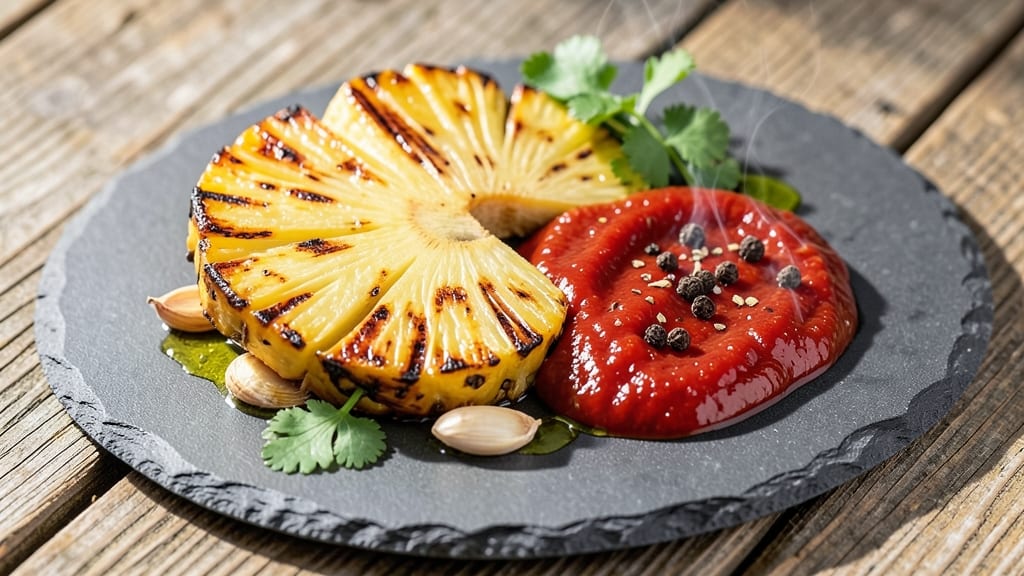
This roasted pineapple and habanero sauce transforms grilled meats into a flavor explosion—sweet, smoky, and packed with a slow-building heat. 🔥 The secret lies in caramelizing pineapple until it’s sticky and golden, then blending it with habanero peppers for a balance of tropical sweetness and fiery depth.
I developed this sauce after craving a glaze that could stand up to bold flavors like pork or shrimp without overpowering them.
The process is simple but precise: roast pineapple rings until tender and caramelized, then simmer them with vinegar, sweetener, and habanero for a glossy, well-rounded sauce.
The habanero adds complexity, while the vinegar brightens the sweetness, creating a glaze that’s versatile enough for grilled chicken, fish, or even drizzled over ice cream for a daring dessert twist. Every batch delivers a perfect harmony of heat and sweetness.
What makes this sauce truly special is its ability to elevate any dish it touches—whether you’re basting ribs, glazing fish, or drizzling it over seared scallops. The texture is thick yet pourable, clinging beautifully to proteins while adding a glossy finish.
It also stores well in the fridge for up to two weeks, so you can make a big batch and use it all season long.
For those who love heat but want control, adjust the habanero quantity to suit your spice tolerance—just remember, the sauce’s magic lies in that perfect balance. Let’s get cooking!
Ingredients for roasted pineapple and habanero sauce
Sweet, smoky, and fiery—this sauce needs just 10 simple ingredients to deliver bold flavor.
| Ingredient | Amount | Notes |
|---|---|---|
| Fresh Pineapple 🍍 | 2 cups | Cored, cut into rings |
| Habanero Peppers 🌶️ | 2 whole | Seeds removed for less heat |
| White Vinegar 💧 | ½ cup | For brightness and tang |
| Brown Sugar 🍚 | ½ cup | Packed, for caramelization |
| Extra-Virgin Olive Oil 🫒 | ¼ cup | High-quality, fruity |
| Garlic Cloves 🧄 | 3 cloves | Minced for depth |
| Salt 🧂 | 1 tsp | Kosher or sea salt |
| Ground Black Pepper 🌶️ | ½ tsp | Freshly ground |
| Fresh Lime Juice 🍋 | 2 tbsp | Brightens the sauce |
| Fresh Cilantro 🌿 | ¼ cup | Chopped, for garnish |
The pineapple is your star here. Grab a fresh, ripe one—Costco or Trader Joe's usually have the best quality. Look for pineapples that are heavy for their size and have a golden hue, not green. The habanero peppers can be tricky; Mexican markets often carry them fresh, but if you can't find them, substitute with 1 jalapeño + 1/2 tsp cayenne for milder heat. Don’t skip the vinegar—it’s what balances the sweetness and cuts through the richness. I always use Organicville or Heinz for consistent quality.
No habanero? Jalapeño + cayenne works, but taste as you go—you can always add more. Brown sugar substitutes? Coconut sugar or maple syrup both work, but brown sugar gives that classic caramelized depth. Fresh lime juice is ideal, but bottled works in a pinch (just add a pinch of salt to mimic freshness). The cilantro is optional but adds that fresh finish—skip it if you hate cilantro or use parsley instead. For extra smokiness, add a dash of smoked paprika to the finished sauce.
This sauce keeps beautifully. Store it in a glass jar in the fridge for up to 2 weeks—the flavors actually deepen over time. Freeze in ice cube trays for single-use portions, perfect for quick glazes. I like to make a big batch and use it on everything from grilled shrimp to roasted chicken. The sauce thickens as it cools, so give it a quick stir before using. Trust me, the first time you drizzle this over seared scallops, you’ll be hooked.
Why You'll Love This Recipe
- Foolproof Roast: I swear by this method—just toss pineapple chunks on a sheet pan with olive oil and roast until caramelized. No peeling, no fuss, and the sweetness deepens without extra effort.
- Sweet Heat Magic: That habanero-vinegar-browned sugar combo? It’s the perfect balance—fruity, smoky, and just spicy enough to linger. Honestly, I’ve never met a sauce that hits this flavor trifecta so cleanly.
- Double-Duty Sauce: Use it on grilled chicken, drizzle it over rice, or let it glaze pork chops—it’s my go-to for weeknight dinners and weekend BBQs. Between us, it’s also the star of my lazy Sunday brunch plates.
- Pantry Stash Winner: A single batch stretches for days: toss leftovers in the fridge for tacos, freeze half for later, or even gift it to neighbors. Brown sugar and vinegar keep costs low, but the payoff feels like a splurge.
Step-by-step instructions for roasted pineapple and habanero sauce
Let's create a bold, balanced glaze that'll make grilled meats unforgettable.
🔥 Step 1: Roast the Pineapple and Habaneros for Deep Flavor
Preheat your oven to 425°F and line a baking sheet with aluminum foil for easy cleanup. Arrange the 2 cups of cored pineapple rings and 2 whole habanero peppers (seeds removed) in a single layer on the sheet. Drizzle with 1 tablespoon of the extra-virgin olive oil to prevent sticking.
Roast for 15-20 minutes until the pineapple is tender when pierced with a fork and the habaneros are slightly blistered. You'll smell that sweet, smoky aroma developing—that's your signal they're ready. I like to flip them halfway through for even caramelization. Watch closely after 15 minutes as pineapple burns quickly once it starts browning.
🍳 Step 2: Blend the Roasted Ingredients with Vinegar and Sugar
Transfer the roasted pineapple and habaneros to a blender or food processor. Add the 0.5 cup white vinegar, 0.5 cup packed brown sugar, 3 minced garlic cloves, 1 teaspoon salt, and 0.5 teaspoon ground black pepper. Leave about 1 tablespoon of the olive oil in the pan—we'll use it later.
Blend until completely smooth, scraping down the sides as needed. You want a silky texture with no chunks remaining. The sauce should be vibrant red-orange with a thick, syrupy consistency. If it's too thick after blending, add 1-2 tablespoons of water to reach your desired pouring consistency. Taste and adjust the sweetness—you can add more brown sugar if needed, or more vinegar for tang.
🥘 Step 3: Simmer and Reduce for Perfect Balance
Pour the blended mixture into a saucepan and add the remaining 0.25 cup extra-virgin olive oil from the baking sheet. Bring to a gentle simmer over medium heat. Let it reduce for 10-12 minutes, stirring occasionally, until it thickens enough to coat the back of a spoon.
Here's where the magic happens: the acidity from the vinegar and lime will mellow slightly while the sugar caramelizes. You're looking for a sauce that's glossy and coats meat beautifully without being gluey. If it gets too thick, add a splash of water. For extra depth, stir in the 2 tablespoons fresh lime juice now—this brightens the flavors and balances the heat.
🍽️ Step 4: Finish with Fresh Cilantro and Strain (Optional)
Remove from heat and stir in the 0.25 cup chopped fresh cilantro. Let it steep for 5 minutes so the flavors meld. For a completely smooth sauce, strain through a fine-mesh sieve, pressing gently on the solids. If you prefer texture, skip straining—the charred bits add amazing depth.
Taste and adjust seasoning one final time. The sauce should sing with sweet, smoky, spicy, and tangy notes. Transfer to a clean jar and store in the refrigerator for up to 2 weeks. This sauce gets even better as it sits—allowing the flavors to develop and mellow slightly. Serve warm or cold over grilled chicken, pork, or even as a dipping sauce for spring rolls!
Pro Tips For Making Roasted Pineapple And Habanero Sauce
- CHAR THE PINEAPPLE FIRST: Cut the pineapple into 1-inch chunks before roasting—thicker pieces stay undercooked inside while the outside burns. I learned this the hard way when my sauce tasted like raw pineapple and charred edges. Use a high-heat broiler or 475°F oven for 10-12 minutes, flipping halfway, until edges are blackened but centers soften easily with a fork.
- PEEL HABANEROS LIKE A PRO: Wear gloves—always—and slice the habanero lengthwise, then scrape out seeds with a spoon, not your fingers. The seeds pack the most heat, and I’ve cried over my own mistakes. If you’re using the whole pepper, finely mince it after removing seeds to balance heat with sweetness. No mincer? A sharp knife and a cutting board work fine—just go slow.
- ACIDIFY THE SAUCE GRADUALLY: Add vinegar in stages—start with half the recipe, taste, then adjust. Too much upfront makes the pineapple taste sour and dulls the habanero’s bright kick. I used to dump it all in and ended up with a drinkable glaze instead of a bold sauce. Let the mixture simmer uncovered for 5 minutes after adding vinegar to let the acid mellow.
- SWEAT THE PEPPERS FIRST: Sauté minced habanero in olive oil for 2 minutes before adding pineapple—this softens the peppers and deepens their flavor without scorching. I skipped this once and got a sauce that tasted like raw chili and sugar. Keep heat medium-low; high heat turns habanero bitter faster than you’d think.
Regional styles of these flavors
Caribbean Fusion Style
In the Caribbean, this sauce gets a tropical twist by adding 1 tablespoon of rum to the simmering stage and finishing with ½ cup of mango purée instead of extra pineapple.
The rum caramelizes beautifully with the brown sugar, while the mango adds a fruity depth that complements the habanero’s heat. Serve it over grilled jerk chicken or fish tacos for an island-inspired flavor explosion. 🌴
Mexican Street Food Adaptation
For a bold Mexican street food vibe, swap the white vinegar for ¼ cup lime juice and add 1 teaspoon of ground cumin and ½ teaspoon of smoked paprika during the simmering phase.
Top with crumbled queso fresco and chopped cilantro before serving. This version pairs perfectly with grilled carne asada or shrimp ceviche. The smoky, spicy profile feels right at home in a taqueria.
Thai-Inspired Glaze
Transform this sauce into a Thai-inspired glaze by adding 1 tablespoon of fish sauce, 1 tablespoon of soy sauce, and 1 teaspoon of grated ginger to the blended mixture. Simmer for an extra 5 minutes to let the umami flavors meld.
Finish with 1 teaspoon of palm sugar (or more brown sugar) and a splash of rice vinegar for brightness. Drizzle over grilled lemongrass pork or shrimp skewers for an authentic Thai-Mexican fusion. 🌶️
Southern BBQ Twist
Give this sauce a Southern BBQ makeover by replacing the white vinegar with ½ cup apple cider vinegar and adding 1 teaspoon of liquid smoke during the simmer. Reduce the brown sugar to ¼ cup and add 1 tablespoon of molasses for depth.
This version works amazingly as a glaze for pulled pork or smoked ribs, delivering a sweet, smoky, and slightly spicy profile that’s pure comfort food. 🔥
Dessert Version
For a daring dessert twist, reduce the habanero to 1 pepper (seeds included for extra heat) and add ½ cup of honey instead of brown sugar. Simmer for 15 minutes to caramelize the flavors, then finish with 1 teaspoon of vanilla extract**.
Drizzle over vanilla ice cream or pound cake for a sweet-spicy-sweet surprise. The heat balances the richness perfectly—trust me, it’s a crowd-pleaser! 🍦
Nutrition facts
Frequently asked questions
Can I adjust the heat level in this sauce?
Start with 1 habanero pepper for mild heat, or use 2 peppers with seeds removed for medium spice. For extra kick, add ½ teaspoon cayenne powder during simmering. Always taste as you go—you can tone down heat with a splash of pineapple juice if needed.
What's the best way to use this sauce?
This versatile glaze works perfectly on grilled meats like pork chops or shrimp, but also shines as a marinade or dipping sauce. For desserts, drizzle over vanilla ice cream or pound cake (reduce habanero to 1 pepper with seeds). The sauce's thick consistency makes it ideal for basting during grilling.
How do I prevent the sauce from being too sweet?
Balance the sweetness by adding 1 extra tablespoon of white vinegar during simmering, or increase the habanero to 3 peppers (seeds removed). For a more complex flavor, stir in 1 teaspoon of lime zest at the end. The roasting process naturally caramelizes the pineapple, so don't over-reduce the sauce—this concentrates the sweetness.
Can I make this sauce without a blender?
Yes! If you don't have a blender, roast the pineapple and habaneros as directed, then finely chop them with a knife. Simmer with all other ingredients for 15-20 minutes until smooth. For texture, leave some small chunks—they'll soften during cooking. The sauce will be slightly thicker but still delicious.
Why did my sauce turn out too thin?
This usually happens if you didn't reduce the sauce long enough or added too much liquid during blending. To fix it, simmer uncovered for 5-10 extra minutes until thickened. For future batches, reduce heat to medium-low and stir frequently. If it's still too thin, mix 1 teaspoon cornstarch with 1 tablespoon water and stir in at the end.