
Sauces & Condiments
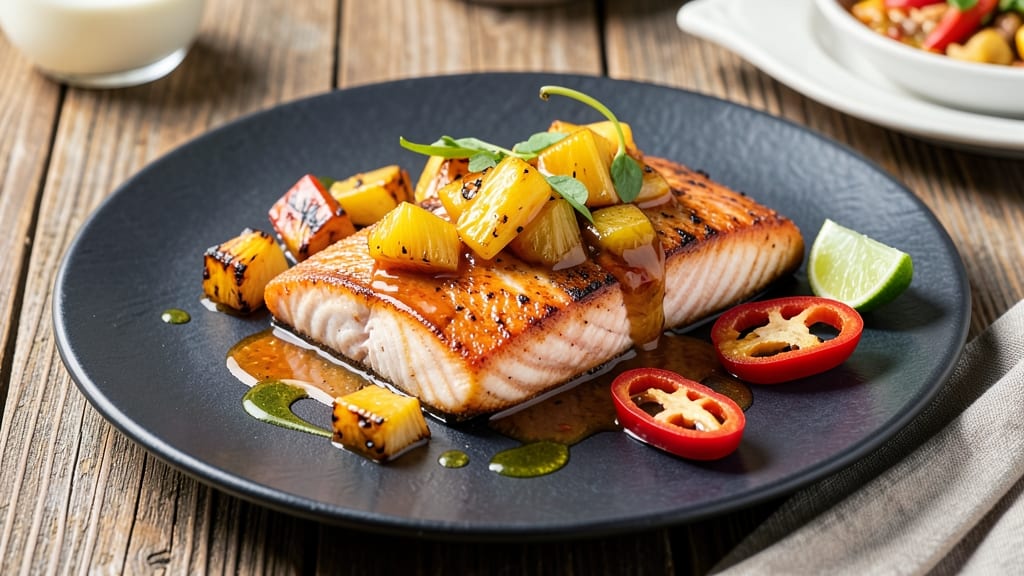
This roasted pineapple habanero sauce salmon recipe transforms ordinary weeknight dinners into a bold, tropical feast with just a few key ingredients.
The caramelized edges on the salmon create a perfect canvas for the sweet-spicy glaze, where roasted pineapple and habanero blend into a complex, heat-balanced sauce that lingers on the palate.
What makes this dish special is how the sauce's natural sweetness tames the habanero's intensity, creating a harmony that's both exciting and approachable.
The recipe begins with roasting pineapple chunks until their natural sugars caramelize, intensifying their sweetness and mellowing the habanero's sharpness when blended together. This process also concentrates the flavors, so you get maximum impact with minimal ingredients.
The salmon cooks quickly in a hot pan or oven, developing a crispy crust that contrasts beautifully with the sauce's velvety texture.
By the time you serve this dish, you'll have perfectly cooked salmon with a glossy, caramelized glaze that's sweet, tangy, and just spicy enough to wake up your taste buds.
The sauce's vibrant color and aromatic profile make it as visually impressive as it is delicious, turning simple weeknight meals into something restaurant-worthy.
Pair this dish with steamed jasmine rice or a fresh arugula salad to balance the richness, and you've got a complete meal that's equal parts elegant and effortless.
The best part? The sauce keeps well in the fridge, so you can make extra for future meals or use it as a marinade for other proteins.
Ingredients for roasted pineapple habanero sauce salmon
Sweet caramelized pineapple, fiery habanero, and buttery salmon come together in this bold tropical masterpiece.
| Ingredient | Amount | Notes |
|---|---|---|
| Fresh Atlantic Salmon Fillets 🐟 | 1 ½ lb | Skin-on, center-cut preferred |
| Fresh Pineapple Chunks 🍍 | 2 cups | Cored, peeled, 1-inch pieces |
| Fresh Habanero Peppers 🌶️ | 2 whole | Seeds removed for less heat |
| Extra-Virgin Olive Oil 🫒 | ½ cup | For roasting and cooking |
| Lime Juice 🍋 | ¼ cup | Freshly squeezed, strained |
| Honey 🍯 | 2 tbsp | Wildflower preferred |
| Garlic Cloves 🧄 | 4 cloves | Minced for sauce |
| Fresh Ginger 🌿 | 1 tbsp | Grated, finely |
| Soy Sauce 🍶 | 1 tbsp | Light or dark preferred |
| Diamond Crystal Kosher Salt 🧂 | 1 ½ tsp | For seasoning |
| Fresh Cilantro 🌿 | ¼ cup | Chopped, for garnish |
| Jasmine Rice 🌾 | 1 cup | Uncooked, for serving |
| Sesame Seeds 🌰 | 1 tbsp | Toasted, for garnish |
The pineapple is your flavor anchor—look for ripe but firm fruit at the store, with vibrant yellow color and no bruising. Trader Joe's and Whole Foods carry the best quality chunks, but any fresh pineapple works if you prep it yourself. Habaneros are the star here, but wear gloves when handling them—the oils can cause skin irritation. If you can't find fresh habaneros, substitute with 1 red jalapeño plus 1/2 tsp cayenne, but you'll lose some of that fruity depth. The salmon should be center-cut fillets—they stay moist and develop that perfect caramelized crust. Wild-caught is ideal, but any fresh salmon works if it's handled properly.
No fresh pineapple? Canned pineapple in juice (drained and patted dry) works in a pinch, but it lacks that caramelized sweetness. Short on habanero? Serrano peppers are a good substitute, but reduce to 1 whole pepper and add 1/2 tsp smoked paprika for depth. The honey in this sauce is non-negotiable—avoid imitation honey or those cheap grocery store brands. Wildflower or clover honey adds subtle floral notes that balance the heat. For the salmon, if you can't find center-cut fillets, ask your fishmonger to trim the skin evenly—this ensures consistent cooking. The lime juice should be freshly squeezed; bottled lime juice lacks brightness and can make the sauce taste flat.
This sauce keeps beautifully in the fridge for 5-6 days, so make extra—it's perfect over rice bowls, grilled chicken, or even scrambled eggs. Store it in a glass jar with a tight seal, and the flavors will deepen over time. The salmon cooks in minutes, so plan to serve it immediately—it's best enjoyed fresh off the pan. If you're prepping ahead, roast the pineapple and make the sauce a day in advance, then reheat gently before serving. The rice can be cooked in advance too—just reheat with a splash of water and a pinch of salt to restore its fluffiness.
Why You'll Love This Recipe
- One-Pan Magic: I swear by this trick—just toss everything on a sheet pan, roast, and walk away. The salmon flakes apart while the pineapple caramelizes, and the habanero adds heat without extra pots to scrub.
- Sweet Heat Balance: That first bite? Pineapple’s natural sweetness tames the habanero’s kick, but don’t worry—it’s not cloying. The lime juice brightens it all, leaving you with a sauce that’s tangy, smoky, and just spicy enough to linger.
- Weeknight to Weekend: Make it for Tuesday takeout night or impress guests on Saturday—same effort, different vibes. The leftovers reheat beautifully, and the sauce freezes like a dream for future lazy dinners.
- Budget-Friendly Luxury: Salmon feels fancy, but this recipe stretches it. The pineapple and habanero bulk it up, so you’re not sacrificing flavor for cost. Plus, one habanero goes a long way—no need to buy a whole bunch.
Step-by-step instructions for roasted pineapple habanero glazed salmon
Here's how to create that perfect sweet-spicy balance with caramelized edges every time.
Roast the Pineapple and Habanero for Deep Flavor
Preheat your oven to 400°F. Line a baking sheet with parchment paper and arrange the 2 cups fresh pineapple chunks and 2 whole fresh habanero peppers (halved lengthwise, seeds removed) in a single layer. Drizzle with 2 tablespoons honey and 2 tablespoons lime juice, then toss gently to coat.
Roast for 20-25 minutes until the pineapple is tender with caramelized edges and the habanero peppers are blistered and slightly charred. This roasting step develops complex, caramelized flavors that form the base of your sauce. I like to stir the pineapple halfway through cooking to ensure even browning.
Create the Sweet-Spicy Glaze
While the pineapple roasts, heat 2 tablespoons extra-virgin olive oil in a small saucepan over medium heat. Add the 4 cloves minced garlic and 1 tablespoon finely grated fresh ginger, cooking for 1-2 minutes until fragrant but not browned. Add the roasted pineapple and habanero peppers to the pan, along with the remaining 0.25 cup lime juice.
Simmer for 5-7 minutes until the mixture reduces slightly and the flavors meld together. Use an immersion blender to purée directly in the pan until smooth, or transfer to a blender and blend until completely smooth. The sauce should be vibrant orange with a glossy sheen. If it's too thick, add 1-2 tablespoons water to reach your desired consistency.
Prepare the Salmon with Perfect Seasoning
Pat the 1.5 lb fresh atlantic salmon fillets dry with paper towels—this is crucial for crispy skin. Place them skin-side down on a separate baking sheet lined with parchment paper. In a small bowl, mix 1 tablespoon soy sauce, 1.5 teaspoons diamond crystal kosher salt, and 1 tablespoon toasted sesame seeds. Rub this mixture evenly over the salmon fillets.
Let the salmon sit at room temperature for 10-15 minutes while you prepare the glaze. This helps ensure even cooking. The skin should be completely dry and the salmon should be at room temperature before hitting the heat.
Glaze and Roast the Salmon to Perfection
Preheat your oven to 425°F for this final step. Spread the pineapple-habanero glaze evenly over the salmon fillets, making sure to coat all surfaces. Place the salmon in the oven and roast for 12-15 minutes until the edges are caramelized and the internal temperature reaches 145°F.
You'll know it's done when the salmon flakes easily with a fork and the skin is crispy and golden. The glaze should bubble and caramelize beautifully, creating those coveted edges. For extra crispiness, broil for 1-2 minutes at the end, watching closely to prevent over-browning.
Assemble and Garnish for Presentation
Transfer the salmon to serving plates and garnish with 0.25 cup chopped fresh cilantro and an additional sprinkle of toasted sesame seeds. Serve immediately with the 1 cup cooked jasmine rice on the side to soak up that delicious glaze.
Each bite should deliver perfectly balanced sweet, spicy, and umami flavors with a crispy skin that contrasts beautifully against the tender salmon. The glaze should be sticky and vibrant, clinging to every piece of fish. Don't forget to taste the glaze before serving—adjust the heat level with more honey or lime if needed.
Pro Tips For Making Roasted Pineapple Habanero Sauce Salmon
- Roast Pineapple First: I learned this the hard way—salmon and pineapple don’t play well together in the same pan if you’re trying to caramelize both. Roast the pineapple chunks at 400°F (200°C) for 15-20 minutes before touching the salmon. The concentrated sweetness and smoky edges will make the sauce sing without overpowering the fish.
- Seed That Habanero: Habaneros are tiny but pack a wallop. Even one unseeded pepper can turn your sauce into a spicy regret. Wear gloves, slice the peppers lengthwise, and scrape out the seeds and membranes with a spoon—don’t just eyeball it. The heat should be sharp, not brutal.
- Don’t Overmix the Sauce: After roasting, blend the pineapple, habanero, lime, and olive oil until just smooth—no pulsing into oblivion. A slightly textured sauce clings better to the salmon and balances the heat with body. I used to puree it into a paste, and it lost that bright, fresh edge.
- Salt the Salmon Last: Season the salmon with salt and pepper right before it hits the pan or grill. The acid in the pineapple-habanero sauce will pull moisture out of the fish if it’s sitting salted too long—even 10 minutes makes a difference. Trust me, the flavor’s still there when it cooks.
Storing and reheating this roasted pineapple habanero sauce salmon
Sauce Storage Secrets
The roasted pineapple habanero sauce keeps beautifully in an airtight glass jar for 5-6 days in the fridge. I always make extra because it's perfect for rice bowls, grilled chicken, or even scrambled eggs. The flavors actually deepen over time, becoming more complex and balanced. 🌶️
For longer storage, freeze the sauce in 1-cup portions using ice cube trays. Once frozen solid, transfer to a ziplock freezer bag and flatten to save space.
It stays good for 3 months—just thaw overnight in the fridge before using. The texture remains smooth, though it may thicken slightly after freezing.
Reheating Sauce Perfectly
Warm the sauce gently on the stovetop over low heat for 3-5 minutes until just hot. Avoid boiling, as this can break down the delicate pineapple fibers and make the sauce watery.
Stir occasionally and taste as you go—you can adjust the heat with a pinch of honey or lime juice if needed.
For microwave reheating, use 50% power for 1-2 minutes, stirring halfway. This prevents hot spots while preserving the sauce's vibrant color. If the sauce thickens too much, add 1 teaspoon water or pineapple juice to restore its glossy consistency.
Salmon Make-Ahead Tips
Cook the salmon just before serving for the best texture, but you can prep the glaze and seasoning a day ahead. Store the seasoned salmon fillets in an airtight container in the fridge for up to 12 hours.
Let them sit at room temperature for 15 minutes before glazing and cooking to ensure even doneness.
If you must reheat leftover salmon, use the oven at 300°F for 8-10 minutes on a baking sheet. The skin will crisp up again, and the glaze will warm through without drying out.
For microwave reheating, cover with a damp paper towel and heat in 30-second intervals until reaching 145°F internal temperature.
Rice Prep Ahead
Cook the jasmine rice in advance and store it in an airtight container for up to 3 days. Reheat by spreading it on a baking sheet and warming in the oven at 350°F for 5 minutes.
Add a splash of water and a pinch of salt to restore moisture. For microwave reheating, cover with a damp towel and heat on medium power for 2-3 minutes, stirring halfway.
To keep rice from drying out, store it with a damp paper towel in the container. This method works for any grain—quinoa or brown rice too—and ensures fluffy texture every time. The rice acts as a perfect vessel for soaking up the leftover glaze, making it a complete meal. ✨
Nutrition facts
Frequently asked questions
Can I adjust the heat level in this recipe?
For milder heat, reduce the habanero to 1 pepper or remove seeds completely. To increase spice, add ½ teaspoon cayenne pepper or keep the seeds in. The honey and lime juice naturally balance the heat, so adjust these amounts too if needed. Always taste the sauce before serving.
What's the best way to store leftover salmon?
Store cooked salmon in an airtight container for up to 3 days in the fridge. For longer storage, freeze for 2 months. Reheat gently in the oven at 300°F for 8-10 minutes to restore crispiness. Never microwave without a damp paper towel to prevent drying.
Can I use canned pineapple instead of fresh?
Yes, but fresh pineapple gives the best caramelization. If using canned, drain well and pat dry, then roast at 425°F for 15 minutes to concentrate flavors. Add 1 extra tablespoon honey to compensate for the lack of natural sweetness. The texture will be slightly softer but still delicious.
How do I prevent the salmon skin from sticking?
Pat the salmon completely dry with paper towels before seasoning. Use a nonstick skillet or parchment-lined baking sheet, and heat the pan until smoking hot before adding the fish. For extra insurance, rub the skin with ½ teaspoon vegetable oil before adding the glaze.
What are good side dishes for this salmon?
Jasmine rice or coconut rice soak up the glaze beautifully. For freshness, try a mango avocado salad with lime dressing. Roasted sweet potatoes or steamed bok choy also complement the tropical-spicy flavors. The key is balancing textures—creamy, crunchy, or starchy sides work best.