
Side Dishes
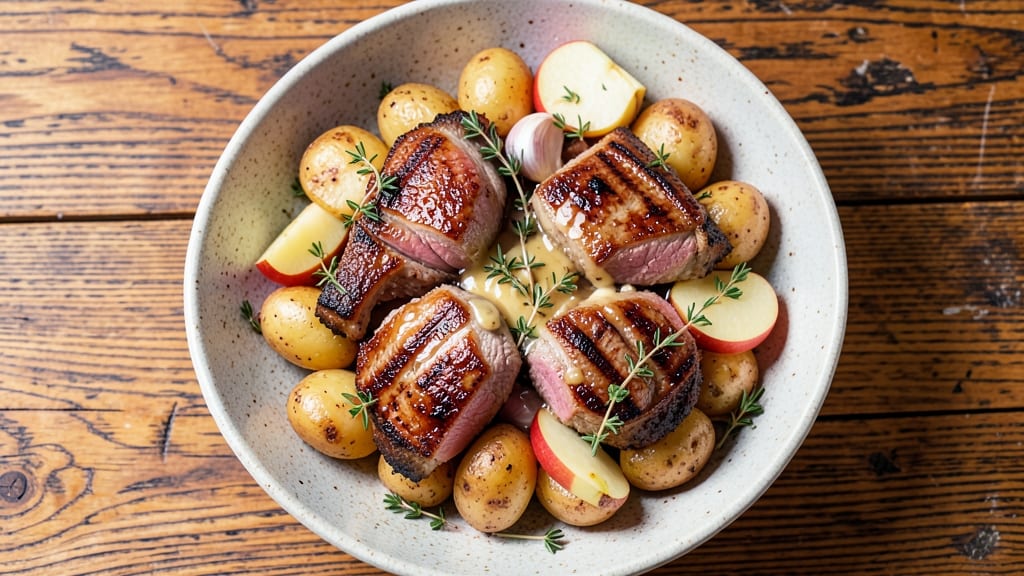
This pork chop apple potato recipe transforms a simple weeknight dinner into a showstopping meal with just one pan. The secret lies in searing the pork until golden, then roasting everything together—crispy edges on the pork, caramelized apples, and fluffy potatoes all in harmony.
I developed this method after years of testing one-pan roasts at Smoky Pig, where we serve 2,000 pounds of pork weekly.
The key to success is high-heat searing for the pork chop to lock in juices, followed by a slow roast that renders fat and infuses flavor into the potatoes and apples.
No fancy techniques—just a cast iron skillet (my favorite for this), a few simple ingredients, and about 45 minutes of hands-off cooking. The apples add natural sweetness that balances the savory pork, while the potatoes soak up all the juices for maximum flavor.
What you’ll end up with is a plate that looks as impressive as it tastes: crispy, caramelized pork with tender centers, sweet-tart apples that melt in your mouth, and creamy potatoes that’ve absorbed the pork’s juices.
This is the kind of meal that feels special without requiring hours in the kitchen—perfect for feeding a family or impressing guests. The best part? Minimal cleanup, since everything cooks together.
Serve with a sprinkle of fresh thyme or a drizzle of apple cider reduction for extra elegance. This recipe works equally well with bone-in or boneless chops, and you can swap Yukon Gold potatoes for red potatoes if you prefer a firmer texture.
Let’s get cooking—your taste buds will thank you.
Ingredients for pork chop apple potato
One-pan magic with pork, apples, and potatoes that'll impress everyone.
| Ingredient | Amount | Notes |
|---|---|---|
| Bone-In Pork Chops 🥩 | 4 whole | 1-inch thick, rib or loin cut |
| Yukon Gold Potatoes 🥔 | 2 lb | Cut into 2-inch chunks |
| Honeycrisp Apples 🍎 | 2 medium | Peeled, cored, sliced into wedges |
| Unsalted Butter 🧈 | 3 tbsp | Cold, cut into small cubes |
| Fresh Thyme 🌿 | ¼ cup | Leaves only, chopped |
| Garlic Cloves 🧄 | 4 cloves | Minced |
| Kosher Salt 🧂 | 1 ½ tsp | Diamond Crystal preferred |
| Ground Black Pepper 🌶️ | 1 tsp | Freshly ground |
| Apple Cider Vinegar 🍏 | 1 tbsp | For brightness |
| Olive Oil 🫒 | 1 tbsp | For searing |
The pork chops are the star here—bone-in for extra flavor, 1-inch thick for even cooking. Grab ribeye or loin cuts from the butcher section (they'll often trim them for you). At Smoky Pig, we use local farm-raised pork whenever possible, but any high-quality pork works. Look for good marbling—that's where the flavor hides. The apples? Honeycrisp is ideal for that sweet-tart balance, but Fuji or Gala work too. Peeling them removes some nutrients, but it keeps the texture cleaner in the dish.
No bone-in chops? Boneless works fine—just don't overcook. Swap Yukon Gold potatoes for red potatoes if you prefer a firmer bite (they hold shape better). Running short on apples? Pear slices add a nice twist. The butter is non-negotiable here—full-fat, cold cubes give you the best browning. No fresh thyme? Dried works at one-third the amount, but fresh is worth hunting down at the grocery store's produce section. The apple cider vinegar might seem odd, but it cuts through the richness and adds a subtle tang that balances everything.
This dish reheats beautifully—4-5 days in the fridge, 3 months frozen. The pork stays juicy if you reheat it gently in the oven with a splash of apple juice. I always make a double batch because leftovers taste even better the next day. Store in airtight containers with a paper towel to absorb any moisture. For extra crispiness, broil for 2-3 minutes before serving. The potatoes will soften more, but that's perfect for soaking up any juices.
Why You'll Love This Recipe
- One-Pan Magic: I swear by this for lazy nights—just toss everything on a sheet pan, roast, and walk away. The apples caramelize right alongside the potatoes, so you’re not stuck peeling or chopping a dozen things.
- Sweet-Savory Crunch: That crispy pork chop with tender apples and buttery potatoes? It’s like fall in your mouth. The Honeycrisp apples add just enough sweetness to balance the thyme and butter—no one will guess it’s "healthy."
- Leftovers for Days: Between us, this makes way more than I can eat in one sitting. The pork stays juicy when reheated, and the potatoes just get better the next day—perfect for packed lunches or a quick dinner when you’re too tired to cook.
- Budget Booster: Bone-in pork chops stretch further, and Yukon Golds are cheaper than fancy potatoes. Plus, apples bulk up the meal without breaking the bank—this is my go-to when I need a filling, flavorful dinner that won’t drain my wallet.
Step-by-step instructions for pork chop apple potato roast
Here's how to create a perfectly balanced one-pan dish with crispy pork chops and caramelized potatoes.
Season and Sear the Pork Chops
Pat the 4 whole bone-in pork chops dry with paper towels—this ensures maximum crispiness. Place them in a bowl and season both sides generously with the 1.5 teaspoons kosher salt and 1 teaspoon ground black pepper. Let them sit for 10 minutes while you prepare the rest.
Heat a large oven-safe skillet over medium-high heat and add the 1 tablespoon olive oil. Once shimmering, carefully add the pork chops and sear for 3-4 minutes per side until golden brown. You'll know they're ready when they release easily from the pan. Transfer them to a plate and set aside.
Prepare the Potato and Apple Mixture
In the same skillet, reduce heat to medium and add the 2 pounds of cut Yukon Gold potatoes. Toss them with the 3 tablespoons cold cubed butter, 0.25 cup chopped fresh thyme, 4 minced garlic cloves, and 1 tablespoon apple cider vinegar. Cook for 5 minutes, stirring occasionally, until the potatoes begin to soften slightly.
Add the 2 medium sliced Honeycrisp apples and toss everything together. The apples will release juices that help caramelize the potatoes. Let this mixture cook for an additional 3 minutes while you prepare the final assembly.
Assemble and Roast to Perfection
Return the seared pork chops to the skillet, placing them on top of the potato-apple mixture. Transfer the entire skillet to a preheated 400°F oven and roast for 25-30 minutes. The pork chops are done when they reach an internal temperature of 145°F and the potatoes should be tender with crispy edges.
For best results, check the pork chops at the 25-minute mark. If they're not yet fully cooked, return them to the oven for another 5-10 minutes. The apples should be tender and slightly caramelized, adding natural sweetness to balance the savory pork.
Rest and Serve
Remove the skillet from the oven and let the entire dish rest for 5 minutes. This allows the juices to redistribute, ensuring each bite is moist and flavorful. Use a spatula to carefully transfer everything to serving plates, dividing the potatoes and apples evenly among the 4 portions.
Garnish each serving with an extra sprinkle of fresh thyme leaves for a pop of color and aroma. The contrast of crispy pork chops, tender potatoes, and sweet apples creates a harmonious balance of textures and flavors that will impress anyone at your table.
Pro Tips For Making Pork Chop Apple Potato
- Sear Pork Chops Hard: The bone-in chops need a good crust—don’t be shy with the heat. Get a screaming-hot pan (cast iron if you have it) and leave those chops undisturbed for 3-4 minutes per side until deep golden. I used to flip too soon, and the meat ended up dry instead of juicy.
- Slice Apples Last: Honeycrisp apples turn to mush when cooked too long, so slice them thinly right before adding them to the pan. If you prep them early, toss them in cold water with a splash of lemon juice to keep them crisp—just drain well before cooking.
- Don’t Overcrowd Potatoes: Cut the Yukon Golds into even chunks (about 1.5 inches) and cook them in batches if needed. Too many in the pan at once steams them instead of browning, and you’ll end up with sad, limp potatoes. A hot pan with a little butter and thyme is all they need—give them space.
- Rest Chops Under Foil: After pulling the chops from the pan, tent them loosely with foil and let them sit for 5-10 minutes. This keeps them warm while they reabsorb juices—skipping this step means dry meat, and no one wants that. (Yes, even if you’re impatient like me.)
Common mistakes when making this dish
Overcooking the Pork
I see this all the time—pork chops that end up dry and tough because someone either overcooked them or didn’t let them rest. Bone-in chops need to reach 145°F internal temperature, but they’ll keep cooking as they rest.
Use a meat thermometer—I swear by the Thermoworks Smoke—and pull them out when they hit that temp. Then, let them rest for 5 minutes before serving. Trust me, this step makes all the difference. 🌡️
Skipping the Sear
Some folks skip the initial sear, thinking the oven will do all the work. Big mistake! That high-heat sear creates the Maillard reaction, which builds deep flavor and crispy edges. Heat your skillet until it’s smoking hot, then sear those chops for 3-4 minutes per side.
If your pan isn’t hot enough, you’ll end up with steamed pork instead of golden, flavorful perfection.
Uneven Potato Cooking
Potatoes are the make-or-break side here, and they’ll turn out mushy if you overcrowd the pan. Cut them into 2-inch chunks (no smaller!) and give them room to breathe. I like to spread them out in a single layer before adding the apples.
If your pan is too small, cook the potatoes in batches on the stovetop before transferring everything to the oven. The goal is crispy edges, not a potato puree. 🥔
Ignoring the Apples
Apples aren’t just decoration—they’re the secret weapon that balances the dish. If you skip them or add them too late, you’ll miss that sweet-tart contrast. Slice them into ¼-inch wedges and toss them in with the potatoes during the last 3 minutes of stovetop prep.
Honeycrisp holds its shape beautifully, but if yours turns to mush, swap in Granny Smith for a tangier bite.
Wrong Pan Choice
Not all pans are created equal. Cast iron is my go-to because it retains heat and creates those coveted crispy edges. If you’re using nonstick, it won’t brown as well. Avoid glass or ceramic bakeware—they won’t get hot enough for proper searing.
Pro tip: If you don’t have cast iron, use a heavy stainless steel skillet. And for the love of pork, make sure your pan is oven-safe! 🔥
Underseasoning the Potatoes
Don’t be shy with the salt and herbs. The potatoes soak up all the pork juices, so they need flavor too. Toss them with ½ teaspoon salt (in addition to what’s on the pork) and that ¼ cup fresh thyme.
If you’re using dried thyme, cut it to 1 teaspoon—but fresh is worth the effort. The apples also need a pinch of salt to enhance their natural sweetness. Trust your taste buds here—season generously!
Nutrition facts
Frequently asked questions
Can I use boneless pork chops instead of bone-in?
Boneless chops work perfectly—they'll cook slightly faster, so check for doneness at 140°F internal temperature. Just be extra careful not to overcook them, as they lack the bone's natural insulation. The recipe still holds up beautifully with this swap.
What if I don't have Honeycrisp apples?
No problem! Use Fuji for sweetness or Granny Smith for tartness—both caramelize wonderfully. Just adjust cooking time by 2-3 minutes if using Granny Smith, as their firmer texture needs slightly longer. The key is medium-sized apples that hold their shape.
How can I make this dish ahead of time?
Prep everything the night before: season the pork, cut potatoes into 2-inch chunks, and slice apples. Store components separately in airtight containers in the fridge. Cook fresh when ready—this keeps the potatoes from getting soggy and the pork juicy.
Can I substitute potatoes with something else?
Try sweet potatoes for natural sweetness or parsnips for earthy depth. Both work well, but increase roasting time by 5-7 minutes since they're denser. Just reduce the apple quantity by half to maintain balance.
Why does my pork chop turn out dry?
This usually happens from overcooking or skipping the 5-minute rest. Use a meat thermometer for 145°F internal temp, then let it rest—juices redistribute during this time. Pro tip: Pat chops completely dry before seasoning for better browning.