
Main Courses
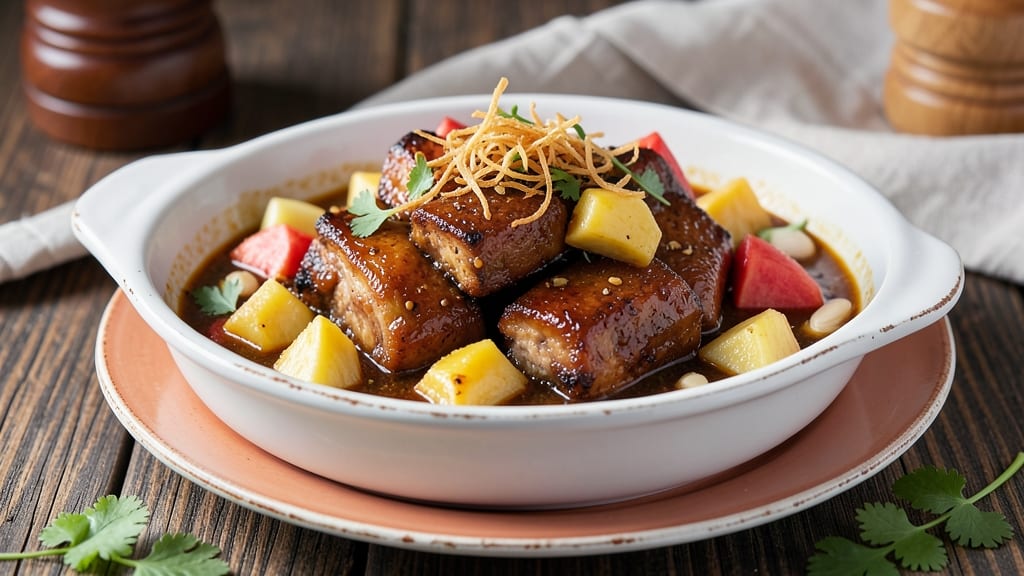
This pork adobo with pineapple recipe brings the bold flavors of Panlasang Pinoy to your kitchen, where tangy vinegar and sweet pineapple create an irresistible balance.
I first tasted this dish at a Filipino restaurant in Portland, and it became my go-to recipe for weeknight dinners—simple yet packed with layers of flavor that make every bite unforgettable.
The secret lies in the marinade, where soy sauce, vinegar, and garlic meld together before the pork slow-cooks into tender perfection. Adding pineapple not only sweetens the dish but also keeps the sauce from becoming too heavy, creating a bright, refreshing contrast to the savory pork.
This recipe delivers restaurant-quality results with just a few key ingredients and minimal effort.
By the time you're done, you'll have fork-tender pork swimming in a glossy, sweet-tangy sauce with chunks of juicy pineapple that add a delightful crunch. The aroma alone will have everyone gathering around the table, and the flavors will leave them asking for seconds.
This is comfort food at its finest—warm, familiar, and impossible to resist.
Whether you're serving it with steamed rice or crispy garlic bread, this dish is a crowd-pleaser that works for any occasion. Let's get cooking and bring a taste of the Philippines to your home!
Ingredients for pork adobo with pineapple recipe panlasang pinoy
Sweet-tangy magic starts with these 12 ingredients—simple yet packed with bold Filipino flavors.
| Ingredient | Amount | Notes |
|---|---|---|
| Boneless Pork Shoulder 🥩 | 1 ½ lb | Cut into 1-inch chunks |
| Coconut Vinegar 🍶 | ½ cup | Or substitute white vinegar |
| Soy Sauce 🥄 | ½ cup | Use light soy sauce |
| Garlic Cloves 🧄 | 6 cloves | Minced for marinade |
| Fresh Ginger 🌿 | 1 inch | Peeled, sliced thin |
| Fresh Pineapple 🍍 | 1 cup | Diced, fresh or canned |
| Brown Sugar 🍚 | ¼ cup | Packed, light brown preferred |
| Bay Leaves 🌿 | 2 whole | Dried, for depth of flavor |
| Black Peppercorns 🌶️ | 10 whole | Crushed for extra kick |
| Olive Oil 🫒 | 2 tbsp | For searing pork |
| Salt 🧂 | 1 ½ tsp | Adjust to taste |
| Fresh Green Onions 🧅 | 2 whole | Sliced, for garnish |
The pork shoulder is the star here—look for well-marbled cuts at Filipino markets or the meat section of Asian grocery stores like 99 Ranch or H Mart. If you can't find coconut vinegar, don't stress—white vinegar works just as well (though it'll be slightly less fruity). Fresh ginger and garlic are non-negotiable for that authentic depth, but if you're in a pinch, jarred minced garlic and ginger paste from the Asian aisle will save you. For the pineapple, fresh is ideal, but canned chunks in juice (not syrup) are a lifesaver when you're short on time.
No soy sauce? Coconut aminos are a great substitute, though the flavor will be slightly different. Running low on brown sugar? White sugar plus a pinch of molasses mimics the caramel notes. The bay leaves and peppercorns might seem minor, but they're what elevate this from good to restaurant-quality—don't skip them. If you're prepping ahead, the marinade (vinegar, soy sauce, garlic, ginger, sugar) can be made 2 days in advance and stored in the fridge. The pineapple can be added fresh right before cooking, or tossed in with the marinade if you're making it a day ahead.
This dish tastes even better the next day as the flavors meld. Store leftovers in an airtight container in the fridge for up to 4 days, or freeze for 3 months. For serving, I always garnish with sliced green onions—they add a fresh pop of color and brightness. If you're making this for a crowd, double the recipe—it reheats beautifully and the sauce only gets more flavorful. Leftovers make incredible sandwiches or rice bowls the next day.
Why You'll Love This Recipe
- One-Pot Magic: I swear by this—no chopping boards, no extra pans, just the pork, vinegar, and a few staples simmering together. The pineapple melts into the sauce like it was always meant to be there, and cleanup? One pot, one spatula.
- Sweet-Savory Balance: Honestly, the coconut vinegar and soy sauce combo is where it shines—tangy, salty, with just enough bite. Add the pineapple, and suddenly you’ve got a dish that’s rich but bright, salty but sweet, in every bite.
- Meal Prep MVP: Between us, this is my go-to for busy weeks. Cook a big batch, and it reheats like a dream—whether it’s for lunch the next day or packed in containers for work. (Yes, even on a Tuesday night.)
- Budget-Friendly Powerhouse: Pork shoulder stretches forever, and the ingredients? All pantry basics. I’ve made this for date nights, family dinners, and even potlucks—never once felt like I was overspending, but always got compliments.
Step-by-step instructions for pork adobo with pineapple
Here's the method that transforms simple ingredients into that perfect sweet-tangy balance we all love.
Sear the Pork Shoulder for Maximum Flavor
Heat a large, heavy-bottomed pot or Dutch oven over medium-high heat. Add the 2 tablespoons olive oil and let it get shimmering hot—about 2 minutes. Working in batches if needed, add the 1.5 lb boneless pork shoulder cut into 1-inch chunks. You want to avoid overcrowding so the pork gets that beautiful golden crust.
Sear the pork for 3-4 minutes per side until deeply browned. This step is crucial—it develops the Maillard reaction that creates that rich, caramelized flavor. I press down gently on the pork with a spoon during the first minute to prevent curling. Once browned, remove the pork and set it aside on a plate.
Build the Sweet-Tangy Marinade Base
In the same pot with all those flavorful browned bits still clinging to the bottom, add the 6 cloves minced garlic cloves and 1 inch sliced fresh ginger. Cook for 1-2 minutes until fragrant and just starting to color. This is where the aromatics develop their full potential—don't rush this step or you'll miss out on that deep, complex flavor.
Now add the 0.5 cup coconut vinegar and 0.5 cup soy sauce. The vinegar will bubble vigorously—let it simmer for 3-4 minutes until reduced by about half. This reduction concentrates the flavors and balances the acidity. Stir occasionally to prevent sticking, and watch for that beautiful glossy sheen that indicates proper reduction.
Add Sweetness and Spices for Depth
Stir in the 0.25 cup packed brown sugar, 2 whole bay leaves, and 10 whole crushed black peppercorns. Let the mixture bubble gently for 2-3 minutes until the sugar dissolves completely. The sugar will caramelize slightly, adding another layer of complexity to the sauce. This is where the sweet-tangy balance begins to develop—taste it now and you'll notice how the flavors are coming together.
Return the seared pork to the pot, along with any accumulated juices. The juices are flavor gold—don't skip this step. Add 1 cup diced fresh pineapple and bring everything to a gentle simmer. The pineapple will release its juices and help tenderize the pork as it cooks. Here's the thing—if your pineapple is particularly juicy, you might need to reduce the sauce slightly later to achieve the perfect consistency.
Slow Cook Until Fork-Tender
Cover the pot and reduce heat to low. Let the adobo simmer gently for 1 hour, then check the pork tenderness. You want it to be fork-tender but not falling apart. If it's not quite there, continue cooking uncovered for another 30-45 minutes, stirring occasionally and adding 2-3 tablespoons water if the sauce becomes too thick. The key is patience—rushing will result in tough meat.
During the final 15 minutes of cooking, you'll notice the sauce reducing and intensifying in flavor. This is when the magic happens. The pork should be so tender it practically falls off the bone, and the sauce should coat the back of a spoon with a beautiful gloss. Taste and adjust seasoning with additional salt if needed—remember, the pork has already absorbed some of the initial seasoning.
Finish and Garnish for Presentation
Once the pork is perfectly tender, remove it from the pot and transfer to a serving platter. Strain the cooking liquid through a fine-mesh sieve to remove the bay leaves and any large pineapple chunks if you prefer a smooth sauce. Return the strained sauce to the pot and simmer uncovered for another 5-10 minutes to reduce it to your desired consistency—it should coat the back of a spoon but still be saucy enough to spoon over the pork.
Garnish the pork with 2 whole sliced fresh green onions and serve immediately with steamed rice. The contrast of the tender, slightly sweet pork with the tangy, slightly sticky sauce is what makes this dish so special. Each bite should deliver that perfect harmony of sweet, tangy, and savory flavors that defines Panlasang Pinoy cooking. Don't forget to save some of that delicious sauce for drizzling over the rice—it's just as good as the main dish!
Pro Tips For Making Pork Adobo With Pineapple Recipe Panlasang Pinoy
- Sear the Pork First: I learned this the hard way—skipping the sear makes the adobo taste flat. Brown the pork shoulder in batches over medium-high heat until deep golden, then deglaze with a splash of coconut vinegar right away. That caramelized crust locks in flavor and cuts through the sweetness of the pineapple later.
- Use Aged Coconut Vinegar: Fresh coconut vinegar tastes harsh and underdeveloped. If you can’t find aged (6+ months), simmer it with the ginger and garlic for 5 minutes first to mellow the acidity. Trust me, your taste buds will notice the difference—especially when balanced with the pineapple’s brightness.
- Don’t Boil the Pineapple: Tossing pineapple chunks into boiling adobo turns them mushy and watery. Add them in the last 10 minutes of cooking, when the sauce is just simmering. You want them to soak up flavor, not stew into oblivion.
- Simmer Low and Slow: After the initial sear and vinegar deglaze, drop the heat to low and let the adobo braise uncovered for at least 1.5 hours. The sauce will thicken naturally, and the pork will stay tender—no need to rush it, even if you’re starving. (Yes, even if you’re impatient like me.)
Best sauces and condiments for this recipe
Classic Adobo Sauce
Start with the traditional base of ½ cup coconut vinegar and ½ cup soy sauce—this tangy duo is the heart of any adobo. The vinegar cuts through the richness of the pork while the soy sauce adds umami depth.
I always reduce this mixture first to concentrate the flavors and create a glossy, velvety sauce. For extra authenticity, use coconut aminos instead of soy sauce if you're avoiding gluten. 🥄
Sweet Pineapple Glaze
Fresh pineapple isn't just a garnish—it transforms the sauce into something bright and refreshing. For a glazed finish, toss 1 cup diced pineapple with 2 tablespoons brown sugar and 1 teaspoon lime juice before adding it to the pot.
Simmer for 10 minutes to caramelize the sugars slightly. This creates a beautiful contrast with the tangy adobo and adds natural sweetness that balances the acidity. 🍍
Spicy Chili Oil Finish
For heat lovers, finish the dish with a drizzle of Filipino-style chili oil. Simmer 2 tablespoons neutral oil with 1 tablespoon chopped siling labuyo (bird's eye chili) and 1 teaspoon black peppercorns for 5 minutes until fragrant.
Strain and drizzle over the pork and rice—this adds a smoky, spicy kick that cuts through the richness. Store-bought versions like Toyo Keishi work in a pinch. 🌶️
Creamy Coconut Milk Twist
Want to make your adobo extra luxurious? Stir in ½ cup coconut milk during the final 10 minutes of cooking. This creates a silky, velvety sauce that pairs beautifully with the pineapple's acidity.
For a modern twist, add 1 teaspoon pandan extract (found in Asian markets) for a floral aroma that's pure comfort food. 🥥
Garlic Butter Sauce
If you prefer a richer, more indulgent sauce, make a quick garlic butter sauce to serve on the side. Melt 2 tablespoons butter with 3 minced garlic cloves and 1 teaspoon soy sauce until fragrant.
Drizzle this over the pork just before serving—it adds a luxurious finish that elevates the dish to restaurant-quality. 🧄
Pickled Onion Topping
For a tangy crunch, prepare quick-pickled red onions by thinly slicing ½ red onion and soaking in ¼ cup vinegar, 1 teaspoon sugar, and a pinch of salt for 15 minutes.
Drain and sprinkle over the pork before serving. This adds a bright, acidic contrast that cuts through the richness of the adobo and complements the pineapple beautifully. 🧅
Nutrition facts
Frequently asked questions
Can I substitute regular vinegar for coconut vinegar?
Yes, you can use white vinegar or apple cider vinegar as a substitute—just expect a slightly different flavor profile. Coconut vinegar adds a subtle sweetness and depth that regular vinegar lacks, but it won't ruin the dish. For the best results, use an equal amount and let the sauce simmer longer to balance the acidity.
How do I know when the pork is tender enough?
The pork should be fork-tender but not falling apart. Insert a fork into the thickest piece—it should slide in easily with minimal resistance. If it feels slightly firm, let it cook another 15-20 minutes covered. Overcooking can make it dry, so check frequently during the final stages.
Can I make this recipe in a slow cooker?
Sear the pork first, then transfer everything (including the marinade) to your slow cooker. Cook on low for 6-7 hours or high for 3-4 hours, stirring occasionally. The slow cooker method is perfect for hands-off cooking and results in even more tender pork. Just reduce the sauce at the end to your desired consistency.
What if my sauce is too thin or too thick?
For a thicker sauce, simmer uncovered for 5-10 minutes to reduce the liquid. If it's too thick, add 1-2 tablespoons water or pineapple juice and stir well. The ideal consistency should coat the back of a spoon but still be pourable. Remember, the sauce will thicken as it cools, so don't over-reduce it.
How can I make this dish spicier?
Add 1-2 tablespoons chopped siling labuyo (bird's eye chili) or 1 teaspoon chili flakes to the marinade. For extra heat, stir in 1 tablespoon chili oil or ½ teaspoon cayenne pepper during the final 10 minutes of cooking. Start with less if you're sensitive to spice—you can always add more!