
Sauces & Condiments
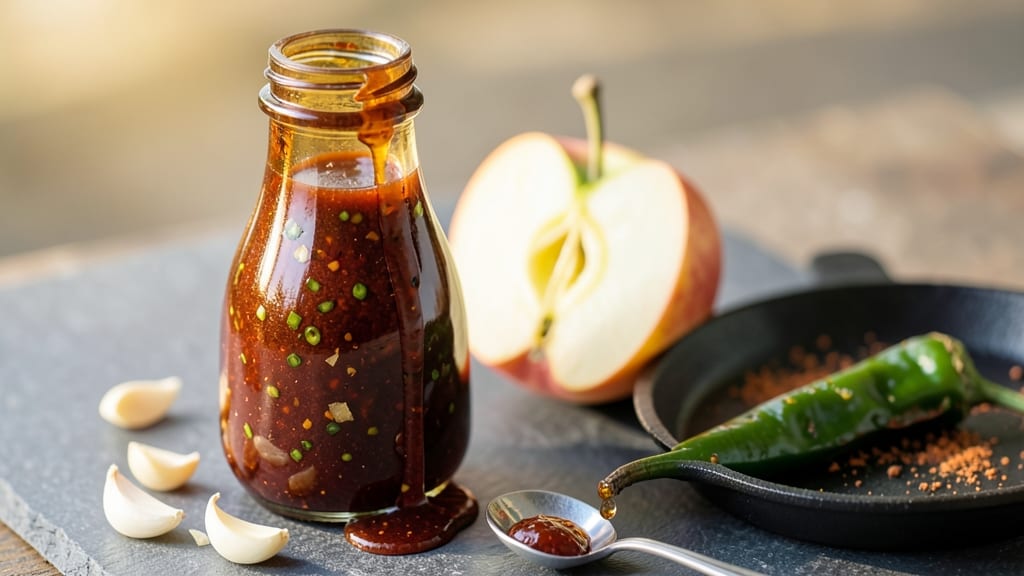
This apple jalapeño hot sauce transforms bold heat into something unexpected—where smoky jalapeños meet sweet apple depth in every drop. 🔥 The balance of acidity, sweetness, and spice creates a sauce that’s complex enough for gourmet dishes but simple enough to make at home.
I developed this recipe after craving a hot sauce that didn’t overpower but instead enhanced flavors with a touch of fruit-forward brightness.
The process is straightforward but precise: fresh jalapeños are slow-cooked with apples to soften their heat while preserving their natural sweetness. A splash of apple cider vinegar brightens the sauce, and smoked paprika adds depth without overpowering the fruit.
Adjust the heat level by controlling how many jalapeño ribs you include—this isn’t about overwhelming spice but about a slow-building warmth that lingers.
What you’ll end up with is a vibrant, glossy sauce with layers of flavor—sweet apple notes, smoky jalapeño heat, and a tangy finish. It’s perfect for drizzling over tacos, grilled meats, or even deviled eggs, but its versatility means it can elevate almost any dish.
The sauce thickens slightly as it cools, making it ideal for dipping, drizzling, or even blending into marinades.
Store it in the refrigerator for up to two weeks, or extend its shelf life by canning—just ensure the jars are properly sterilized. The heat level mellows slightly over time, so if you prefer a sharper kick, use it fresh.
This isn’t just another hot sauce; it’s a flavor bridge that turns ordinary meals into something memorable.
Ingredients for apple jalapeno hot sauce
Sweet apples and smoky jalapeños—just ten ingredients for a sauce that's bold yet balanced.
| Ingredient | Amount | Notes |
|---|---|---|
| Fresh Jalapeño Peppers 🌶️ | 4 whole | Seeds removed for mild heat |
| Honeycrisp Apples 🍎 | 3 medium | Peeled and chopped into chunks |
| Apple Cider Vinegar 🍎 | ½ cup | Unfiltered for tangy flavor |
| Smoked Paprika 🌶️ | 2 tbsp | For deep smoky flavor |
| Granulated Garlic 🧄 | 1 tbsp | Or 2 fresh garlic cloves |
| Cane Sugar 🍬 | ¼ cup | Balances apple sweetness |
| Kosher Salt 🧂 | 1 tsp | Enhances all flavors |
| Extra-Virgin Olive Oil 🫒 | 2 tbsp | For glossy finish |
| Red Wine Vinegar 🍷 | 1 tbsp | Adds depth to sauce |
| Cayenne Pepper 🔥 | ½ tsp | Adjust for desired heat |
The apples and jalapeños are the stars here. Honeycrisp apples work best—they're sweet but hold up during cooking. Grab the freshest jalapeños you can find (the local farmers market usually has the best), and keep the seeds in for extra heat if you're feeling brave. Smoked paprika is non-negotiable for that signature depth—Penzeys or the bulk section at Whole Foods have great options. The vinegars? Apple cider adds brightness while red wine vinegar brings complexity. Don't skimp on quality here—cheap vinegars taste like vinegar.
No Honeycrisp? Fuji or Gala work in a pinch, but expect slightly less flavor. Running low on smoked paprika? Liquid smoke at half the amount mimics the effect, though it won't be identical. The cayenne is completely adjustable—start with less and add more if you want serious heat. For the oil, extra-virgin olive oil gives the best finish, but avocado oil works too. Fresh garlic cloves can replace the granulated version if you've got them—just mince them finely. And if you're making a big batch, double the vinegars to maintain that perfect balance.
This sauce thickens as it cools, so don't worry if it looks too thin right after cooking. Store it in a clean glass jar in the fridge for up to 2 weeks. The flavors actually improve over time—it mellows slightly but develops more complexity. For longer storage, sterilize jars and process in a water bath for 10 minutes. Freezes beautifully too if you portion it into ice cube trays first. That way you can grab just what you need for a quick drizzle.
Why You'll Love This Recipe
- No Blender Needed: I swear by this—just chop, simmer, and strain. That thick, jammy texture comes from reducing the apple and jalapeño with vinegar until it’s just right, no fancy equipment required.
- Sweet Heat Balance: The Honeycrisp apples bring this sauce to life—crisp, bright acidity cutting through the jalapeño’s kick. Honestly, the smoked paprika ties it all together like a cozy hug for your taste buds.
- Game for Crowds: This stuff disappears at parties. Drizzle it on tacos, toss it in marinades, or let your kids (yes, even the picky ones) dip fries in it. The apple sweetness makes it approachable, while the heat keeps adults happy.
- Lasts All Week: I make a big batch and keep it in the fridge for snacks or last-minute flavor boosts. No wasting ingredients here—every leftover drop gets used, and the vinegar preserves that perfect tang longer than store-bought ever could.
Step-by-step instructions for apple jalapeño hot sauce
Here's how to blend sweet apple crunch with smoky jalapeño heat into a vibrant hot sauce.
🔥 Step 1: Roast the Apples and Jalapeños for Depth
Preheat your oven to 400°F and line a baking sheet with parchment paper. Peel and chop the 3 medium Honeycrisp Apples into ½-inch chunks—don't worry about perfect uniformity, just even pieces. Toss them with 1 tbsp Granulated Garlic, 1 tsp Kosher Salt, and 1 tbsp Extra-Virgin Olive Oil until evenly coated.
Slice the 4 whole Fresh Jalapeño Peppers lengthwise, remove seeds and membranes for milder heat, then chop into ¼-inch pieces. Toss these with the apples and spread everything in a single layer on the baking sheet. Roast for 20-25 minutes until the apples soften and edges turn golden brown—this caramelization builds sweet complexity.
🍳 Step 2: Build the Sauce Base with Vinegars and Spices
Transfer the roasted apple-jalapeño mixture to a blender along with the 0.5 cup Apple Cider Vinegar, 1 tbsp Red Wine Vinegar, 0.25 cup Cane Sugar, and 2 tbsp Smoked Paprika. Blend until completely smooth, scraping down the sides as needed. The sauce should be thick but pourable—if it's too stiff, add 1-2 tablespoons water to loosen.
Here's where the magic happens: taste and adjust. Want more heat? Add the 0.5 tsp Cayenne Pepper now. Need more sweetness? Add another ½ tablespoon Cane Sugar. The goal is balance—tangy, sweet, smoky, and just a hint of spicy kick. I like mine with a bright finish, so I usually add a splash more apple cider vinegar if it tastes flat.
⏰ Step 3: Simmer and Thicken the Sauce
Pour the blended sauce into a small saucepan and bring to a gentle simmer over medium-low heat. Let it cook uncovered for 10-15 minutes, stirring occasionally, until it thickens enough to coat the back of a spoon. You're looking for a glossy, syrupy consistency—this ensures it clings beautifully to wings, tacos, or grilled meats.
Don't walk away during this step. The sauce reduces quickly, and you want to prevent burning. If it starts to darken too much, reduce the heat slightly. When it reaches your desired thickness, remove from heat and let it cool completely before bottling—this prevents condensation from diluting your hard work.
🥫 Step 4: Bottle and Age for Maximum Flavor
Transfer the cooled sauce to sterilized glass bottles or jars, leaving about ½-inch headspace at the top. Seal tightly and store at room temperature. For best results, let it sit for at least 24 hours before using—this allows the flavors to meld and develop depth. I usually make mine a day ahead so the heat and sweetness really sing together.
This sauce keeps for up to 3 months in the pantry, though I rarely have any left that long. The colors will be vibrant—deep red from the jalapeños, golden from the roasted apples—and the aroma will make your kitchen smell like a food truck. Use it as a dipping sauce, drizzle over tacos, or mix into marinades for an unexpected sweet-spicy twist.
Pro Tips For Making Apple Jalapeno Hot Sauce
- CHAR THE APPLES FIRST: Toss diced Honeycrisp apples in a pinch of salt and let them sit 10 minutes before cooking—this draws out moisture and prevents a watery sauce. I used to skip this, and the sauce always tasted thin and sad.
- REMOVE JALAPEÑO SEEDS HALFWAY: Roast the peppers whole, then split them open and scrape out seeds after 10 minutes of cooking—this balances heat without killing the flavor. I learned this the hard way when my first batch was too fiery to enjoy.
- USE A LITTLE MORE VINEGAR: Start with ¼ cup apple cider vinegar, then add another splash if the sauce seems too thick—it cuts through the sweetness and keeps the texture smooth. My grandmother swore by this, and she was right: the acidity makes all the difference.
- TOAST THE SMOKED PAPRIKA: Dry-toast the smoked paprika in a small pan for 30 seconds before mixing—it deepens the flavor and prevents clumping in the sauce. Sounds weird, but it works: the aroma jumps off the plate.
Health benefits of these flavors
Digestive Aid
Apples contain pectin, a soluble fiber that supports healthy digestion by promoting regularity and soothing stomach discomfort. When combined with jalapeños, the capsaicin in peppers can stimulate digestion—though in moderation, as too much can irritate sensitive stomachs.
I've noticed this sauce helps me digest heavier meals like burgers or fried chicken more comfortably. 💪
Antioxidant Boost
The Honeycrisp apples in this sauce are packed with quercetin and vitamin C, both powerful antioxidants that combat free radicals in your body. Jalapeños add vitamin A and vitamin K, while smoked paprika contributes rutin, another antioxidant.
Together, they create a flavorful way to boost your daily antioxidant intake—especially when drizzled on nutrient-rich dishes like roasted veggies or grilled fish.
Metabolism Support
The capsaicin in jalapeños is known to temporarily boost metabolism, helping your body burn calories more efficiently. Meanwhile, the apple cider vinegar in this recipe supports stable blood sugar levels, which is particularly helpful after carb-heavy meals.
I make this sauce on game days when I want an energy boost without heavy, greasy foods.
Anti-Inflammatory Benefits
Both apples and jalapeños contain compounds that help reduce inflammation in the body. Apples provide flavonoids like quercetin, while jalapeños offer capsaicin, which has been shown to reduce inflammation at the cellular level.
The smoked paprika adds antioxidative properties too. This makes the sauce a great addition to anti-inflammatory diets, especially when paired with lean proteins or whole grains.
Immune System Support
The vitamin C in apples and the vitamin A in jalapeños work together to strengthen your immune system. A single serving of this sauce provides about 15% of your daily vitamin C needs, which is excellent for immune function and skin health.
I keep a bottle in my fridge during cold season to add a flavorful immune boost to soups and stews.
Blood Sugar Regulation
Despite its sweetness, this sauce helps regulate blood sugar thanks to the low glycemic index of apples and the acetic acid in apple cider vinegar. The fiber in apples slows sugar absorption, preventing energy crashes.
I've found it's a great alternative to sugary condiments when I'm watching my blood sugar levels—perfect for drizzling on grilled chicken or fish without the guilt.
Nutrition facts
Frequently asked questions
Can I use green jalapeños instead of red?
Yes! Green jalapeños work perfectly—they're slightly fresher and milder than red ones. The color difference won't affect the flavor much, but green peppers have a slightly grassier note. For extra heat, leave the seeds in when roasting. Red jalapeños are just riper versions of the same pepper.
How do I adjust the heat level?
Start mild by removing all jalapeño seeds and membranes, then add heat in stages. For medium heat, include seeds from 1-2 peppers. For spicy, add the 0.5 tsp cayenne pepper or include seeds from all 4 peppers. Always taste as you go—you can't remove heat once added!
What's the best way to store leftovers?
Transfer to a clean glass jar and refrigerate for up to 2 weeks. The sauce actually improves with time as flavors meld. For longer storage, sterilize jars and process in a water bath for 10 minutes (seals for 1 year). Freeze in ice cube trays for single-serving portions—just thaw overnight in the fridge.
Can I substitute other fruits for apples?
Try peaches or pears for similar sweetness, but avoid tart fruits like pineapple—they'll overpower the sauce. For a tropical twist, use mango chunks (reduce sugar to 1 tbsp). The fruit should soften completely during roasting, so choose varieties that won't stay crunchy.
Why does my sauce look too thin?
This happens when sauce isn't reduced enough. Simmer uncovered for 5-10 more minutes on low heat, stirring often. If it still looks thin, blend in 1 tsp cornstarch mixed with 1 tbsp water and simmer until thickened. The sauce should coat the back of a spoon when cool—this ensures perfect drizzling consistency.