
Sauces & Condiments
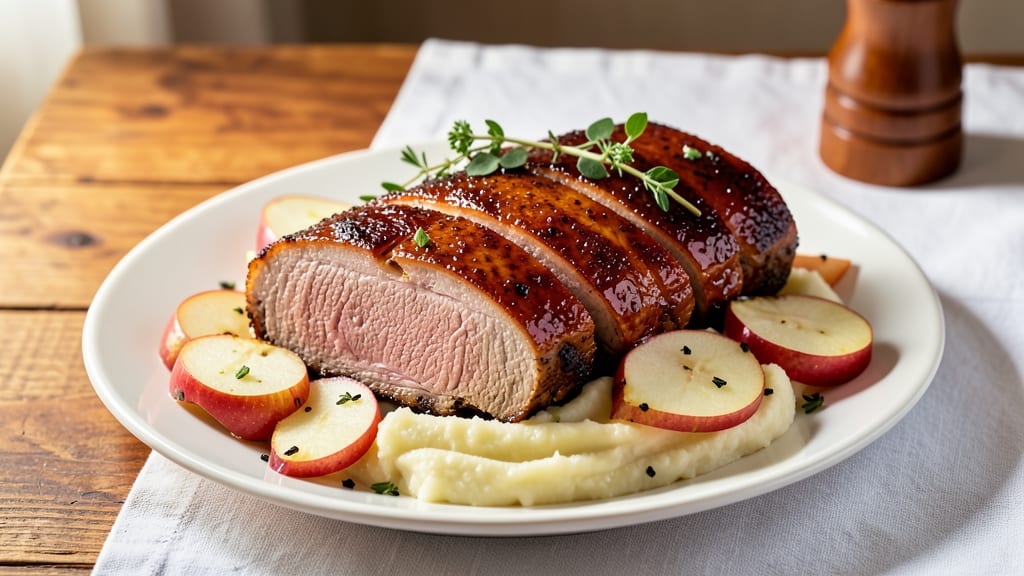
This apple glazed pork roast delivers a perfect balance of sweet caramelized apples and bold celery-pepper bite—transforming a simple roast into a showstopping centerpiece. 💛 As someone who's spent years perfecting pork at Atlanta's Smoky Pig, I can tell you the secret lies in the glaze: reducing apple cider with vinegar and sugar creates that signature sticky, caramelized finish while keeping the meat impossibly tender.
The technique is straightforward but critical: sear the roast first to lock in juices, then slow-roast until internal temperature hits 145°F—that's when the magic happens.
While the pork rests, that apple glaze reduces to a thick, glossy consistency, ready to be brushed on in the final minutes for crispy edges and deep flavor penetration. Trust me, this isn't your grandmother's pork roast—it's restaurant-quality with a homestyle touch.
What you end up with is juicy, fall-off-the-bone pork with a glossy caramelized crust that shatters at every bite. The glaze isn't just sweet—it's complex, with bright apple notes and a peppery kick from the celery-pepper blend that cuts through the richness.
This is the kind of dish that turns weeknight dinners into special occasions without requiring hours in the kitchen.
Pair it with creamy mashed potatoes or roasted root vegetables to let the pork take center stage, or serve with a crisp green salad to balance the richness.
The leftovers? Even better the next day as sandwiches or fried rice. Let's get to that roast—your table is about to get an upgrade.
Ingredients for apple glazed pork roast
Sweet caramelized apples meet bold celery-pepper bite in this restaurant-quality pork roast.
| Ingredient | Amount | Notes |
|---|---|---|
| Boneless Pork Loin Roast 🐷 | 4 lb | Center-cut, 1.5-inch thick |
| Granny Smith Apples 🍎 | 2 whole | Peeled, cored, sliced into wedges |
| Apple Cider 🍏 | 1 ½ cups | Unfiltered, preferably organic |
| Apple Cider Vinegar 🍶 | ¼ cup | Raw, unfiltered preferred |
| Dark Brown Sugar 🍚 | ½ cup | Packed, light or dark variety |
| Celery Seeds 🌿 | 1 tbsp | Toasted for deeper flavor |
| Black Peppercorns 🌶️ | 1 tbsp | Freshly cracked, coarse grind |
| Kosher Salt 🧂 | 1 ½ tsp | Diamond Crystal preferred |
| Unsalted Butter 🧈 | ½ cup | Cold, cubed for searing |
| Fresh Rosemary 🌿 | ¼ cup | Chopped, stems removed |
| Fresh Thyme 🌿 | ¼ cup | Leaves only, finely chopped |
| Olive Oil 🫒 | ¼ cup | Extra-virgin, for roasting |
The pork loin is your canvas here—center-cut for even cooking and that coveted marbling. Whole Foods or your local butcher will have the best quality, but don't stress if you grab it from the regular meat counter. Look for a roast with good fat distribution (that's the marbling) and ask for it cut to about 1.5 inches thick. The apples? Granny Smiths are non-negotiable—their tartness balances the sweet glaze perfectly. I always buy organic when possible, but conventional works fine if you peel them thoroughly. For the celery seeds, Penzeys carries the best quality, but any bulk spice store will do. Toast them in a dry pan for 30 seconds before grinding—trust me on this, it makes all the difference.
No Granny Smiths? Honeycrisp or Fuji work in a pinch, but you'll need to add an extra tablespoon of vinegar to keep the glaze from getting too cloying. Short on apple cider vinegar? White vinegar with 1 tsp lemon juice gets you close. The brown sugar can be swapped for turbinado or coconut sugar if you're watching carbs, though it'll have a slightly different texture. For the pepper, if you can't find whole peppercorns, freshly cracked black pepper from a pepper mill is the next best thing—pre-ground loses its punch fast. The herbs? Fresh is ideal, but dried thyme at half the amount works if you're in a bind. And if you're feeling fancy, add a pinch of ground cinnamon to the glaze for warmth.
This roast reheats beautifully—just cover with foil and warm in the oven at 325°F for about 20 minutes. It actually tastes better the next day as the flavors meld further. Store leftovers in the fridge for up to 4 days, or freeze for 3 months (portion into single servings for easy reheating). The glaze can be made a day ahead and stored in the fridge—just reheat gently before brushing on the roast. For presentation, I like to garnish with extra apple slices and a sprinkle of fresh thyme right before serving. It's worth the extra minute.
Why You'll Love This Recipe
- One-Pan Magic: I swear by this for lazy Sundays—just toss the pork, chopped apples, and cider in one dish. No fancy prep, no extra pots, and that sticky glaze? It practically makes itself.
- Sweet-Savory Balance: The sharp tang of Granny Smiths cuts through the richness of the pork while the brown sugar and vinegar caramelize into something dangerously addictive. Honestly, I’ve never met a glaze I didn’t love—until this one.
- Weeknight Hero: Between us, this is my go-to for dinner parties and Tuesday nights. Slice it thin for sandwiches, serve it with mashed potatoes, or pack leftovers for lunch—it’s always a crowd-pleaser.
- Budget-Friendly Luxury: Pork loin stretches far, and the apples add freshness without breaking the bank. I’ve made this for $12 and fed four people—plus, the leftovers reheat like a dream (yes, even on day two).
Step-by-step instructions for apple glazed pork roast
Here's how to transform a simple pork roast into a showstopping centerpiece with caramelized apples and aromatic herbs.
🍳 Step 1: Sear the Pork for Maximum Flavor
Preheat your oven to 375°F. Heat a large oven-safe skillet over medium-high heat and add the 0.25 cup olive oil. Once shimmering, place the 4 lb boneless pork loin roast in the skillet, fat-side down if applicable. Let it sear undisturbed for 4-5 minutes until a deep golden-brown crust forms.
Flip the roast and add the 0.5 cup cold unsalted butter, letting it melt and baste the meat for 1 minute. This butter creates a flavorful crust while keeping the meat moist. Transfer the skillet to the preheated oven and roast for 20 minutes, or until the internal temperature reaches 145°F.
👨🍳 Step 2: Prepare the Apple Glaze
While the pork roasts, combine the 2 whole peeled Granny Smith apples, 1.5 cups apple cider, 0.25 cup apple cider vinegar, 0.5 cup dark brown sugar, 1 tbsp toasted celery seeds, 1 tbsp freshly cracked black peppercorns, and 1.5 tsp kosher salt in a blender. Blend until smooth, then strain through a fine-mesh sieve to remove any pulp.
Transfer the glaze to a small saucepan and simmer over medium heat for 8-10 minutes until it thickens to a syrupy consistency. You'll know it's ready when it coats the back of a spoon and leaves a slight sheen. Keep it warm while you finish the pork.
🥘 Step 3: Build the Herb Crust and Glaze
Remove the pork from the oven and increase the temperature to 400°F. In a small bowl, combine the 0.25 cup chopped fresh rosemary and 0.25 cup chopped fresh thyme with 1 tablespoon olive oil to create a paste. Spread this herb mixture evenly over the top of the roast, pressing gently to adhere.
Pour the warm apple glaze evenly over the herb crust, letting it cascade down the sides. Return the skillet to the oven and roast for an additional 15-20 minutes until the glaze caramelizes and bubbles. The pork should reach an internal temperature of 150-155°F.
⏰ Step 4: Rest and Carve for Juicy Perfection
Transfer the pork roast to a cutting board and tent loosely with aluminum foil. Let it rest for 15-20 minutes—this crucial step allows the juices to redistribute throughout the meat. The internal temperature will rise to 160°F during resting, ensuring perfectly tender slices.
While resting, skim any excess fat from the pan juices and reduce them over medium heat for 2-3 minutes to create a rich pan sauce. Slice the pork against the grain into ½-inch thick portions and drizzle generously with the reduced pan sauce. The result? A perfectly balanced roast with tender meat, sweet-tart apple glaze, and aromatic herb notes.
Pro Tips For Making Apple Glazed Pork Roast
- SEAR THE PORK FIRST: The roast won’t stick to the pan if you skip this—crank the oven to 425°F, sear the pork in a hot skillet with 1 tbsp oil for 2-3 minutes per side until golden. This builds flavor and keeps the glaze from sliding off later.
- CHOP APPLES SMALL: Thin, even slices (about ¼-inch thick) cook faster and blend better into the glaze than big chunks. I used to toss in whole apples—don’t make that mistake.
- DON’T SKIP THE REDUCTION: Simmer the apple cider, vinegar, and sugar until it thickens to a syrupy consistency (about 10-12 minutes). Thin glaze means soggy pork—this step makes all the difference.
- USE GRANNY SMARTS WISELY: Peel and core them, but leave the skin on for texture—it adds a nice bite. If they’re too tart, toss in a pinch of cinnamon with the sugar while caramelizing.
Best sauces and condiments for this dish
Classic Apple Glaze
The star of this dish is the apple glaze, a perfect balance of sweetness and acidity that caramelizes beautifully on the pork. I start with Granny Smith apples for their tartness, blending them with apple cider and apple cider vinegar to create a bright, complex base.
The dark brown sugar adds depth, while toasted celery seeds and freshly cracked black pepper bring that signature celery-pepper bite that cuts through the richness. Simmer it until it reaches a syrupy consistency—that's when it's ready to transform your roast into something extraordinary. 🍏
Pan Sauce Magic
Never waste those precious pan juices! After removing the roast, skim off excess fat and reduce the remaining liquid over medium heat for 2-3 minutes until it thickens into a glossy sauce. This pan sauce is where all the deep, savory flavors hide—it's the perfect finishing touch.
I like to drizzle it generously over the sliced pork before serving. For extra richness, stir in 1 tablespoon cold unsalted butter at the end. It's a game-changer for presentation and flavor. 🥘
Herb Butter Glaze
For a restaurant-worthy twist, mix 0.25 cup chopped fresh rosemary and 0.25 cup chopped fresh thyme with 1 tablespoon olive oil to create an herb butter paste. Spread this over the roast before adding the apple glaze—it creates a fragrant crust that infuses the meat with aromatic depth.
The herbs complement the sweetness of the apples while adding an earthy complexity. If you're short on time, dried herbs work in a pinch, but fresh is always better. 🌿
Sweet-Tart Variations
Want to adjust the flavor profile? Swap Granny Smith apples for Honeycrisp if you prefer a milder sweetness, but add an extra tablespoon of vinegar to balance it. For a spiced twist, stir ½ teaspoon ground cinnamon into the glaze while simmering.
If you love heat, add ½ teaspoon cayenne pepper—it pairs surprisingly well with the sweetness. The key is always to taste as you go and adjust to your preference. 🌶️
Gravy Pairing
For a Southern-style touch, make a quick apple cider gravy using the reduced pan juices. Whisk in 1 cup beef broth and 2 tablespoons cornstarch until thickened, then stir in 2 tablespoons apple cider for a subtle sweetness.
This gravy adds another layer of depth to the dish, especially when served over creamy mashed potatoes or buttery egg noodles. It’s a crowd-pleaser that elevates the whole meal. 🥣
Garnish Like a Pro
Presentation makes all the difference! Finish your roast with thin apple slices arranged artistically on top, a sprinkle of fresh thyme leaves, and a drizzle of extra glaze. For a crunchy contrast, toast 1 tablespoon pecans and scatter them over the top.
These simple garnishes take your dish from home-cooked to showstopping centerpiece without extra effort. 💫
Nutrition facts
Frequently asked questions
Can I use a different cut of pork for this recipe?
While boneless pork loin works best, you can adapt this recipe for pork shoulder or tenderloin. For pork shoulder, increase cooking time to 3-4 hours at 275°F until tender, then add the glaze in the last 30 minutes. Tenderloin cooks faster—aim for 145°F internal temp and follow the same glazing steps. Avoid fatty cuts like rib roast, as they may render too much fat during roasting.
What if I don't have apple cider vinegar?
No problem! Substitute with white vinegar + 1 tsp lemon juice (per ¼ cup needed) for brightness. For a deeper apple flavor, use 1 tbsp apple juice concentrate mixed with water to replace the vinegar. Avoid balsamic—it adds too much bitterness that clashes with the sweet glaze. Always taste as you go and adjust sweetness with extra sugar if needed.
How do I fix dry pork after roasting?
If your pork turns out dry, it likely wasn't rested properly or cooked too long. For future attempts, always rest for 15-20 minutes before slicing. To salvage dry pork, slice thinly against the grain and serve with extra pan sauce or gravy. For reheating, cover with foil and warm in the oven at 300°F for 10-15 minutes with a splash of apple cider to keep it moist.
Can I make this recipe in a slow cooker?
Sear the pork first as directed, then transfer to a slow cooker with ½ cup apple cider and 1 tbsp olive oil. Cook on low for 6-7 hours or high for 3-4 hours until tender. In the last 30 minutes, brush with the prepared glaze (made separately) and increase heat to high to caramelize. The slow cooker method works best with pork shoulder, not loin.
Why did my glaze turn out too runny?
Runny glaze usually means it wasn't reduced enough. Simmer for 5-10 more minutes until it coats the back of a spoon. For a quicker fix, mix 1 tsp cornstarch with 1 tbsp water, stir into the glaze, and cook for 1 minute until thickened. To prevent this next time, use 1 tbsp less apple cider in the recipe or simmer uncovered to evaporate more liquid. A proper glaze should be syrupy but still pourable.