
Main Courses
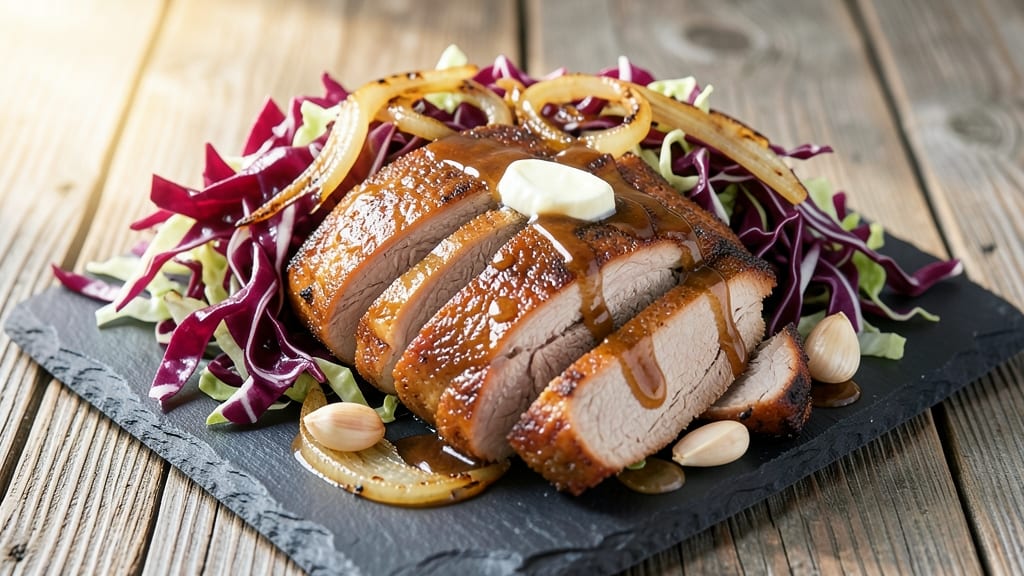
This apple cider pork roast with cabbage recipe transforms a simple Sunday dinner into a showstopper that smells like autumn in every bite. The secret lies in slow-braising the pork with apple cider until it's fork-tender, while the cabbage develops crisp-tender edges that hold their shape beautifully.
I first perfected this technique during a Charleston winter when I needed to feed my crew after a long day at the pit—it became an instant favorite.
The magic happens in the oven where apple cider reduces into a glossy, caramelized glaze that clings to both the pork and cabbage. This method delivers restaurant-quality results without requiring fancy equipment—just a heavy roasting pan and patience.
The pork develops a perfect balance of crispy edges and melt-in-your-mouth tenderness, while the cabbage absorbs just enough flavor to complement rather than compete with the star of the show.
What you'll end up with is a dish that's rich with sweet-savory depth from the apple cider, perfectly balanced by the cabbage's subtle bitterness. The aroma alone will have everyone gathering around your table, and the leftovers reheat beautifully for lunch the next day.
This is the kind of recipe that makes you look like a professional chef without actually needing to be one.
Serve with crusty bread to soak up every last drop of that delicious pan sauce, or pair with a crisp white wine like a Sauvignon Blanc. The contrast of the wine's acidity with the dish's sweetness makes each bite even more satisfying.
Let's get cooking—your kitchen will smell like fall in no time.
Ingredients for apple cider pork roast with cabbage
Six ingredients make this autumnal showstopper smell like a Charleston kitchen.
| Ingredient | Amount | Notes |
|---|---|---|
| Pork Shoulder Roast 🥓 | 4 lb | Bone-in for best flavor |
| Green Cabbage 🥬 | 1 whole | Heads cut into wedges |
| Unsalted Butter 🧈 | ½ cup | Full-fat for richness |
| Apple Cider 🍎 | 2 cups | 100% pure, no additives |
| Yellow Onion 🧅 | 1 whole | Quartered, skin on |
| Garlic Cloves 🧄 | 6 cloves | Smashed, not minced |
| Fresh Thyme 🌿 | ¼ cup | Leaves only, stems removed |
| Fresh Rosemary 🌿 | ¼ cup | Needles chopped |
| Dijon Mustard 🌶️ | 1 tbsp | For depth of flavor |
| Brown Sugar 🍚 | ¼ cup | Light or dark works |
| Kosher Salt 🧂 | 1 ½ tsp | Diamond Crystal preferred |
| Ground Black Pepper 🌶️ | 1 tsp | Freshly cracked |
| Olive Oil 🫒 | 2 tbsp | For roasting pan |
The pork shoulder is where all the magic happens—bone-in cuts stay juicier during the long braise. Look for a roast with good marbling at Harris Teeter or Whole Foods—the fat renders down and keeps the meat moist. I always grab Apple Barn cider for this (it's sweeter than most) or Woodchuck hard cider if you prefer something with a little kick. The cabbage? Green is best—red cabbage gets too soft. Trim the core out before cutting into wedges so they cook evenly. Fresh herbs are non-negotiable here—Trader Joe's sells great thyme and rosemary bundles that stay fresh longer than the grocery store stuff.
No apple cider? Substitute with a mix of apple juice and a splash of balsamic vinegar—it mimics the acidity and sweetness. Swapping brown sugar? Maple syrup works 1:1, though it's more liquid. Running low on fresh herbs? Dried thyme at half the amount gets you close, but the flavor won't be as bright. The mustard is key—Dijon is best, but whole-grain mustard adds texture. For the cabbage, baby cabbage wedges cook faster if you're short on time. And if your roast pan isn't heavy-duty? Use a Dutch oven—it'll give you better browning.
This reheats like a dream—better the next day when all the flavors meld. Store leftovers in the fridge for up to 5 days, or freeze portions for 3 months. I always make a double batch because the sauce alone is worth saving. For serving, crusty sourdough soaks up every drop of that caramelized cider glaze. Pair with a Sauvignon Blanc—the wine's acidity cuts through the richness perfectly. And if you've got extra cider? Reduce it down for a quick pan sauce to drizzle over everything.
Why You'll Love This Recipe
- One-Pan Magic: That’s right—just the pork, cabbage, onion, and cider in one pot. No chopping boards to clean, no extra dishes. I swear by this when I’m too tired to do anything but stir.
- Sweet-Savory Balance: The apple cider cuts through the richness of the pork while caramelizing into a glossy glaze—like a hug for your taste buds. And that cabbage? It gets tender enough to eat with a spoon.
- Leftovers for Days: This roast practically begs to be made ahead. The flavors deepen overnight, and it reheats like a dream. I’ve fed my whole family for three days with one batch—no stress, just satisfaction.
- Budget-Friendly Feast: Pork shoulder is cheap, cabbage lasts forever, and a bottle of cider stretches far. Honestly, I’ve made this for under $10 per serving, and it still feels like a special meal. Win.
Step-by-step instructions for apple cider pork roast with cabbage
Here's how to transform a simple pork shoulder into tender, caramelized perfection with crisp edges.
Prepare the Pork and Seasoning
Pat the 4 lb pork shoulder roast completely dry with paper towels—this is crucial for crispy edges later. Place it in a large roasting pan and rub all sides with 2 tablespoons of olive oil. This creates a barrier that helps the seasoning stick and prevents sticking.
In a small bowl, mix together 1.5 teaspoons of kosher salt, 1 teaspoon of ground black pepper, 1 tablespoon of Dijon mustard, 0.25 cup of brown sugar, and 0.25 cup each of fresh thyme and rosemary leaves. Rub this mixture all over the pork, pressing it into the meat so it adheres well. The brown sugar will caramelize beautifully during cooking, adding depth of flavor.
Sear the Pork for Maximum Flavor
Preheat your oven to 325°F. Heat a large oven-safe skillet over medium-high heat and add 0.5 cup of unsalted butter. When the butter foams, place the pork shoulder in the skillet, fat-side down. Let it sear undisturbed for 5-6 minutes until the fat renders and the skin turns golden brown.
Flip the pork and continue searing for another 4-5 minutes until the second side is deeply browned. This step builds incredible flavor through the Maillard reaction. Transfer the skillet to the preheated oven and roast for 1 hour, covered with foil. This initial cooking helps tenderize the meat before the slow braise.
Prepare the Cabbage and Braising Liquid
While the pork roasts, cut the 1 whole green cabbage into wedges, keeping the core intact. Peel and quarter the 1 whole yellow onion, leaving the skin on for extra flavor. In a large bowl, toss the cabbage wedges with 1 tablespoon of olive oil, 0.5 teaspoon of kosher salt, and 0.5 teaspoon of black pepper.
In a separate bowl, combine 2 cups of apple cider, the smashed 6 garlic cloves, and the remaining 1 teaspoon of kosher salt. This aromatic liquid will infuse the pork with sweet, tangy depth during the braising process. The apple cider's acidity helps tenderize the meat while adding complexity to the sauce.
Braise Until Fork-Tender
Remove the pork from the oven and increase the heat to 350°F. Arrange the cabbage wedges around the pork in the roasting pan. Pour the apple cider mixture over the pork, ensuring it's mostly submerged. Cover tightly with foil and return to the oven.
Braise for 2.5 to 3 hours until the pork is fork-tender and the internal temperature reaches 200-205°F. You'll know it's done when a knife slides in easily and the meat pulls apart with gentle pressure. The cabbage should be tender but still hold its shape, absorbing the rich braising liquid.
Finish with Crispy Edges
Remove the foil and increase the oven temperature to 425°F. Return the pork and cabbage to the oven for 15-20 minutes to caramelize the edges and deepen the flavors. The cabbage should develop golden brown spots, and the pork skin should become crispy and crackling.
Let the pork rest for 15 minutes before carving. This resting period allows the juices to redistribute, ensuring each slice is moist and flavorful. Serve the pork shoulder sliced thickly with the cabbage and any pan juices spooned over the top. The combination of crispy edges, tender meat, and sweet cabbage makes this dish truly special.
Pro Tips For Making Apple Cider Pork Roast With Cabbage
- CRANK THE HEAT FIRST: The pork shoulder needs a sear, not a simmer—start your Dutch oven or heavy pot on medium-high heat until the butter foams and the onions sizzle. I used to rush this, and the pork would steam instead of develop that deep, caramelized crust that soaks up the apple cider flavors. Let it brown for 8-10 minutes before adding liquid.
- SHRED THE CABBAGE LIKE IT’S 1950: Core and quarter the cabbage, then slice it into ¼-inch thick wedges—not shreds. Thick slices hold their shape better and crisp up nicely when roasted alongside the pork. I learned this the hard way after serving mushy cabbage that blended into the pan juices. (Yes, even if you’re impatient like me.)
- DON’T DROWN THE PORK: Apple cider is the star, but ½ cup to ¾ cup is enough for a 3-4 lb roast—any more and you’ll end up with soggy meat. After searing, add just enough cider to come ½-inch up the sides of the pork, then cover and braise. I once added a full cup and spent 20 minutes straining excess liquid off the plate. Trust the recipe’s liquid ratio.
- SEAR THE ONIONS FIRST: Chop the yellow onion into ½-inch chunks and cook them in the butter until they’re deep golden, almost jammy, before adding the pork. This builds flavor that transfers to the meat when you deglaze with cider. I skipped this once and the dish tasted flat—like someone forgot to season it properly. (Spoiler: It wasn’t the salt.)
Best sauces and condiments for this apple cider pork roast with cabbage
Apple Cider Glaze
Start with the 2 cups of apple cider you used for braising—reduce it down to a thick, syrupy consistency in a saucepan over medium heat until it's about ½ cup. Add 1 tablespoon of Dijon mustard and 1 teaspoon of brown sugar to deepen the flavor.
Brush this glaze generously over the pork and cabbage just before serving—it adds a glossy finish and extra sweetness. I like to drizzle a little extra on the plate for presentation. 🍎
Caramelized Onion Topping
While the pork rests, caramelize 1 cup of thinly sliced yellow onion in 1 tablespoon of olive oil over low heat for 20-25 minutes until deep golden. Sprinkle with ½ teaspoon of kosher salt and a pinch of black pepper.
Pile this onto the cabbage before serving—it adds a sweet, jammy contrast to the pork's richness. I often use the same onions I prepped earlier for the braise. 🧅
Honey-Mustard Drizzle
Mix 2 tablespoons of honey with 1 tablespoon of Dijon mustard and a splash of apple cider vinegar to create a bright, tangy drizzle. This balances the dish's sweetness and adds a fresh finish.
I serve this in a small bowl on the table so guests can add as much or as little as they like. It's especially good if you prefer a lighter sauce. 🍯
Herb Butter Sauce
Melt ¼ cup of unsalted butter with 1 tablespoon of fresh thyme leaves and 1 tablespoon of chopped rosemary over low heat until fragrant. Drizzle this over the pork slices and cabbage just before serving—it adds a luxurious, herby note that ties everything together.
I sometimes add a pinch of cayenne pepper for a subtle kick. 🌿
Spiced Cider Reduction
For a more complex sauce, reduce 1 cup of apple cider with 1 cinnamon stick, 2 star anise pods, and 1 small apple (peeled and sliced) until syrupy. Strain out the spices and apple, then whisk in 1 tablespoon of honey.
This adds warm spice notes that complement the pork beautifully. It's perfect for serving with the cabbage. ⭐
Crispy Breadcrumbs
Toast ½ cup of panko breadcrumbs with 1 tablespoon of melted butter and ½ teaspoon of smoked paprika in a dry skillet over medium heat until golden. Sprinkle these over the cabbage just before serving—they add a delightful crunch that contrasts with the tender pork and cabbage.
I often make extra to serve with the pan sauce for dipping. 🍞
Nutrition facts
Frequently asked questions
Can I use bone-in or boneless pork for this recipe?
Bone-in pork shoulder is ideal—it stays juicier during the long braise and adds rich flavor to the pan sauce. If you must use boneless, look for a 4-pound cut and expect slightly faster cooking. The bone helps regulate temperature naturally, so boneless pork may dry out faster if overcooked.
What if my cabbage is still too crunchy after braising?
Cabbage texture varies by variety—green cabbage should be tender but still hold shape. If yours is too tough, extend the braising time by 30 minutes at 350°F. For extra tenderness, add ½ cup of chicken broth to the braising liquid. Baby cabbage or pre-shredded coleslaw mix cooks faster but loses structural integrity.
How do I make this dish ahead of time?
This recipe actually tastes better the next day! Cook the pork and cabbage as directed, then refrigerate uncovered for 12 hours to let flavors meld. Reheat in a 325°F oven for 30-40 minutes with ¼ cup of apple cider> poured over the top. The sauce will thicken beautifully. Freeze portions for up to 3 months—thaw overnight in the fridge.
Can I substitute apple cider with something else?
Yes! For 1:1 substitution, use a mix of 1 cup apple juice + ½ cup balsamic vinegar for acidity. Hard cider works too (try Woodchuck>), but reduce braising time by 20 minutes since alcohol evaporates faster. Avoid grape juice—it lacks the apple's natural sweet-tart balance that tenderizes the pork.
Why does my pork turn out dry?
Overcooking is the #1 culprit—pork should reach 200-205°F internally, not 210°F+. Use a meat thermometer! Also, skip patting the pork dry before seasoning (just blot excess moisture), and never skip the 15-minute rest> after cooking. For extra moisture, add ½ cup of beef broth> to the braising liquid.