
Main Courses
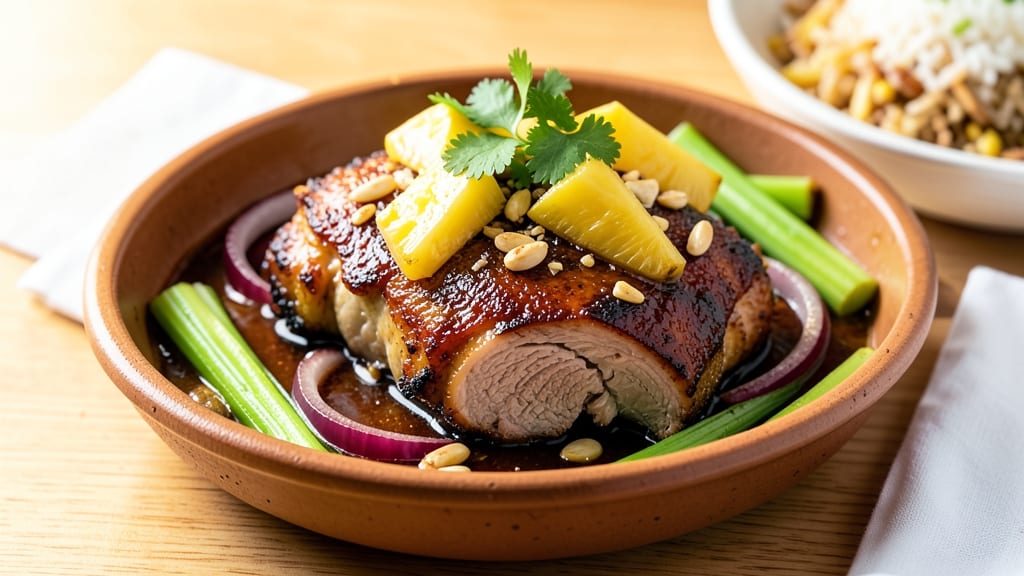
This Pinoy-style pork pata humba with pineapple delivers the perfect balance of sweet, tangy, and savory flavors in every bite—just like my tita used to make during family gatherings. 💛 The secret lies in slow-braising the pork until it's fork-tender, then finishing it with caramelized pineapple and crispy celery that adds a satisfying crunch.
This dish isn't just about the meat; it's about the harmony of textures and flavors that make it unforgettable.
What sets this recipe apart is the traditional Filipino technique of braising the pork in a rich, slightly sweet sauce until it's meltingly tender.
The pineapple isn't just an afterthought—it's cooked down to create a glossy, sticky glaze that clings to every bite, while the celery adds a refreshing crunch that cuts through the richness.
The marinade, a blend of soy sauce, vinegar, and spices, infuses the pork with deep, complex flavors that develop as it cooks.
By the time you're done, you'll have a dish that's rich, flavorful, and perfectly balanced—ready to be served over steamed rice with a side of atchara for that classic Pinoy touch.
The aroma alone will have everyone gathering around the table, and the first bite will transport you straight to a Filipino fiesta. This is comfort food at its finest, made even better with the right techniques.
The beauty of this recipe is its versatility—it's perfect for family dinners, potlucks, or even a special weekend meal. The slow cooking process means you can prepare it ahead of time, and the flavors only get better as they meld together.
Plus, the leftovers reheat beautifully, making it a practical choice for busy weeks. Let's get cooking!
Ingredients for pork pata humba with pineapple recipe pinoy style
Six ingredients make this Pinoy classic unforgettable—crispy celery, sweet pineapple, and tender pork that melts in your mouth.
| Ingredient | Amount | Notes |
|---|---|---|
| Pork Shoulder (Pata) 🥩 | 3 lb | Cut into 2-inch chunks, bone-in preferred |
| Pineapple Chunks 🍍 | 2 cups | Fresh or canned in juice, drained |
| Celery Stalks 🥬 | 3 whole | Cut into 1-inch pieces, leaves reserved |
| Yellow Onion 🧅 | 1 whole | Thinly sliced, about 1.5 cups |
| Garlic Cloves 🧄 | 6 cloves | Minced or finely chopped |
| Soy Sauce 🥄 | ½ cup | Regular or dark soy sauce |
| White Vinegar 🍶 | ¼ cup | White or cane vinegar |
| Brown Sugar 🍚 | ½ cup | Packed, light or dark |
| Black Peppercorns 🌶️ | 1 tsp | Crushed, not ground |
| Bay Leaves 🌿 | 2 whole | Dried, removed before serving |
| Cooking Oil 🫒 | ¼ cup | Vegetable or canola oil |
| Salt 🧂 | 1 ½ tsp | Kosher or sea salt |
| Green Bell Pepper 🌶️ | 1 whole | Cut into 1-inch pieces, optional |
| Tomato Paste 🍅 | 2 tbsp | Squeeze tube or canned |
The pork shoulder is key—bone-in gives the most flavor, but boneless works too. Look for cuts with good marbling at Filipino markets or the meat section of Walmart. If you can't find pata, pork butt or shoulder is the next best thing. The pineapple should be ripe but firm—Dole or Del Monte cans work in a pinch, but fresh tastes better. Celery leaves are often overlooked, but they add that signature crunch and aroma. Save them for garnishing at the end—trust me on this.
No soy sauce? Coconut aminos or even extra Worcestershire sauce (check for no anchovies) works, though the flavor won't be identical. Swapping brown sugar? Coconut sugar or honey gives a similar caramelized depth. Vinegar substitute? Lime juice or apple cider vinegar both work. The tomato paste is non-negotiable for that rich umami base—Rao's or any good-quality canned paste will do. Fresh garlic and onion are ideal, but if you're short on time, powdered garlic and onion at half the amount gets you close.
This dish tastes even better the next day—3-4 days in the fridge, covered tightly. For longer storage, freeze portions for up to 3 months. I like to portion it into containers with rice so I can grab it straight from the freezer on busy mornings. The celery and pineapple can be prepped ahead and stored separately in the fridge for 2 days. When reheating, add a splash of water or broth to keep it moist—microwave works, but stovetop gives the best texture.
Why You'll Love This Recipe
- One-Pot Magic: I swear by this—just brown the pork, toss in the onions, garlic, and celery, then let the pineapple’s sweetness melt into the sauce. No extra pots, no stress, just hands-off simmering while you sip your coffee.
- Sweet-Savory Balance: That caramelized pork with the tangy pineapple? It’s like a flavor hug. The celery adds a subtle crunch, and the garlic? Oh, it’s the secret weapon—deep, aromatic, and impossible to resist.
- Weeknight Workhorse: Between us, this feeds my whole family with leftovers that taste even better the next day. Pack it for lunch or reheat it for dinner—it’s my go-to when I’m too tired to plan.
- Budget-Friendly Luxury: Pork shoulder is cheap but feels special, and pineapple stretches the dish without breaking the bank. Honestly, it’s the kind of meal that makes frugal nights feel like a treat.
Step-by-step instructions for Pinoy-style pork pata humba
Here's how to make this beloved Filipino dish with perfectly tender pork and just the right sweet-tart balance.
🔥 Step 1: Sear the Pork Shoulder for Deep Flavor
Heat the 0.25 cup cooking oil in a large Dutch oven or heavy pot over medium-high heat until shimmering. Add the 3 lb pork shoulder (pata) cut into 2-inch chunks in a single layer, working in batches if needed. Let them sear undisturbed for 3-4 minutes per side until deep golden brown—this creates that gorgeous crust we want.
I press down gently on the pork pieces during the first minute to prevent them from curling. Don't crowd the pan or you'll steam instead of sear. Once all pieces are browned, transfer them to a plate and set aside. This step builds the foundation for all that rich flavor in the final dish.
🍳 Step 2: Build the Sweet-Savory Base
In the same pot, add the thinly sliced yellow onion and 1-inch celery pieces (reserve the leaves for garnish). Cook for 5 minutes until softened. Add the 6 cloves minced garlic and 1-inch green bell pepper pieces (if using), cooking for another 2 minutes until fragrant.
Stir in the 2 tbsp tomato paste and cook for 1 minute until it darkens slightly. This creates a beautiful color base for our sauce. I always use a wooden spoon here to scrape up any browned bits from the bottom—they're packed with flavor. Here's where the magic starts happening between the sweet and savory elements.
🥘 Step 3: Simmer the Pork in Flavorful Liquid
Pour in the 0.5 cup soy sauce, 0.25 cup white vinegar, and 0.5 cup brown sugar. Stir well to combine, then return the pork to the pot. Add 2 cups pineapple chunks, 1.5 tsp salt, 1 tsp crushed black peppercorns, and 2 whole bay leaves. Bring to a gentle boil, then reduce heat to low and cover partially.
Simmer for 1 hour 30 minutes until the pork is fork-tender. I check at the 1-hour mark—if the liquid reduces too much, add ¼ cup water to maintain moisture. The pork should be falling apart easily when pierced with a fork, but not yet shredding completely. This slow cooking develops that melt-in-your-mouth texture we love in Filipino dishes.
⏰ Step 4: Finish with Crispy Celery and Perfect Sauce
Remove the pork from the pot and set aside. Increase heat to medium-high and add the reserved celery leaves and any remaining celery stalks cut into pieces. Cook for 3-4 minutes until they crisp up beautifully—this adds that signature crunch to the dish.
Return the pork to the pot and simmer uncovered for another 5 minutes to thicken the sauce slightly. Taste and adjust seasoning if needed—you might want to add a pinch more salt or sugar to balance the flavors. The sauce should coat the back of a spoon but still be saucy enough to serve over rice.
🍽️ Step 5: Serve with Crispy Celery Topping
Transfer the pork and sauce to a serving platter. Garnish with the crispy celery leaves on top for that authentic presentation. Serve immediately with steamed white rice—each bite should deliver tender pork, sweet pineapple, and that perfect balance of salty, sweet, and tangy flavors.
Here's the thing about this dish—the flavors actually improve the next day as the sauce reduces further. I always make extra because it's that good reheated. The pork will be even more tender, and the sauce will be more concentrated. Don't skip the celery leaves on top—that's what makes this dish look (and taste) special!
Pro Tips For Making Pork Pata Humba With Pineapple Recipe Pinoy Style
- SEAR THE PATA FIRST: The pork shoulder needs a good crust—don’t skip the initial sear. After browning the meat in oil, let it sit for 2-3 minutes per side until deep golden, or it’ll turn out bland and mealy. (Yes, even if you’re impatient like me.)
- USE FRESH PINEAPPLE, NOT CANNED: Fresh pineapple chunks hold their shape and add brightness—canned gets mushy and watery. Cut the fruit into 1-inch pieces, then lightly salt them before adding to the pot. (Your future self will notice the difference.)
- DON’T RUSH THE SIMMER: Low and slow is the name of the game. Once the pork is submerged, keep the heat at a gentle simmer (tiny bubbles, not rolling). I learned this the hard way—rushing it makes the meat tough and the sauce thin.
- CHOP CELEERY FINE, NOT CHUNKY: Small, even pieces (about ¼-inch) blend better into the sauce and cook faster. If you’re lazy, pulse them in a food processor—but don’t skip them entirely, or the dish loses its classic texture. (I know, I know, but trust the process.)
Regional styles of this dish
Classic Filipino Style
The original pork pata humba from the Philippines relies on a simple but flavorful marinade of soy sauce, vinegar, and brown sugar to tenderize the pork while adding depth.
Traditional versions often use pineapple chunks cooked down into the sauce for natural sweetness, but they typically skip the crispy celery topping. I remember my tita always serving this with steamed jasmine rice and a side of atchara (pickled papaya) to cut through the richness.
The key difference here is the 1.5-hour braising time—Filipino cooks know patience is everything for that melt-in-your-mouth texture. 🌶️
Visayan Regional Twist
In the Visayas region, this dish often includes green bell peppers and extra garlic for a slightly spicier profile. Cooks there might also add 1 tbsp calamansi juice (Filipino lime) to the marinade for a bright citrus note.
The pineapple is sometimes replaced with mango chunks in summer months, though I prefer the tropical sweetness of pineapple. Visayan versions often finish with a sprinkle of toasted sesame seeds for extra crunch instead of celery leaves.
This regional variation keeps the same core technique but adds a fruity complexity that feels summery. 🍍
Modern Filipino-American Adaptation
For home cooks in the US, I've adapted this recipe to use fresh pineapple instead of canned whenever possible—it makes a world of difference in flavor. Many Filipino-American families add 1 tbsp fish sauce to the marinade for extra umami depth, though I find it's not always necessary.
The crispy celery topping is a modern touch that adds visual appeal and texture contrast. Some versions even incorporate grilled pineapple slices on top for extra caramelization.
The biggest adaptation is using bone-in pork shoulder for richer flavor, which is easier to find at mainstream grocery stores than traditional cuts. 🥩
Pampanga-Inspired Version
In Pampanga province, this dish often includes shrimp paste (bagoong) in the marinade for a funky, salty depth. The pork is sometimes marinated overnight in shrimp paste, vinegar, and sugar before cooking. Pampanga-style versions also use more black peppercorns and often include hard-boiled eggs mixed into the final dish.
The sauce is typically thicker, almost like a glaze, and the dish is served with garlic fried rice instead of plain white rice. This regional take is bolder and more complex, perfect for adventurous eaters. 🌿
Quick Weeknight Adaptation
For busy weeknights, I often swap the 1.5-hour braise for a 30-minute pressure cooker method—just sear the pork first, then pressure cook with all ingredients for 20 minutes on high. The pineapple can be added fresh at the end to maintain its texture.
For a vegetarian version, use extra-firm tofu marinated in the same sauce and pressed before cooking. Some home cooks even make a pork-free version with mushrooms and pineapple for a similar flavor profile. The key is maintaining that sweet-savory balance, even with different proteins. ⏰
Nutrition facts
Frequently asked questions
Can I use boneless pork shoulder instead of bone-in?
Yes, you can use boneless pork shoulder, but bone-in cuts like pata give richer flavor and stay more tender during braising. If using boneless, reduce cooking time by about 15 minutes since it cooks faster. Look for well-marbled cuts at Filipino markets or the meat counter for best results.
How do I get the celery extra crispy like in the photos?
The secret is cooking the celery leaves and stalks separately at the end over medium-high heat for just 3-4 minutes until golden. Don't overcrowd the pan or they'll steam instead of crisp. For extra crunch, toss them with 1 tsp oil before adding to the pan. The high heat creates that satisfying texture contrast that makes this dish special.
What's the best way to reheat leftovers?
Reheat in a skillet over medium heat with 2 tbsp water or broth to prevent drying out. Cover and cook for 5-7 minutes until warmed through. The microwave works too—just add 1 tbsp water and cover with a damp paper towel for 2 minutes on high. Leftovers actually taste better the next day as the sauce reduces further!
Can I make this in a slow cooker?
Brown the pork first, then transfer everything to your slow cooker. Cook on low for 6-7 hours or high for 3-4 hours. Add the celery leaves and pineapple in the last 30 minutes to maintain their texture. The slow cooker method gives even more tender pork and deeper flavor development.
What's the difference between this and regular pork adobo?
While both use soy sauce and vinegar, this dish features pineapple and celery for sweet-tart balance, plus a longer braising time for melt-in-your-mouth pork. Adobo is more vinegar-forward with a thinner sauce, while this version has a richer, slightly sweet profile with that signature crispy celery topping that makes it uniquely Pinoy.