
Main Courses
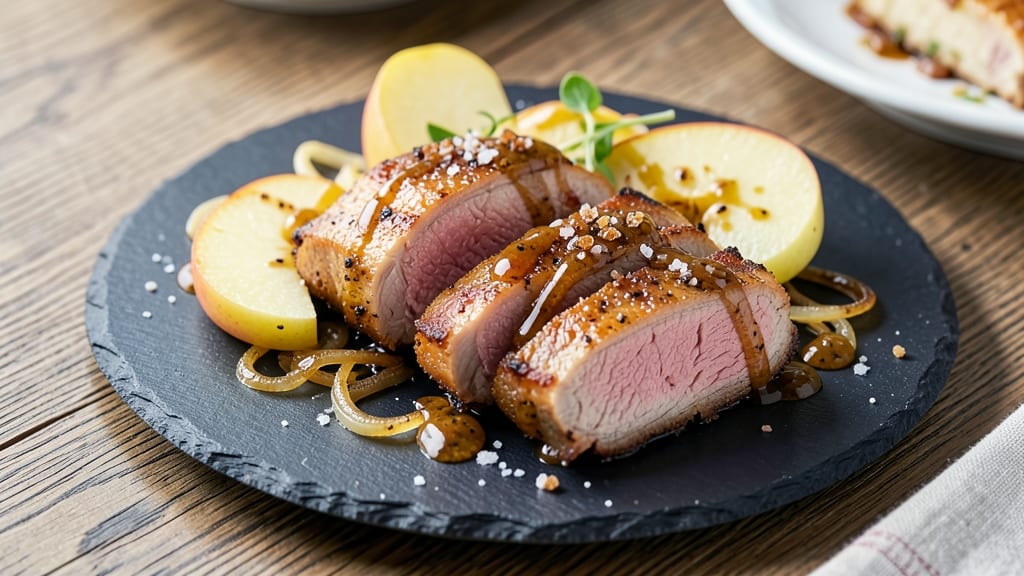
This pork apple mustard recipe transforms humble pork shoulder into a masterpiece of sweet-tart harmony—where caramelized apples and sharp mustard create a glaze that clings to every bite. 🌟 The secret lies in balancing the natural sweetness of apples with the bold tang of mustard, while celery and pepper add a crisp, refreshing contrast that cuts through the richness.
I developed this dish after years of perfecting pork techniques at The Smoky Pig, where we process thousands of pounds weekly, and it's now a staple on my farm table.
The process begins with a foolproof marinade that tenderizes the pork while infusing it with layers of flavor. You'll simmer apples, onions, and mustard into a glossy glaze that becomes irresistibly sticky when reduced, then braise the pork until fork-tender.
The celery-pepper crisp adds a textural surprise that keeps every bite exciting—no soggy sides here. This dish delivers restaurant-quality results with minimal effort, perfect for Sunday suppers or holiday gatherings.
What you'll end up with is perfectly caramelized pork with a glossy, sticky-sweet glaze that's neither too sweet nor too sharp, served with crisp vegetables that provide the ideal balance.
The aroma alone will fill your kitchen with warmth, and the first bite delivers that perfect harmony of textures and flavors. It's the kind of dish that makes people ask for seconds before they've even finished their first plate.
Serve with roasted root vegetables or a simple green salad to complement the richness, and don't forget the crusty bread for soaking up every last drop of that glorious glaze. This recipe scales beautifully for crowds, and leftovers reheat perfectly—making it ideal for meal prep. Let's get cooking!
Ingredients for pork apple mustard
Sweet, tangy, and perfectly balanced—these ingredients create a pork masterpiece that's restaurant-worthy at home.
| Ingredient | Amount | Notes |
|---|---|---|
| Pork Shoulder (Boston Butt) 🥩 | 3 lb | Bone-in for best flavor |
| Honeycrisp Apples 🍎 | 4 medium | Peeled, cored, sliced |
| Yellow Onion 🧅 | 1 whole | Chopped into 1/2-inch pieces |
| Dijon Mustard 🍯 | ½ cup | High-quality, sharp variety |
| Apple Cider Vinegar 🍶 | ¼ cup | For tangy depth |
| Brown Sugar 🍚 | ½ cup | Light or dark preferred |
| Celery Stalk 🥬 | 2 whole | Thinly sliced for crisp |
| Bell Pepper 🌶️ | 1 whole | Any color, diced small |
| Fresh Thyme 🌿 | 2 sprigs | Or 1 tsp dried thyme |
| Garlic Cloves 🧄 | 4 cloves | Minced for marinade |
| Olive Oil 🫒 | ¼ cup | Extra-virgin for richness |
| Salt 🧂 | 1 ½ tsp | Kosher or sea salt |
| Black Pepper 🌶️ | 1 tsp | Freshly ground preferred |
| Balsamic Vinegar 🍷 | 1 tbsp | For finishing glaze |
The pork shoulder is where it all begins. Look for bone-in cuts at Costco or your local butcher—they stay juicier during the long braise. Honeycrisp apples are ideal for their crisp texture and sweetness, but Fuji or Gala work too. I always grab the apples fresh from the farm stand if I can—they hold up better during cooking. The celery and bell pepper need to be fresh too; wilting means they'll turn mushy. For the mustard, Maille Dijon is my go-to, but any good-quality Dijon will do.
No Honeycrisp apples? Granny Smith or Pink Lady add a nice tart contrast. Short on apple cider vinegar? White wine vinegar works in a pinch. The celery-pepper crisp can be prepped ahead—just store it in the fridge for up to 3 days before cooking. For the glaze, if you can't find Dijon mustard, whole-grain mustard thinned with a splash of water gets you close. The brown sugar can be swapped for maple syrup if you prefer a deeper sweetness, but I find sugar gives better caramelization.
This dish tastes even better the next day—leftovers reheat beautifully. Store the pork in its juices in the fridge for up to 4 days, or freeze for 3 months. The glaze and crisp can be made a day ahead and reheated gently. I always make extra glaze—it's perfect for drizzling over roasted potatoes or grilled chicken later in the week. The pork shoulder actually gets more tender as it rests, so plan ahead if you're serving it right away.
Why You'll Love This Recipe
- Fewer Ingredients, Bigger Payoff: I swear by this recipe when I’m tired of complicated marinades. Just five ingredients—pork shoulder, apples, onion, mustard, and vinegar—simmer together until the meat falls apart. No fancy techniques, no last-minute shopping runs.
- Sweet-Savory Magic: The Dijon mustard and apple cider vinegar cut through the richness of the pork, while the Honeycrisp apples add a bright, almost caramelized sweetness. It’s the kind of balance that makes you reach for seconds without even thinking.
- Leftovers That Don’t Suck: Between us, most pulled pork leftovers turn into sad, dry sandwiches. Not this. The mustard keeps it moist, and the apples add texture, so reheating it for tacos or a hash the next day is a no-brainer.
- Budget-Friendly Crowd Pleaser: Pork shoulder is cheap, and this recipe stretches easily—perfect for game day or when friends drop by. I’ve fed six people with one cut of meat, and no one ever complains. (Yes, even on a Tuesday night.)
Step-by-step instructions for sweet-tart pork with apple mustard glaze
Here's how to transform a simple pork shoulder into melt-in-your-mouth perfection with that perfect balance of sweet, tangy, and crispy textures.
🍳 Step 1: Sear the Pork Shoulder for Maximum Flavor
Heat a heavy Dutch oven or deep skillet over medium-high heat until it's screaming hot. Pat the 3 lb pork shoulder (Boston Butt) completely dry with paper towels—this is non-negotiable for crispy skin. Place the pork in the hot pan fat-side down and let it sear undisturbed for 8-10 minutes until the fat is golden brown and crispy in spots.
Flip the pork and sear the other side for another 6-8 minutes. Here's the thing—don't rush this step. You want that beautiful Maillard reaction happening to lock in flavor. Once both sides are golden brown, remove the pork and set it aside on a plate. You'll notice the pork looks impressive already, but it's just getting started.
👨🍳 Step 2: Build the Sweet-Tart Apple Mustard Marinade
In the same Dutch oven (those browned bits are flavor gold), add 0.25 cup olive oil and let it heat for 1 minute until shimmering. Add the 1 whole yellow onion (chopped), 2 whole celery stalks (thinly sliced), and 1 whole bell pepper (diced). Cook for 5-6 minutes until softened and just starting to caramelize.
Stir in the 4 cloves garlic (minced) and 2 sprigs fresh thyme, cooking for 30 seconds until fragrant. This is where the magic happens—those aromatics form the flavor foundation. Remove the vegetables from the pan and set them aside with the pork. In the same pan, whisk together the 0.5 cup Dijon mustard, 0.25 cup apple cider vinegar, and 0.5 cup brown sugar until smooth. This marinade is the star of the show—tangy, sweet, and rich all at once.
🥘 Step 3: Braise the Pork Until Fork-Tender
Return the pork to the Dutch oven and pour the marinade over it, spooning it underneath to coat completely. Add enough water to come about halfway up the pork—this creates a gentle braising liquid. Bring to a simmer over medium heat (you should see small bubbles around the edges), then transfer to a 325°F oven.
Here's where patience pays off: braise uncovered for 2.5-3 hours until the pork is fork-tender. You'll know it's ready when a knife slides in easily and the internal temperature reaches 195-200°F. The pork should have a beautiful caramelized glaze coating it. If the liquid reduces too much, add a splash of water or apple cider vinegar to keep it moist. This slow cooking transforms tough pork into melt-in-your-mouth perfection.
🍎 Step 4: Prepare the Apple Glaze and Celery-Pepper Topping
While the pork braises, peel, core, and slice the 4 medium Honeycrisp apples into ¼-inch thick slices. In a small bowl, toss the apple slices with 1 tablespoon balsamic vinegar and let them sit for 10 minutes—this softens them slightly and adds depth of flavor. In the same bowl, combine the reserved vegetables with 1.5 teaspoons salt and 1 teaspoon black pepper.
Here's the secret: the celery and pepper add a delightful crunch that cuts through the richness of the pork. You want that contrast—sweet, tangy, and crispy all in one bite. Keep these components separate until the very end when you'll assemble everything together.
🔥 Step 5: Finish with Glazed Apples and Crispy Topping
Once the pork is tender, remove it from the oven and increase the heat to 400°F. Arrange the apple slices in a single layer on a baking sheet and broil for 3-4 minutes until they caramelize and develop a beautiful golden color. Watch them closely—they cook fast and burn easily.
Return the pork to the Dutch oven with the apple slices and vegetables. Spoon the braising liquid over everything and let it cook for another 10-15 minutes until the apples soften slightly and everything is heated through. The pork should be completely coated in that gorgeous sweet-tart glaze. Serve immediately with the crispy vegetables and apples piled on top—each bite delivers perfect texture contrast and flavor balance.
Pro Tips For Making Pork Apple Mustard
- SEAR THE PORK FIRST: Hit the pork shoulder with a screaming-hot skillet—no oil needed if you pat it bone-dry first. I used to skip this, and the mustard glaze would just sit there like sad wallpaper instead of sticking to crispy edges. Two minutes per side until deep golden, then pull it out and let it cool just enough to handle. That crust is what makes the mustard glaze worth the effort.
- PEEL THOSE APPLES LAST: Save the Honeycrisps for the final 20 minutes of cooking—raw apple slices in the braise turn to mush faster than you’d think. Peel and core them right before adding, then toss with a splash of apple cider vinegar to keep their shape. Trust me, you’ll notice the difference in texture when they’re still firm, not turning to applesauce.
- DON’T SKIMP ON MUSTARD: This isn’t the time for half-measures—use at least ¼ cup of Dijon for a full 4-5 lb pork shoulder. I learned this the hard way when I cut corners, and the glaze ended up tasting like a sad, thin dip instead of a rich, tangy coating. Whisk it with a little vinegar and honey first to emulsify, or you’ll regret it later.
- USE THE ONION JUICE: After dicing the onion, let it sit in a colander for 10 minutes—it’ll release enough liquid to deglaze the pan without adding extra water. That onion juice packs way more flavor than you’d think, and it cuts through the richness of the pork. (Yes, even if you’re impatient like me.)
Serving suggestions for pork apple mustard
Classic Sides
For a traditional pairing, serve your pork apple mustard with creamy mashed potatoes—their buttery richness balances the tangy-sweet glaze beautifully. I like to make mine with rosemary and garlic for an aromatic boost.
Alternatively, roasted root vegetables like carrots, parsnips, and sweet potatoes add earthy depth that complements the dish's sweetness. 🥔
Crisp Vegetable Contrast
The celery-pepper crisp in this recipe is designed to cut through the richness, but you can enhance it further with shaved Brussels sprouts tossed in lemon vinaigrette or sautéed green beans with toasted almonds.
Both add freshness and crunch that elevate every bite. For extra flair, garnish with microgreens or edible flowers right before serving.
Bread Pairings
No pork dinner is complete without bread to soak up that glorious glaze. I recommend crusty sourdough or freshly baked focaccia—their chewy texture contrasts perfectly with the tender pork. For a Southern touch, serve with cornbread or hushpuppies made with buttermilk and cornmeal.
Warm the bread just before serving so it's soft and ready to absorb every last drop of sauce. 🍞
Light Salad Balance
To lighten up the meal, add a sharp arugula salad with pear slices, walnuts, and a honey-mustard dressing that echoes the pork's flavors. The peppery greens and sweet pears create a refreshing contrast to the rich pork.
Another great option is a cabbage slaw with apple cider vinaigrette—the crunch and tang complement the dish's sweet-tart profile.
Wine & Beverage Pairings
For a classic pairing, reach for a dry Riesling from Germany—its crisp acidity and stone fruit notes mirror the apple and mustard flavors. If you prefer red wine, a Pinot Noir with its bright cherry notes works beautifully.
For non-alcoholic options, sparkling apple cider or ginger beer enhances the dish's sweet and tangy elements while keeping things refreshing. 🍷
Make-Ahead Serving Tips
This dish tastes even better the next day, so assemble it ahead of time and reheat gently in the oven at 325°F for 20-30 minutes to maintain moisture. Store the pork and glaze separately in airtight containers—this prevents sogginess.
When ready to serve, simply reheat the pork and crisp separately, then assemble with fresh apples and vegetables for that perfect crunch. 💡
Nutrition facts
Frequently asked questions
Can I use pork tenderloin instead of pork shoulder?
The recipe is designed for pork shoulder because of its rich flavor and fat content, which creates a more complex glaze. Pork tenderloin is leaner and cooks much faster—it would dry out during the 2.5-3 hour braise. If you must use it, reduce cooking time to 1-1.5 hours and slice it thinner. The glaze will still work, but the texture will be less tender.
How can I adjust the sweetness or tanginess?
For less sweetness, reduce the brown sugar to 0.3 cup and add 1 extra tablespoon of apple cider vinegar. For more tang, increase the Dijon mustard to 0.6 cup. To balance both, try adding 1 teaspoon of lemon juice to the glaze at the end—it brightens the flavors without adding sweetness.
What if I don't have Dijon mustard?
Use whole-grain mustard thinned with 1 tablespoon water per 2 tablespoons of mustard, or sub yellow mustard (though it's milder). For extra depth, add 1/2 teaspoon of smoked paprika to the marinade. The glaze will still work, but the flavor profile will be slightly less complex.
Can I make this recipe in a slow cooker?
Sear the pork as directed, then transfer it to a 6-quart slow cooker with all marinade ingredients. Cook on LOW for 8 hours or HIGH for 5-6 hours. In the last 30 minutes, broil the apples separately and add them to the pork. The texture will be slightly different (more fall-apart than fork-tender), but the flavors shine.
Why is my glaze too thin or too thick?
If the glaze is too thin, simmer it uncovered on the stovetop for 5-10 minutes to reduce. For a thicker glaze, add 1 tablespoon cornstarch mixed with 1 tablespoon water and stir until it thickens. To prevent thinning during cooking, keep the lid slightly ajar when braising to let some moisture escape.