
Main Courses
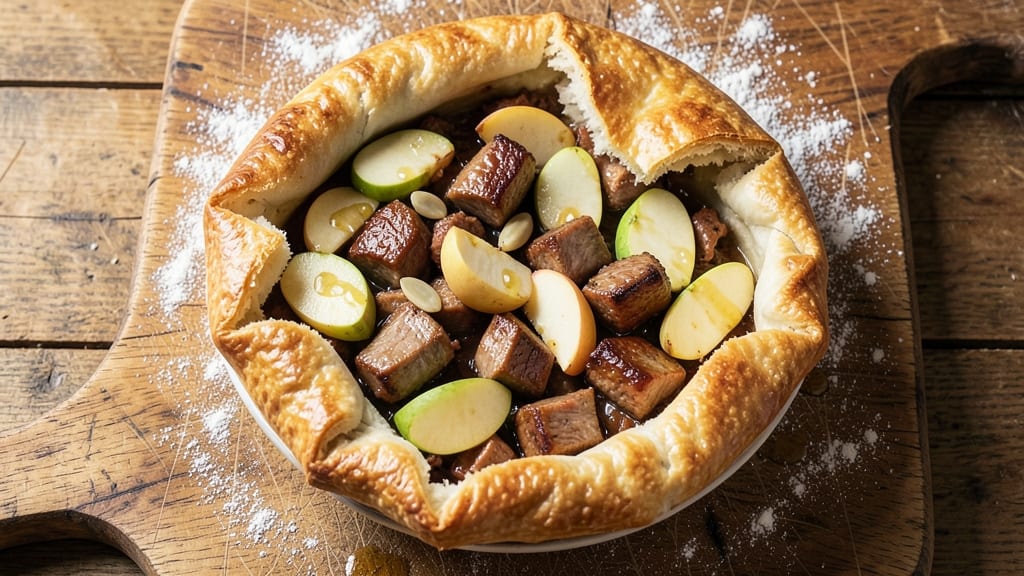
This pork and apple pasty recipe delivers the perfect balance of savory pork and sweet apples wrapped in a flaky crust that rivals any bakery. I developed this version after years of perfecting the art of handheld pasties—where tender pork shoulder and caramelized apples meet a buttery, golden crust.
The key lies in layering flavors: slow-cooked pork infused with thyme and bay, paired with tart apples that soften just enough to release their natural sweetness without turning mushy.
The secret to that signature flaky crust starts with cold butter cut into the flour, then rested in the fridge before rolling. This ensures layers of melt-in-your-mouth texture rather than a dense, tough pastry.
I use a mix of Granny Smith and Honeycrisp apples for that perfect balance of tartness and sweetness, but any crisp apple will work. The filling cooks just until tender, so the apples retain their bite and the pork stays juicy—no dry, overcooked mess here.
What makes this recipe truly special is how it transforms humble ingredients into something restaurant-worthy. The combination of smoky pork, caramelized apples, and buttery crust creates a handheld meal that’s hearty enough for a family dinner but simple enough for a weeknight.
The aroma alone—warm apples mingling with thyme and pork—will have everyone gathering around the table. Trust me, this is one pasty that disappears faster than you can say "second helpings."
Whether you're serving this at a picnic, holiday gathering, or just craving comfort food, these pasties deliver. The dough can be prepped ahead, and the filling comes together in under 30 minutes—perfect for busy cooks who still want impressive results. Let’s get baking!
Ingredients for pork and apple pasty
Six ingredients for the filling, six for the crust—just enough to create restaurant-quality pasties at home.
| Ingredient | Amount | Notes |
|---|---|---|
| Pork Shoulder 🥓 | 1 ½ lb | Boneless, cut into 1-inch cubes |
| Granny Smith Apples 🍏 | 2 whole | Peeled, cored, sliced into wedges |
| Honeycrisp Apples 🍏 | 2 whole | Peeled, cored, sliced into wedges |
| All-Purpose Flour 🌾 | 3 cups | Plus 2 tbsp for dusting |
| Unsalted Butter 🧈 | ¾ cup | Cold, cubed, for flaky layers |
| Ice Water 💧 | ¼ cup | For dough elasticity |
| Salt 🧂 | 1 tsp | Plus extra for dough |
| Black Pepper 🌶️ | ½ tsp | Freshly ground |
| Fresh Thyme Leaves 🌿 | 1 tbsp | Chopped, stems removed |
| Fresh Rosemary 🌿 | 1 tbsp | Chopped, stems removed |
| Bay Leaves 🍃 | 2 whole | Crushed lightly |
| Granulated Sugar 🍚 | 1 tbsp | For caramelizing apples |
| Olive Oil 🫒 | 1 tbsp | For filling |
The pork shoulder is where the magic starts. Look for well-marbled cuts at Whole Foods or your local butcher—the fat renders down beautifully, keeping the meat juicy. Granny Smith and Honeycrisp apples are my go-tos because their tartness balances the pork's richness, but any crisp apple works. If you can't find Honeycrisp, Fuji or Braeburn are great backups. For the crust, King Arthur flour is my secret weapon—it gives that perfect flaky texture, but any all-purpose flour in a pinch. The butter? Plugrá or Land O'Lakes work, but make sure it's cold when you cut it into the flour. Room-temperature butter = tough pastries.
No Granny Smith? McIntosh or Pink Lady add sweetness, but you'll need to reduce sugar to 1/2 tablespoon. Short on thyme? Dried thyme at 1/3 the amount works, but fresh is better. Rosemary is non-negotiable—it adds that earthy depth. If you're making a big batch, freeze extra dough balls for up to 3 months. The filling can be prepped ahead and refrigerated for 24 hours before baking. For extra flakiness, chill the dough for 30 minutes between folds—worth the wait!
The dough keeps best in the fridge, wrapped tightly, for 3 days—but honestly, it's better the next day after the flavors meld. The filling can be stored separately for 2 days before baking. For make-ahead convenience, pre-roll and freeze dough discs—just thaw before using. These pasties reheat beautifully: 350°F for 10-12 minutes until golden. Leftovers? Freeze fully baked pasties for 2 months—they reheat like a dream.
Why You'll Love This Recipe
- No-Rolling Required: I swear by this trick—just cut the dough into squares, fold, and press. No stressing over perfect circles or rolling pins. That buttery crust still comes out golden and flaky, even when I’m in a hurry.
- Sweet-Savory Magic: Granny Smiths add that sharp bite, while Honeycrisp brings juicy sweetness—together, they cut through the rich pork shoulder like a dream. Honestly, the first bite makes me pause mid-chew.
- Picnic to Potluck: These pasties travel like champs. Wrap them in foil, toss in a cooler, and they’re still warm and delicious hours later. My go-to for tailgates, office parties, or lazy Sundays when I don’t want to fuss.
- Leftovers? More Like Leftovers: Make a double batch—trust me, they disappear fast. Reheat in the oven until crispy again, and they taste just as good the next day. Budget-friendly? Absolutely. My wallet thanks me every time.
Step-by-step instructions for pork and apple pasty recipe
Here's how to create a golden, flaky crust that perfectly encases your savory-sweet filling.
Prepare the Pork and Apple Filling
In a large skillet, heat the 1 tablespoon olive oil over medium heat. Add the 1.5 lb pork shoulder cut into 1-inch cubes and cook for 5-6 minutes until the pork begins to brown on all sides. This step develops deep flavor through the Maillard reaction.
Remove the pork from the skillet and set aside. In the same pan, add the 2 whole Granny Smith Apples and 2 whole Honeycrisp Apples, both sliced into wedges. Sprinkle with the 1 tablespoon granulated sugar and cook for 4-5 minutes until the apples begin to soften and release their juices. Here's the thing—this caramelization creates that perfect balance of sweet and savory in every bite.
Return the pork to the skillet and add the 1 tablespoon fresh thyme leaves, 1 tablespoon fresh rosemary, 2 whole bay leaves (lightly crushed), 1 teaspoon salt, and 0.5 teaspoon black pepper. Cook for another 3-4 minutes until everything is well-coated and heated through. Remove from heat and let cool slightly—this filling needs to be just warm enough to work with when assembling the pasty.
Make the Flaky Pastry Dough
In a large bowl, combine the 3 cups all-purpose flour and 1 teaspoon salt (plus any extra for dusting). Cut in the 0.75 cup unsalted butter using a pastry cutter or your fingers until the mixture resembles coarse crumbs with pea-sized butter pieces. This cold butter is what creates those beautiful flaky layers.
Gradually add the 0.25 cup ice water, 1 tablespoon at a time, mixing gently with a fork until the dough just comes together. Don't overmix—you want to preserve the gluten development just enough for structure, not toughness. Once combined, turn the dough onto a lightly floured surface and knead it 5-6 times until smooth. Here's the trick: keep everything cold to maintain that flakiness.
Shape the dough into a disk, wrap it in plastic wrap, and refrigerate for 30 minutes. This chilling step relaxes the gluten and makes rolling out the dough much easier. While it chills, preheat your oven to 375°F—this temperature gives you that perfect balance of crispy crust and tender filling.
Assemble and Bake the Pasty
On a lightly floured surface, roll out the chilled dough into a 12-inch circle about ⅛-inch thick. You'll want to keep the edges slightly thicker for that rustic look. Fold the circle in half to create a semicircle, then carefully transfer it to a parchment-lined baking sheet.
Spread the warm pork and apple filling evenly over the lower half of the dough, leaving about 1 inch of bare dough around the edges. This prevents the filling from touching the top crust directly, which could make it soggy. Fold the top half of the dough over the filling to completely enclose it, then press the edges together firmly to seal. Crimp the edges with a fork or your fingers for that classic pasty look.
Cut 3-4 small slits in the top of the pasty to allow steam to escape—this prevents the crust from bursting open in the oven. Bake for 45-50 minutes until the crust is deep golden brown and the internal temperature reaches 190°F. The pasty is done when the crust sounds hollow when tapped and the filling is bubbling through the slits.
Rest and Serve for Maximum Enjoyment
Remove the pasty from the oven and let it rest on a wire rack for 10-15 minutes. This resting period allows the juices to redistribute throughout the filling, ensuring every bite is moist and flavorful. The crust will firm up slightly as it cools, but it'll still be warm and inviting.
Slice the pasty into 6 equal wedges and serve immediately. The contrast of the crisp, flaky crust with the tender, caramelized pork and apples creates an unforgettable eating experience. Pair it with a simple green salad and a glass of crisp white wine for the perfect meal. Here's the moment you've been waiting for—dig in and enjoy your homemade masterpiece!
Pro Tips For Making Pork And Apple Pasty
- Prep Apples Like a Pro: Peel and core the Granny Smiths thin—just enough to remove the skin, not the flesh—and slice them into ¼-inch chunks. Leave the Honeycrisp skins on for texture, but cut them slightly smaller so they soften evenly. I learned this the hard way—overly thick slices stay crunchy while the rest cooks, and nobody wants a pasty with a surprise toothache.
- Salt the Pork Twice: Generously season the pork shoulder with salt and pepper before searing, then add another layer of salt after it’s browned. The first coat gets absorbed, while the second locks in flavor during the slow cook. Skip this, and your filling tastes bland no matter how long you bake it.
- Blind-Bake the Crust: Roll out the dough, line the pan, then prick it all over with a fork before baking. Add a sheet of parchment, fill with pie weights or dried beans, and bake for 15 minutes at 375°F. This prevents a soggy bottom—trust me, your future self will notice the difference when the crust stays crisp instead of turning into a gluey mess.
- Use Cold Butter: Cut the unsalted butter into the flour in cubes, not melted, for flaky layers. The cold fat creates steam pockets as it bakes, giving that perfect lift. I was skeptical until I tried it—now I never melt it, even in summer. The crust will thank you.
Serving suggestions for this recipe
Picnic-Perfect Plating
These pasties are designed for easy handheld dining, but I always elevate them with a few simple touches. Serve warm pasties on a wooden board with a side of apple cider poured from a glass pitcher—its tartness mirrors the filling beautifully.
Add a sprinkle of flaky sea salt right before serving to highlight the crust's buttery layers. For extra flair, garnish each wedge with a tiny sprig of fresh rosemary or thyme to echo the filling's herbs. 🍏
Wine Pairing Secrets
A crisp Sauvignon Blanc from New Zealand cuts through the richness of the pork while complementing the apple's brightness. I love Cloudy Bay Sauvignon Blanc—its citrus notes and herbal undertones mirror the thyme and rosemary in the filling.
For something lighter, a dry Riesling from Germany offers a honeyed sweetness that balances the dish's savory-sweet contrast. Avoid heavy reds; they'll overpower the delicate crust.
BBQ Side Showcase
Turn your pasty spread into a full Southern feast by adding smoked pulled pork sandwiches and cornbread muffins—both pair perfectly with the apple-pork flavors.
For a lighter option, serve a shredded cabbage and carrot slaw with a tangy apple cider vinaigrette (just mix ¼ cup cider vinegar, 2 tbsp olive oil, and 1 tsp honey). The crunch contrasts the pasty's richness beautifully.
Holiday Table Centerpiece
For festive gatherings, arrange pasties on a cast-iron skillet and surround them with roasted Brussels sprouts tossed in bacon and balsamic glaze. The smoky-sweet combo ties everything together. Add a sparkling apple cider cocktail (mix cider with sparkling water and a splash of grenadine) for a non-alcoholic option.
The effervescence cleanses the palate between bites—trust me, it's a crowd-pleaser. ✨
Make-Ahead Serving Tips
Prevent soggy crusts by baking pasties ahead and reheating them in a 350°F oven for 10-12 minutes until golden. Store cooled pasties in an airtight container for up to 3 days. For parties, assemble pasties the night before and refrigerate—bake straight from the fridge for even cooking.
Label them with parchment paper flags for a charming touch. Warm them just before serving to maintain that fresh-from-the-oven appeal.
Kid-Friendly Presentation
Cut pasties into fun shapes using a cookie cutter—stars, hearts, or even tiny pasty "sandwiches" with the crust folded over. Serve with carrot sticks and hummus** for dipping. Kids love assembling their own mini pasties too—let them sprinkle the filling with extra herbs or a pinch of sugar.
The interactive element makes them more likely to try (and finish!) their bites. 🌟
Nutrition facts
Frequently asked questions
Why does the crust need to be cold when rolling?
Cold butter in cold dough creates those signature flaky layers by preventing the butter from melting too soon. When you roll out cold dough, the butter stays solid and creates thin sheets that separate during baking, resulting in a light, airy crust. If the dough warms up, the butter melts and layers don't form properly—leading to a tough, dense crust. Keep everything chilled until it's time to bake!
Can I use frozen apples instead of fresh? Frozen apples work perfectly—just thaw them first and pat them completely dry to prevent a soggy crust. The texture will be slightly softer than fresh apples, but the flavor remains just as good. For best results, use a mix of Granny Smith and Honeycrisp varieties even when frozen. Just
How do I prevent the filling from leaking out?
Proper sealing is key! After folding the dough over the filling, press the edges firmly together and crimp them with a fork or your fingers. For extra insurance, brush the edges with a little beaten egg wash before sealing. The egg acts as a glue. Also, make sure your filling isn't too wet—if it looks soupy, drain off any excess liquid before assembling. A well-sealed pasty should hold together beautifully!
What's the best way to reheat leftovers?
For best results, reheat pasties in a 350°F oven for 10-12 minutes until golden and steaming. Wrap them in foil for the first 5 minutes to prevent drying, then uncover to crisp up the crust. Microwaving works in a pinch (30-45 seconds), but it won't give you that same satisfying crunch. The oven method maintains both texture and flavor perfectly!
Can I make these pasties ahead for a party?
Yes! Assemble the pasties completely (including crimping) and refrigerate them overnight. Bake straight from the fridge—just add 5-10 minutes to your baking time. For even better results, freeze unbaked pasties on a tray, then transfer to a bag. Thaw overnight in the fridge before baking. The flavors develop beautifully when made ahead!