Sauces & Condiments
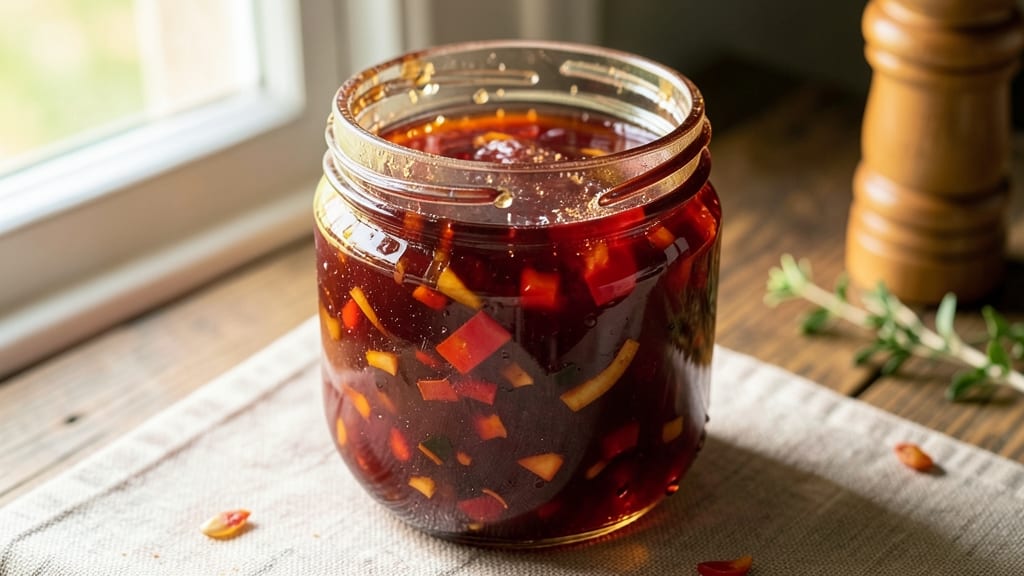
This crab apple and pepper jelly recipe transforms tart crab apples and smoky peppers into a vibrant, sweet-tart spread perfect for sandwiches, cheese boards, or glaze drizzles.
The balance of fruit acidity and pepper heat creates a complex flavor that elevates everything it touches—think crispy bacon, sharp cheddar, or even roasted chicken. What makes this jelly special is the combination of traditional fruit pectin with subtle heat, resulting in a texture that’s both chunky and perfectly set.
The process is straightforward but requires precision: sterilizing jars, simmering crab apples and peppers until tender, then straining for a clear, glossy finish. A splash of lemon juice ensures the right acidity for proper gel formation, while sugar balances the tartness.
The result is a jelly with visible fruit chunks and a hint of pepper’s warmth, making it a standout condiment that’s as beautiful as it is delicious.
Once cooled, this jelly stores for months in the pantry, ready to transform simple meals into something extraordinary. Spread it on toast with butter, drizzle it over grilled meats, or use it as a glaze for roasted vegetables.
The versatility makes it a must-have for any kitchen, especially during harvest season when crab apples are at their peak.
For those who love bold flavors, this jelly delivers a perfect harmony of sweet, tart, and spicy—without overpowering the dish it accompanies. The key is patience during the cooking process and careful straining to achieve that ideal consistency. Let’s get started on creating your own batch of this unforgettable spread.
Ingredients for crab apple pepper jelly
Sweet-tart crab apples, smoky peppers, and just the right sugar balance make this jelly unforgettable.
| Ingredient | Amount | Notes |
|---|---|---|
| Crab Apples 🍎 | 2 lbs | Washed, stems removed, roughly chopped |
| Red Bell Peppers 🌶️ | 2 whole | Seeds and ribs removed, chopped |
| Granulated Sugar 🍚 | 3 cups | White or raw preferred |
| Lemon Juice 🍋 | ¼ cup | Freshly squeezed |
| Pectin (Fruit Pectin) 🍬 | 1 package | Low or medium set recommended |
| Apple Cider Vinegar 💧 | 1 tbsp | For acidity balance |
| Cayenne Pepper 🔥 | ½ tsp | Adjust for heat preference |
| Salt 🧂 | ½ tsp | Kosher or sea salt |
| Water 💧 | 1 cup | For pectin activation |
| Pint Mason Jars 🍯 | 4 whole | With lids for storage |
Crab apples are the star here—look for firm, tart varieties at local orchards or specialty stores. Trader Joe's often carries them in fall, but if you can't find them, sub with Granny Smith apples (use 1 lb extra). The bell peppers should be bright red and crisp—no wilted ones! Skip the green—they’re milder and won’t add that smoky depth. For the sugar, raw cane sugar adds subtle molasses notes, but white sugar works fine. The key is patience: let the apples simmer until they’re completely tender—no bite left. If you’re harvesting your own crab apples, wash them thoroughly and remove stems before chopping.
No crab apples? Granny Smith apples work in a pinch, but add an extra 1 tbsp of lemon juice to boost tartness. Short on bell peppers? Jalapeños or serranos add heat—just reduce the cayenne to ¼ tsp. The pectin package directions are your bible—don’t skimp on the water or sugar ratios. For a chunkier texture, strain the jelly less (leave some fruit bits). If you prefer it smoother, use a fine-mesh sieve. The cayenne is optional, but trust me—a pinch makes it sing. And if you’re worried about acidity, the vinegar ensures proper gel formation without overpowering the sweetness.
Sterilize your jars and lids in boiling water for 10 minutes—don’t skip this! The jelly will keep for up to 12 months in a cool, dark pantry. Once opened, refrigerate and use within 3 months. I like to label mine with the date and pepper variety—jalapeño jelly makes a killer salsa topping, while bell pepper jelly shines on cheese boards. Freeze extras in ice cube trays for single-serving portions. The flavor only gets better with time, so make a double batch—you’ll want this on everything.
Why You'll Love This Recipe
- No-Waste Magic: I turn tart crab apples into something golden and sweet—no bruised fruit or scraps wasted. That first batch where I used every last apple? Pure satisfaction.
- Sweet-Spicy Balance: The red bell peppers add just enough heat to cut through the sugar’s richness, while the lemon juice keeps it bright. Honestly, it’s the kind of jelly that makes you reach for it again before breakfast.
- Gift-Worthy Jars: This isn’t just for toast—it’s the star of charcuterie boards, holiday gifts, or paired with sharp cheeses. I’ve given jars to neighbors, and they always ask for seconds. (Yes, even on a Tuesday night.)
- Budget Stretch: Crab apples grow wild in many places, and bell peppers last forever. I’ve made jars for under $2 each, and they keep for months. That’s flavor that doesn’t break the bank.
Step-by-step instructions for crab apple and pepper jelly
Here's how to make this vibrant, sweet-tart jelly with perfect texture every time.
Prepare the Fruit Mixture
In a large stainless steel pot, combine the 2 pounds of chopped crab apples and 2 whole chopped red bell peppers. I like to use a wooden spoon to stir initially—it helps break down the fruit fibers better than metal. Add the 1 cup of water and bring the mixture to a boil over medium-high heat.
Once boiling, reduce heat to medium and let it simmer for 10-15 minutes until the crab apples soften and release their juices. You'll notice the mixture reduces significantly and the peppers soften completely. This step is crucial for extracting maximum flavor and color from both fruits. Taste the mixture—it should be naturally tart but not overly sour.
Strain and Measure the Juice
Line a fine-mesh strainer with cheesecloth or a jelly bag and place it over a large bowl. Pour the cooked fruit mixture through the strainer, pressing gently with a wooden spoon to extract all the juice. Discard the solids—you should have about 4-5 cups of liquid.
Measure the juice carefully. If you have less than 4 cups, add a bit of boiling water to make up the difference. The exact amount matters for proper pectin activation later. Skim off any foam that rises to the surface before proceeding. This strained juice is the foundation of your jelly—clear, vibrant, and packed with flavor.
Prepare the Sugar and Pectin Mixture
In a separate bowl, whisk together the 3 cups of granulated sugar, 0.25 cup of lemon juice, 1 tablespoon of apple cider vinegar, 0.5 teaspoon of cayenne pepper, and 0.5 teaspoon of salt. This mixture should be completely dissolved with no sugar granules remaining. I like to use a wire whisk for this step to ensure everything blends smoothly.
Add the 1 package of fruit pectin to the sugar mixture and stir until fully incorporated. The pectin will dissolve completely—this is essential for proper gel formation. Keep this mixture ready as you'll need to add it quickly to the hot juice in the next step.
Combine and Cook to Gel Point
Return the strained juice to the pot and bring it to a full rolling boil over high heat. Once boiling vigorously, add the sugar-pectin mixture all at once and stir constantly for 1 minute using a wooden spoon. The mixture will foam up dramatically—this is normal and indicates proper pectin activation.
Continue cooking for exactly 1 more minute, stirring constantly. The jelly should reach a temperature of 220°F on a candy thermometer. You'll notice it thickens noticeably and becomes more translucent. This is the gel point—when the pectin activates and transforms the liquid into jelly. If you don't have a thermometer, perform the wrinkle test: drop a small amount on a chilled plate; it should wrinkle when pushed with your finger.
Jar and Process for Shelf Stability
Quickly ladle the hot jelly into the 4 prepared pint mason jars, filling each to within ¼ inch of the rim. Wipe the rims with a clean, damp cloth to ensure perfect seals. Place the lids on the jars and screw on the bands until fingertip tight.
Process the jars in a boiling water bath for 10 minutes to ensure proper sterilization and shelf stability. Start timing as soon as the water returns to a full boil. Remove the jars and let them cool completely on a towel-lined counter. You'll hear the satisfying "ping" as they seal. Once cooled, store in a dark, cool place—the jelly will keep for up to 1 year unopened.
Pro Tips For Making Crab Apple Pepper Jelly
- COOK PEPPERS UNTIL SOFT: Roast or boil the red bell peppers until they’re almost mushy—think you could squash them with a spoon. Overcooked peppers turn bitter, but undercooked ones won’t break down enough to blend smoothly, leaving grainy jelly. I learned this after tasting a batch where the peppers were still tough—not the same.
- PIT CRAB APPLES FIRST: Remove the stems and cores, then drop the apples into boiling water for 30 seconds to soften. This makes peeling them effortless—no more struggling with a knife or ending up with bitter, fibrous bits. My grandmother swore by this, and she was right: it cuts prep time in half.
- MEASURE SUGAR AFTER COOKING: Let the apple-pepper mixture cool slightly before adding sugar—around 160°F (70°C). Cold sugar dissolves faster and prevents grainy jelly. I used to dump it in hot, and the jelly always ended up cloudy. Now it’s crystal clear every time.
- TEST JELLY BEFORE CANNING: Do the wrist test: wiggle the jar. If the jelly flows like syrup, it’s done. If it slides like oil, keep cooking. I skipped this once and ended up with a batch that never set—now I double-check. (Your future self will thank you.)
Best sauces and condiments for these flavors
Sweet-Savory Glaze
Use this jelly as a glaze for roasted meats like pork tenderloin or chicken thighs. Brush on during the last 10 minutes of cooking at 375°F for a caramelized finish.
The pepper heat and apple tartness cut through rich meats beautifully. I like to pair it with brown sugar and mustard for extra depth. 🔥
Cheese Board Elevator
Drizzle small pools of jelly alongside aged cheddar, gouda, or brie on a cheese board. The sweet-tart balance contrasts perfectly with sharp cheeses. Add crackers, nuts, and honeycomb for a complete spread. For extra flair, sprinkle with crushed pistachios or smoked paprika.
Breakfast Toast Topper
Spread on buttered toast with a sprinkle of flaky sea salt for a sweet-savory morning treat. Add sliced crispy bacon or avocado slices for a hearty breakfast. The jelly’s acidity balances rich fats beautifully. Try it with peanut butter for a Southern-inspired twist.
Salsa Enhancement
Mix 2 tbsp jelly into store-bought or homemade salsa for a fruity, spicy kick. The apple and pepper flavors bridge the gap between sweet and heat. I love it with jalapeño-infused salsa or classic pico de gallo. Add a pinch of cumin to deepen the complexity. 🌶️
Stuffing for Roasted Vegetables
Stuff hollowed-out bell peppers or tomatoes with jelly before roasting at 400°F for 20 minutes. The jelly caramelizes, creating a sticky, flavorful coating. Pair with caramelized onions or goat cheese for a gourmet touch. Perfect for stuffing acorn squash too!
Sandwich Spread
Use as a spread for turkey or ham sandwiches instead of mayo. The jelly’s acidity cuts through fatty meats, while the pepper adds a subtle kick. Add arugula and balsamic glaze for a restaurant-worthy sandwich. It’s also amazing on grilled cheese with sharp cheddar. 🥪
Nutrition facts
Frequently asked questions
Can I substitute crab apples with regular apples?
Yes, but you’ll need to adjust the recipe slightly. Use Granny Smith apples (about 3 pounds) and add an extra 1 tablespoon of lemon juice to compensate for the milder tartness. The texture will still set well, but the flavor won’t have the same bright, complex sweet-tart balance.
How do I adjust the heat level in this jelly?
Start with the ½ teaspoon of cayenne as written for mild heat. For medium heat, add 1 teaspoon of cayenne or 1 chopped jalapeño (seeds removed). For extra spicy, use 2 teaspoons cayenne or 1 serrano pepper (seeds in). Always taste before adding the sugar-pectin mixture to avoid overpowering the fruit.
Why did my jelly turn out too runny?
Runny jelly usually means insufficient pectin activation or undercooking. Double-check you cooked the mixture to 220°F for the full 1 minute after adding the pectin. If you skipped the wrinkle test, try again—it’s the foolproof way to confirm gel point. Also, ensure you used the correct ratio of sugar to pectin (follow package directions). For a quick fix, add 1 extra tablespoon of pectin and reheat to 220°F again.
Can I make this jelly without a candy thermometer?
The wrinkle test works perfectly. Drop a small spoonful of jelly onto a chilled plate. When it wrinkles like skin when pushed with your finger, it’s ready. This test is just as accurate as a thermometer and doesn’t require extra equipment. Practice makes perfect—your jelly will thank you!
How long does homemade jelly last once opened?
Once opened, refrigerate the jelly and use it within 3 months for best quality. The acidity from the lemon juice and vinegar helps preserve it, but the texture may soften slightly over time. For longer storage, freeze the jelly in ice cube trays—thaw as needed for single servings. The flavor stays vibrant for up to 6 months in the freezer.