
Main Courses
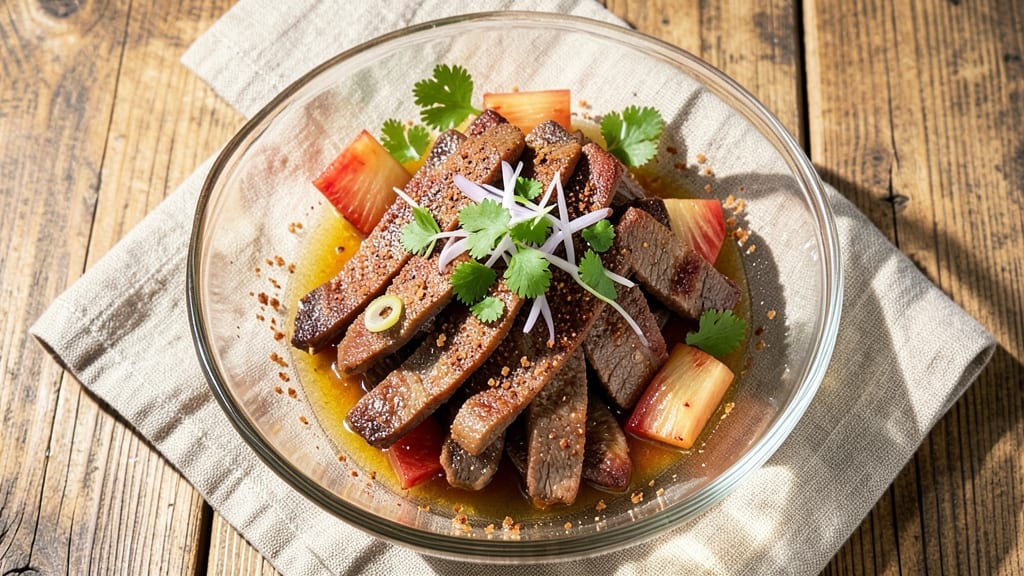
This beef jerky recipe with pineapple juice transforms tough cuts into tender, caramelized strips with tropical sweetness that'll have you reaching for seconds. I first discovered this method while experimenting with fermentation techniques in my Portland kitchen, and the pineapple juice creates a perfect balance of sweetness and tang that caramelizes beautifully during drying. The result? Jerky with a chewy texture and complex flavor profile that's far more interesting than the store-bought versions.
The secret lies in the marinade, where pineapple juice serves as both tenderizer and flavor carrier.
Unlike traditional recipes that rely solely on soy sauce or vinegar, this version uses pineapple juice's natural enzymes to break down proteins while adding a subtle tropical sweetness that caramelizes into rich, amber edges during the drying process.
We're talking about restaurant-quality jerky that's safe to make at home with proper curing techniques—no special equipment required beyond a dehydrator or even your oven.
What makes this recipe particularly special is how it combines traditional jerky-making with modern flavor twists. The pineapple juice prevents the jerky from becoming too salty while adding depth that pairs beautifully with classic spices like smoked paprika and garlic powder.
By the time your strips emerge from the dehydrator, they'll have that perfect chewy-yet-firm texture with caramelized edges that taste like they've been slow-cooked in a tropical glaze.
This method works equally well with beef, venison, or even turkey, and the pineapple marinade keeps beautifully in the fridge for up to 5 days, making it perfect for meal prep. The jerky itself stores for months in the pantry, though I promise you won't have any leftovers that long.
Let's get started on making jerky that tastes like it came from a gourmet kitchen rather than a grocery store shelf.
Ingredients for beef jerky recipe pineapple juice
Tropical caramelized edges and restaurant-quality chewiness start with these 13 ingredients.
| Ingredient | Amount | Notes |
|---|---|---|
| Top-Round Roast Beef 🥩 | 1 ½ lb | Thinly sliced against grain (1/4-inch) |
| Pineapple Juice 🍍 | 1 cup | Fresh, not canned (100% pure) |
| Soy Sauce 🍶 | ½ cup | Low-sodium preferred |
| Brown Sugar 🍚 | ¼ cup | Packed, light variety |
| Smoked Paprika 🌶️ | 2 tbsp | High-quality, not pre-mixed |
| Garlic Powder 🧄 | 1 tbsp | Freshly ground preferred |
| Ground Black Pepper 🌶️ | 1 tbsp | Freshly cracked |
| Ground Cumin 🌿 | 1 tsp | Toasted for depth |
| Kosher Salt 🧂 | 1 tbsp | Diamond Crystal preferred |
| Lemon Juice 🍋 | 1 tbsp | Freshly squeezed |
| Worcestershire Sauce 🍶 | 1 tbsp | Vegetarian if needed |
| Onion Powder 🧅 | 1 tsp | Freshly ground preferred |
| Honey 🍯 | 1 tbsp | Raw preferred (optional) |
The beef is everything here—top-round roast gives that perfect chewy texture without being tough. Most butchers will slice it for you if you ask (just say '1/4-inch against the grain'), or you can do it yourself with a sharp knife. Costco or Whole Foods are great for quality cuts, but any grocery store's butcher section works. Look for beef with good marbling—it'll stay juicier during the drying process. The pineapple juice? Fresh is non-negotiable—canned juice lacks the enzymes that tenderize the meat and won't caramelize the same way. I always grab a small pineapple, juice it myself, and freeze the extra for future batches.
No fresh pineapple juice? Mango nectar at half the amount works in a pinch, though it won't caramelize as beautifully. Short on soy sauce? Coconut aminos is a great 1:1 swap. The honey is optional but adds that extra depth—if you skip it, just reduce the brown sugar slightly. For the spices, Penzeys or local spice shops carry the best quality, but the grocery store stuff works fine if it's fresh. Quick test: if your smoked paprika smells like dust, toss it. The Worcestershire sauce adds that umami punch, but if you're vegetarian, the standard version works just as well.
Marinade keeps for 5 days in the fridge—perfect for meal prep. The beef strips? 3-4 months in the pantry if properly dried. I portion mine into reusable bags with oxygen absorbers for maximum freshness. For dehydrating, 165°F for 4-6 hours gives that perfect chewy texture, but your oven on low works too (just prop the door open slightly). The caramelized edges? That's all the pineapple juice—don't rush the drying process or you'll miss out on that restaurant-quality flavor.
Why You'll Love This Recipe
- Sweet-Savory Magic: The pineapple juice and soy sauce combo? It’s like a tropical vacation for your taste buds—tangy, smoky, and just sweet enough to make you crave seconds. The brown sugar caramelizes into a sticky glaze that clings to every chewy bite, and that smoked paprika adds this deep, earthy warmth.
- Five-Ingredient Fix: Honestly, I swear this is the simplest jerky I’ve ever made. Thin the beef, toss it in a bowl with the marinade, and let it sit while you watch one episode of your favorite show. No fancy dehydrator? A 200°F oven does the trick—just flip halfway.
- Snack Attack Ready: Between us, this jerky disappears faster than I can make it. I keep a batch in the fridge for quick lunches, road trips, or when I’m craving something salty but don’t want to turn on the oven. It’s also the hero of charcuterie boards—elegant enough for guests but easy enough for a lazy Sunday.
- Budget Stretch: Top-round roast is affordable, and this recipe stretches it far. A pound of beef makes enough jerky to feed me for days, and the pineapple juice and soy sauce are pantry staples that won’t break the bank. Plus, the leftovers keep perfectly for weeks, so you’re not wasting a thing.
Step-by-step instructions for beef jerky with pineapple juice
This tropical twist transforms tough beef into chewy, caramelized perfection with just a few simple steps.
Prepare the Beef for Maximum Tenderness
Begin by slicing the 1.5 lb top-round roast beef against the grain into ¼-inch thick strips. I use a sharp boning knife for clean cuts—this thickness ensures proper drying without toughness. Place the beef strips in a large bowl and immediately add the 1 cup pineapple juice, 1 tbsp lemon juice, and 1 tbsp Worcestershire sauce. The acidity from the citrus helps tenderize while the pineapple juice infuses tropical sweetness.
Let the beef marinate for at least 4 hours (overnight is even better). This isn't just about flavor—it breaks down muscle fibers for that signature jerky chew. I like to cover the bowl and refrigerate it, giving the acid time to work its magic without overcooking the meat.
Create the Caramelizing Dry Rub
In a small bowl, combine the 0.25 cup packed brown sugar, 2 tbsp smoked paprika, 1 tbsp garlic powder, 1 tbsp ground black pepper, 1 tsp ground cumin, 1 tsp onion powder, and 1 tbsp kosher salt. Add the 1 tbsp honey (if using) and mix thoroughly with your fingers until it forms a coarse, sticky paste. This blend is what creates those beautiful caramelized edges while adding depth of flavor.
Here's the thing—don't skip the honey if you can get raw. It adds subtle floral notes that complement the pineapple perfectly. If you're using regular honey, make sure it's completely liquid before mixing. The rub should coat your fingers when you press it together, indicating proper moisture for adhesion.
Coat and Cure the Beef
Drain the marinated beef (reserve the juice for later) and pat it dry with paper towels. This step is crucial—excess moisture prevents proper drying. Transfer the beef to a large resealable plastic bag and add the dry rub, shaking gently to coat each piece evenly. You want every surface covered, but don't pack it tightly or the rub won't adhere properly.
Seal the bag and refrigerate for 8-12 hours. This curing period allows the rub to penetrate the meat and the salt to draw out moisture, which is essential for that perfect texture. I like to turn the bag occasionally to ensure even coating. The longer it cures, the more intense the flavor becomes.
Dehydrate to Perfection
Preheat your dehydrator to 160°F—this low temperature ensures even drying without cooking the meat. Arrange the beef strips in a single layer on the dehydrator trays, leaving space between each piece for proper air circulation. If you don't have a dehydrator, a well-ventilated oven set to 160°F with the door slightly open works too.
Dehydrate for 6-8 hours, checking periodically. The jerky is done when it's no longer sticky and the edges have developed a deep caramelization. You'll see those beautiful golden-brown spots where the pineapple and honey sugars have concentrated. For extra flavor, brush the pieces with any reserved marinade during the last hour of drying.
Cool and Store for Maximum Freshness
Remove the jerky from the dehydrator and let it cool completely on a wire rack. This cooling step prevents condensation from forming in your storage container. Once cool, transfer to an airtight container or resealable bag. I like to portion it into individual bags for easy snacking—this keeps it fresh longer.
Store in the refrigerator for up to 2 weeks or freeze for 3 months. The flavors actually improve with time as the sugars continue to caramelize. When ready to eat, let it come to room temperature for about 10 minutes before enjoying—this enhances the texture and lets those tropical notes really shine.
Pro Tips For Making Beef Jerky Recipe Pineapple Juice
- Trim Thin, Trim Even: Use a sharp boning knife to slice the top-round beef against the grain into strips no thicker than ¼-inch—any thicker and the jerky turns chewy. I learned this the hard way after making jerky that took forever to dry and tasted rubbery.
- Reduce Pineapple Juice First: Simmer the pineapple juice down by half before mixing it with soy sauce and sugar—this concentrates the sweetness and prevents the jerky from tasting watery. (Yes, even if you’re impatient like me, skip this and you’ll regret it.)
- Skip the Crowding in Dehydrator: Overlap the jerky strips by no more than 1 inch in the dehydrator, or the edges won’t dry properly and you’ll end up with soggy bits. I used to stack them like sardines—now I space them like a pro.
- Brush On Extra Paprika: After the first 4 hours of dehydrating, pull the tray and lightly brush each piece with a mix of smoked paprika and a tiny bit of brown sugar. This locks in flavor and gives that deep, smoky crust everyone loves. (Your future self will thank you.)
Make-ahead tips for this dish
Marinade Prep Ahead
Make the pineapple marinade up to 5 days in advance—it actually tastes better as the flavors meld. I store mine in a glass jar in the fridge, and it's perfect for batch cooking.
The acidity from the pineapple juice and lemon juice works overtime to tenderize the beef, so don't skip this step. If you're short on time, just marinate the beef for 2 hours minimum instead of overnight—it'll still be delicious, just slightly less tender. 🍍
Beef Slicing Shortcut
If you're not comfortable slicing beef at home, most grocery stores will do it for you. Just ask the butcher to slice 1/4-inch thick strips against the grain from your top-round roast. I've done this at Whole Foods and Costco, and they always accommodate.
This saves 20 minutes of prep time and ensures perfect thickness for even drying. Just bring your own bag to transport the raw meat.
Double Batch Freezing
Double the recipe and freeze half for future use. Portion the cured beef strips into quart-sized freezer bags, removing as much air as possible before sealing. These bags will keep your jerky fresh for 3 months in the freezer.
When you're ready to eat, thaw overnight in the fridge and finish drying in your dehydrator for 2-3 hours at 160°F to restore that perfect texture. 🥶
Dehydrator Alternatives
No dehydrator? No problem. Your oven works just fine—just set it to 160°F and prop the door open with a wooden spoon for airflow. Line a baking sheet with parchment paper and arrange the beef strips in a single layer.
Rotate the tray halfway through drying to ensure even results. This method takes 8-10 hours instead of 6-8, but it's foolproof and requires zero special equipment.
Flavor Boost During Storage
For jerky that tastes fresh out of the dehydrator, store it in an airtight container with a small piece of dried orange peel or a cinnamon stick. The citrus oils will infuse subtle tropical notes over time, enhancing that pineapple flavor.
I also like to add a bay leaf for depth—just remove it before eating. This trick works especially well if you're storing jerky for more than 2 weeks.
Portion Control for Snacking
Divide your finished jerky into single-serving portions before storing. I use small reusable bags or even parchment paper packets tied with twine. This makes it easy to grab a snack without digging through the whole container.
Plus, it keeps the jerky fresher longer by minimizing air exposure. Perfect for backpacking, lunchboxes, or just keeping your pantry organized. 💡
Nutrition facts
Frequently asked questions
Why does pineapple juice make beef jerky taste different?
The pineapple juice adds natural sweetness and tropical depth while its enzymes tenderize the meat differently than traditional vinegar or soy-based marinades. The sugars caramelize during drying, creating those beautiful amber edges you see on restaurant-quality jerky. This tropical twist also prevents the jerky from becoming too salty while adding subtle fruity notes that pair perfectly with the smoky spices.
Can I use canned pineapple juice instead of fresh?
While canned juice will work, fresh pineapple juice is ideal because it contains natural enzymes that tenderize the meat and won't have added preservatives that can affect texture. If you must use canned, choose 100% pure pineapple juice with no added sugars or salt. For best results, reduce the brown sugar slightly in the dry rub since canned juice tends to be sweeter than fresh.
How do I know when the jerky is properly dried?
The jerky is done when it's no longer sticky to the touch and the edges develop deep caramelization. You should be able to bend a piece slightly without it snapping back—it should hold its shape but still have that satisfying chew. For extra assurance, check the internal temperature with a meat thermometer: it should read 160°F when fully dried. Properly dried jerky will keep for months in the pantry.
What's the best way to store homemade jerky?
Store your finished jerky in an airtight container or resealable bag with oxygen absorbers for maximum freshness. In the pantry, it keeps for 3-4 months, while the refrigerator extends this to 2 weeks. For longer storage, freeze for up to 3 months. I like to portion it into single-serving bags to prevent moisture buildup and maintain that perfect texture.
Can I make this jerky with other meats?
This recipe works beautifully with venison, turkey, or even chicken breast. For venison, reduce the marinating time to 2-3 hours as it's more tender than beef. With chicken, increase the drying time slightly (8-10 hours) since poultry dries out faster. The pineapple marinade's acidity works well with all these proteins, though beef gives the classic jerky texture we all love.