
Main Courses
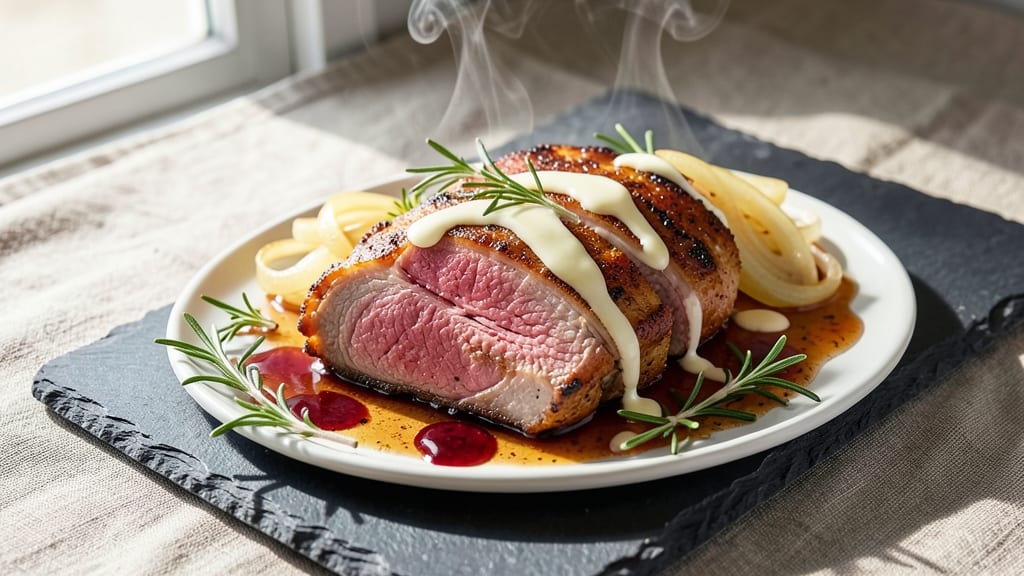
This pork loin recipe with apple juice transforms ordinary roast pork into a tender, caramelized masterpiece that balances sweet and savory notes perfectly. The apple juice isn’t just an ingredient—it’s the secret to achieving juicy, fall-apart meat with a glossy, honeyed crust that’ll have everyone asking for seconds.
I developed this method after years of testing how to elevate pork loin beyond the dry, overcooked versions I’d grown up with in my Boston kitchen.
The technique is foolproof yet elegant: the pork loin roasts until golden, then braises in apple juice, onions, and herbs until the meat is so tender it practically melts.
The apple juice doesn’t just add sweetness—it deglazes the pan, creating a rich, velvety sauce that clings to every bite. This isn’t your grandmother’s pork roast; it’s a dish that feels restaurant-worthy without requiring hours in the kitchen. The best part?
It’s versatile enough for weeknight dinners or holiday tables.
What you’ll end up with is perfectly caramelized pork with a crisp exterior and moist, shreddable interior, all bathed in a glossy apple-herb sauce. The sweetness of the apple juice cuts through the richness of the pork, creating a harmonious balance that’s both comforting and sophisticated.
Serve it with roasted root vegetables or a crisp green salad to let the flavors shine. This is pork loin reimagined—tender, flavorful, and impossible to resist.
Confession: I almost skipped the apple juice step my first time making this, thinking it was too much work. But once I tasted that first bite—juicy, caramelized, with just the right sweetness—I knew it was a game-changer.
The technique is simple, but the results are restaurant-quality. Let’s get cooking!
Ingredients for pork loin recipe with apple juice
Foolproof ingredients for restaurant-quality pork loin with a sweet-tart apple braise.
| Ingredient | Amount | Notes |
|---|---|---|
| Pork Loin 🐖 | 2 ½ lb | Center-cut, bone-in preferred |
| Unsalted Butter 🧈 | ½ cup | Cold, cut into 1-inch cubes |
| Yellow Onions 🧅 | 2 whole | Thinly sliced, about 2 cups |
| Fresh Thyme 🌿 | ¼ cup | Stems removed, chopped |
| Fresh Rosemary 🌿 | ⅛ cup | Stems removed, chopped |
| Unsweetened Apple Juice 🍎 | 1 ½ cups | 100% juice, no added sugar |
| Balsamic Vinegar 🍷 | 2 tbsp | For depth of flavor |
| Garlic Cloves 🧄 | 6 cloves | Minced, about 1 tbsp |
| Diamond Crystal Kosher Salt 🧂 | 1 ½ tsp | For seasoning, adjust to taste |
| Freshly Ground Black Pepper 🌶️ | 1 tsp | Coarsely cracked |
| Olive Oil 🫒 | 2 tbsp | Extra-virgin for roasting |
| Honey 🍯 | 1 tbsp | Optional, for extra caramelization |
The pork loin is everything here—center-cut, bone-in for that perfect balance of tenderness and flavor. Whole Foods or Trader Joe's carry excellent quality, but any well-marbled loin works. Look for even thickness to ensure even cooking. I always ask the butcher to trim excess fat, but leave a thin layer for flavor. Fresh herbs are non-negotiable—they make the difference between good and extraordinary. Penzeys or your local market's bulk section are great sources for high-quality thyme and rosemary. The apple juice should be 100% juice with no added sugar—Mott's or Odwalla are reliable brands.
No apple juice? White grape juice or cranberry juice in a pinch, though the flavor will differ slightly. Short on fresh herbs? Dried thyme and rosemary at one-third the amount will work, but fresh is ideal. The balsamic vinegar might seem like overkill, but it adds that perfect tangy depth—Balsamic Creme from Trader Joe's works too if you're in a hurry. The honey is optional, but if you love caramelized flavors, don't skip it. For the butter, Plugrá or Land O'Lakes are solid choices, but any unsalted butter will do. The key is keeping it cold when searing.
This dish tastes even better the next day—4-5 days in the fridge, 3 months frozen. I always make extra because it reheats beautifully. Store the pork and sauce separately in airtight containers. To reheat, warm the sauce first, then add the pork. The apple-herb sauce thickens as it cools, so a splash of water or apple juice can restore its velvety texture. Portion into individual containers for easy lunches—trust me, you'll be thankful.
Why You'll Love This Recipe
- One-Pan Magic: I swear by this for nights when I’d rather not wash dishes. Slice onions, sear the pork in butter, add apple juice and herbs, then bake—no flipping, no fuss. The onions caramelize right on the same tray where the pork rests, turning cleanup into a joke.
- Sweet-Savory Balance: That apple juice isn’t just for show—it tenderizes the pork while adding a bright, almost wine-like depth. Pair it with rosemary and thyme, and you’ve got a flavor that’s rich but never heavy, like a hug from a French bistro.
- Leftovers That Beg: Between us, this recipe makes way more than I need for one meal. The pork stays juicy when reheated, and the apple juice glaze? It thickens into a sticky, crave-worthy sauce. I’ve sent it to work lunches in jars—people actually finish it.
- Budget-Friendly Luxury: Pork loin feels fancy, but this method makes it feel like a splurge without the price tag. Butter and onions are cheap staples, and a splash of apple juice (even store-bought) elevates everything. Honestly, it’s the kind of dish that makes me feel like I’m cooking for guests—without the grocery bill.
Step-by-step instructions for pork loin braised with apple juice
Here's how to transform tough pork into melt-in-your-mouth perfection using sweet apple juice and aromatic herbs.
Sear the Pork Loin for Maximum Flavor
Pat the 2.5 lb pork loin completely dry with paper towels—this ensures a perfect sear. Heat 2 tablespoons olive oil in a large Dutch oven over medium-high heat until shimmering. Place the pork loin in the pan and sear for 4-5 minutes per side until it develops a deep golden-brown crust. You'll see the fat render out and the meat release easily from the pan when it's ready to flip.
Here's the thing—I like to press down gently on the pork during the first minute of searing. This prevents it from curling and ensures even contact with the pan. Once it's browned on both sides, remove the pork and set it aside on a plate, leaving all that beautiful browned fond in the pan. That fond is pure flavor gold.
Build the Aromatic Base with Onions and Herbs
In the same Dutch oven, reduce the heat to medium and add 0.5 cup unsalted butter, cut into 1-inch cubes. Let it melt completely, then add the 2 whole yellow onions (thinly sliced) and cook for 5-6 minutes until they begin to soften and caramelize slightly. You'll notice the onions release their moisture and then start to turn golden at the edges—that's your signal they're ready for the next step.
Add the 6 cloves garlic (minced), 0.25 cup fresh thyme, and 0.125 cup fresh rosemary (stems removed and chopped). Stir everything together for 1 minute until the garlic becomes fragrant and the herbs release their essential oils. This aromatic base is what transforms a simple braise into something truly special. Don't skip this step—it's where all the magic begins.
Deglaze and Create the Braising Liquid
Pour in the 1.5 cups unsweetened apple juice and 2 tablespoons balsamic vinegar, scraping up all those browned bits from the bottom of the pan with a wooden spoon. The liquid should bubble vigorously for about 2 minutes as it reduces slightly. Then, stir in the 1.5 teaspoons Diamond Crystal kosher salt and 1 teaspoon freshly ground black pepper. This creates the perfect balance of sweet, tart, and savory flavors that will penetrate the meat.
Bring the liquid to a gentle simmer, then return the pork loin to the Dutch oven. The liquid should come about halfway up the sides of the pork. If it's too shallow, add a splash of water to ensure the pork cooks evenly without drying out. The key here is patience—this braise needs time to work its magic.
Braise Until Fork-Tender
Cover the Dutch oven with a tight-fitting lid and transfer it to a 325°F oven. Here's where the real transformation happens: braise the pork for 2 to 2.5 hours until it's fork-tender. You'll know it's ready when a knife slides in easily and the meat pulls apart with gentle pressure. The internal temperature should reach 195-200°F—this is the sweet spot for fall-apart tenderness.
I like to check the pork about halfway through cooking to make sure the liquid hasn't reduced too much. If it has, add a little more apple juice or water to maintain the proper level. The pork should be bathed in flavorful liquid throughout the entire cooking process. This ensures every bite is moist and packed with that sweet-tart apple-herb combination.
Finish with Honey and Rest Before Serving
Once the pork is tender, remove it from the oven and carefully transfer it to a cutting board. Strain the braising liquid into a saucepan and simmer over medium heat until it thickens slightly. Stir in the 1 tablespoon honey and let it simmer for 2-3 minutes until the sauce glistens and coats the back of a spoon. This final step adds a beautiful caramel note that balances the acidity of the apple juice.
Let the pork rest for 10-15 minutes before slicing. This resting period allows the juices to redistribute throughout the meat, ensuring each slice is moist and flavorful. Serve the pork sliced against the grain with the reduced apple-herb sauce spooned over the top. The contrast of tender pork with that sweet-tart sauce is absolutely irresistible.
Pro Tips For Making Pork Loin Recipe With Apple Juice
- SEAR FIRST, THEN BASTE: Pork loin needs that golden crust, but don’t rush it—get your pan screaming hot (medium-high, not medium) and let those slices sit undisturbed for 2-3 minutes per side before you even think about adding apple juice. I used to flip too soon, and the butter just turned into a sad, greasy mess instead of a flavor bomb.
- CHOP ONIONS SMALL—LIKE, REALLY SMALL: Thin half-moons or even smaller. Big chunks? They’ll turn to mush while the pork rests, and suddenly you’ve got a watery pan instead of a fragrant base. Trust me, the extra 2 minutes slicing pays off when the onions caramelize into a glossy, sweet layer under the meat.
- DON’T SKIP THE ROSEMARY SPRIGS: Yes, you could chop them, but whole sprigs infuse the butter and apple juice with piney depth without overpowering. Tuck 2-3 sprigs into the butter while it melts—just pull them out before serving so they don’t turn into a chewy mouthful. (And save the used sprigs for broth or a quick pasta sauce.)
- REST IT—EVEN IF YOU’RE STARVING: Pork loin’s juices scatter like panicked birds when you slice into it too soon. Tent it with foil and let it chill for 10 minutes. I know, I know—you’ve waited this long, but cutting into it early turns a tender masterpiece into a sad, stringy disappointment. (Your future self will curse you if you skip this.)
Wine and beer pairings for pork loin recipe with apple juice
Apple Juice Cocktails
Pair your pork loin with a crisp apple cider cocktail to complement the dish's sweet-tart flavors. I love a Spiced Apple Mule—mix 2 oz gin, ½ oz apple juice, and ½ oz fresh lemon juice in a copper mug with ice.
Top with ginger beer and garnish with a cinnamon stick. The spice and acidity mirror the apple-herb braise beautifully. For a non-alcoholic option, try sparkling apple cider with a splash of grenadine—it’s refreshing and kid-friendly. 🍏
Red Wine Pairings
For wine lovers, a Pinot Noir from Oregon or Burgundy is ideal—its bright acidity and red fruit notes harmonize with the apple juice and pork. I reach for Domaine Drouhin Oregon Pinot Noir; it’s approachable yet sophisticated.
If you prefer something lighter, a Gewürztraminer from Alsace offers floral aromas that complement the rosemary and thyme. Avoid heavy, tannic reds like Cabernet Sauvignon—they’ll overpower the dish’s delicate sweetness. 🍷
Beer Complements
A Belgian witbier like Hoegaarden or Stella Artois cuts through the richness of the pork with its citrusy notes. The apple juice in the dish pairs perfectly with the beer’s coriander and orange peel flavors.
For a heartier option, try a German Helles Lager—its malty sweetness balances the dish’s acidity. Avoid IPAs or stouts; their bitterness clashes with the apple-herb sauce. 🍺
Coffee Pairing
If you’re serving this for a late lunch or dinner, a light roast coffee with notes of caramel or honey enhances the apple juice’s sweetness. I recommend a Colombian or Ethiopian coffee brewed with a splash of apple juice in the cup—it’s a surprising but delicious twist.
The coffee’s acidity mirrors the dish’s tangy sauce, creating a cohesive finish. ☕
Non-Alcoholic Sparkling
For a festive touch, serve sparkling apple cider or a ginger ale with a splash of apple juice. The bubbles cleanse the palate between bites, while the apple flavor ties the meal together.
I like to add a few drops of bitters (like Angostura) to the ginger ale for a sophisticated twist. It’s a crowd-pleaser that feels special without alcohol. 🥂
Nutrition facts
Frequently asked questions
Can I substitute apple juice with another liquid?
Yes! If you don’t have apple juice, try white grape juice, cranberry juice, or even dry white wine (like Sauvignon Blanc) for a similar sweet-tart balance. Avoid heavy red wines—they’ll overpower the dish. For a non-fruit option, use chicken or vegetable broth with 1 tablespoon apple cider vinegar to mimic the acidity.
Why does the pork need to rest after cooking?
Resting for 10-15 minutes lets the juices redistribute—skipping this step means dry, tough slices. The pork’s internal temperature will drop 10-15°F during resting, so it’ll still be perfectly cooked. Pro tip: Tent loosely with foil to keep it warm without steaming.
Can I make this in a slow cooker?
Sear the pork first, then transfer everything (including the browned fond) to a slow cooker. Cook on Low for 6-8 hours or High for 4-5 hours until fork-tender. The slow cooker’s gentle heat ensures even tenderness without drying. Just add ¼ cup apple juice if the liquid reduces too much.
How do I know when the pork is fully cooked?
Use a meat thermometer—pork loin is safe at 145°F, but for fall-apart tenderness, aim for 195-200°F. The meat should pull apart easily with a fork. If unsure, slice into the thickest part: juices should run clear, not pink.
What’s the best way to reheat leftovers?
Reheat in a skillet over medium-low heat with a splash of apple juice or broth to keep it moist. Avoid microwaving—it dries out the pork. For extra flavor, add a pat of butter and a pinch of thyme. Leftovers taste even better the next day!